Natural Light II is a book of photographic portraits of Scottish writers by Angela Caitlin. I acquired it because I was attracted to the cover image of an unnamed person (I think Alasdair Grey) and also because I read endlessly and voraciously. I am Scottish by habit (although not by birth) and much of the poetry, crime and other novels I read is by Scottish authors, so it seemed a sensible acquisition.
The images are all taken by natural light, across the world and vary from close up portraits such as the ones of Jackie Kay and William Boyd to ones where the person is almost hidden, Christopher Brookmyre and Ronald Frame. The combination of the image and the written text, a piece by the subject, a poem or a short extract of fiction was fascinating. The person’s portrait often did not give any clues as to the type of writing, other than some wild men from the north with their Gaelic poems! I spent as much time reading as looking – and have been seduced into enlarging my collection of both poetry and fiction.
My favourite image is one of Al Kennedy, shown outside, smiling, under blossom – contrasted with a rather scary piece of work about a girl (she feels young) being overwhelmed with the expectations of her lover. I look back and forward between the writing and the image and think – how do they fit together – but why should they? Why should someone’s looks mandate how or what they write about? Why should I be so naïve to assume they should?
Very few of the images show the subject looking at the camera, most are staring into the distance, or looking slyly sidewards. What are they thinking about? Are they imagining their next poem? These are the dreamers of our life and we would be poorer without them.
Reference:
Catlin, A. (2015). Natural Light II: photographic portraits of Scottish writers. Glasgow: Cargo.
“To gaze implies more than to look at – it signifies a psychological relationship of power, in which the gazer is superior to the object of the gaze.” Schroeder. J, in Barbara B Stern, Representing Consumers: Voices, Views and Visions (1998) London: Routledge. Pg 208.
The gaze is an important in the theory of photography. There are multiple ways of looking at what that actually means. A simple list that summarises it is:
The photographer’s gaze
What they are actually looking at and how they are looking, which might be though the lens of the camera – but could also be by looking at the image that they are planning (an example of this would be in the work of Gregory Crewdson).
The viewer’s (spectator’s) gaze
The male gaze is discussed in Berger’s Ways of Seeing (Berger, 1973) – ‘Men look at women. Women watch themselves being looked at’ – and usually implies power, ‘I own the image/object that is shown’. It was initially suggested in relation to film by Laura Mulvey in her essay Visual Pleasure and Narrative Cinema’ (Mulvey, 1975).
The female gaze – initially discussed by feminists in response to Mulvey’s work and now widely used but not clearly defined. Is it about all work by females? Or only about that work with a feminist slant? There is an interesting recent article by Murray Brown that says, ‘if anything, the female gaze is simply an awareness that women do not hold half the power’ (Murray Brown, 2019).
The LGBTQ+ gaze also needs to be considered and has more recently been explored, for instance in the context of the work of Mapplethorpe and Goldin.
The ‘colonial gaze’ – about attitudes to ‘others’ (not white, European or American).
The academics gaze – analysing the context, sources and details
The gaze of the person/people within the image
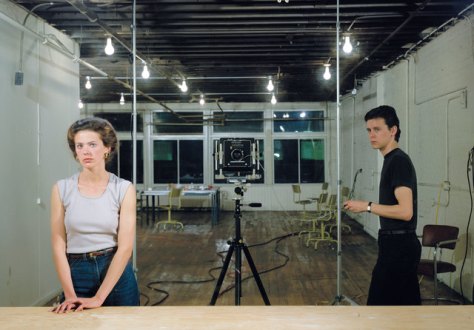
Where they are looking and who they are looking at- an example of multiple gazes within an image is Jeff Wall’s photograph Picture for Women (1979).
People looking at people looking! Good examples of these are in Martin Parr’s recent work on Versaille where he has photographed people taking images of themselves (Pégard, 2019).
For a more complicated consideration of the gaze there is an essay by Lutz and Collins in ‘The photography reader’ (Wells, 2010, pp. 354-374) which starts by saying ‘the photograph……is not simply a captured view of the other, but rather a dynamic site at which many gazes or viewpoints intersect’. The essay is written in the context of research on National Geographic images. They discuss seven different types of gaze which I shall summarise here:
The photographer’s gaze which controls the subject matter, the structure, view and content, and which may be emotionally distant (alienated) from the subject
The magazines gaze (they were talking in the context of the National Geographic), but there would be similar issues from any commissioned image – where a specific image is chosen, and the layout will give a desired ‘reading’ to the image
The magazine reader’s gazes where ‘the reader….is invited to dream in the ideological space of the photograph’ (Tagg, 1988), anything that jars may put the reader off interpreting the image as the magazine would want. It is reliant on cultural models, gender and diversity of experience together with the context of reading (a quick skim or detailed look, alone or with other people)
The non-Western subject’s gaze (or more generally the gaze of the subject in the image) divided further into:
Confronting the camera, acknowledging the photographer and the reader ‘I see you looking at me, so you cannot steal that look’ (p.359), what it means is dependant on the expression (smiling, glaring etc.), a collaboration and an attempt at creating intimacy. They note that those who the West defines as weak are more likely to look directly at the camera than those defined as strong – is that editorial choice/political reasons?
Looking at something else within the frame – gives information about the subject of the image
Looking into the distance – may suggest things about the personality of the subject (dreamy, forward thinking)
No gaze visible, too small, covered with a mask – ‘a boundary erected’
A direct Western gaze – in the context of the National Geographic included Westerners in the image may allow the viewer/reader more identification with the image. The meaning will then partially depend on how the various people within the image interact – ‘the mutuality or non-mutuality of the gaze of the two parties’ (p.362). Is the gaze colonial? Is it patronising? These types of images are less frequent now – is that because of a changing view of Americans within the world – the other becoming more threatening and therefore safer behind the camera?
The refracted gaze of the Other: to see themselves as others see them – ‘mirror and camera are tools of self reflection and surveillance’ (p.365), creating a double, looking for self-knowledge. The photo may actually increase alienation, see Sontag’s suggestion ‘the photographer is a supertourist, an extension of the anthropologist……the photographer is always trying to colonise new experiences……to fight against boredom’ (Sontag, 1978).
The academic spectator’s gaze as a subtype of the reader’s gaze which here looks at a critique of the images and why they were made
They summarise by saying that ‘the multiplicity of looks is at the root of a photo’s ambiguity, each gaze potentially suggesting a different way of viewing the scene’ (p.171).
In the OCA handbook for IAP it states:
A key feature of the gaze is that its subject remains unaware of the present viewer. Academics and theorists have identified a number of different gazes:
the spectator’s gaze – the look of the viewer at a person in the image.
the internal gaze – the gaze of one depicted person at another within the same image.
the direct address – the gaze of a person depicted in the image looking out directly, as if at the viewer (through the camera lens).
the look of the camera – the way the camera itself appears to look at people depicted in the image (the gaze of the photographer).
the bystander’s gaze – the viewer being observed in the act of viewing.
the averted gaze – the subject in the image deliberately looking away from the lens.
the audience gaze – an image depicting the audience watching the subject within the image.
the editorial gaze – the whole ‘institutional’ process by which a proportion of the photographer’s gaze is chosen and emphasised.
There is a comprehensive overview of the gaze and accompanying issues available at: http://visual-memory.co.uk/daniel/Documents/gaze/gaze12.html?LMCL=zhc8U6 . In this Daniel Chandler adds in discussion about the direction and angle of the gaze, proximity and how this is varied by race and custom (as is length of time someone will look at you and how direct the gaze will be). He also discusses the eye of the camera, although mostly related to film and TV and notes ‘Looking at someone using a camera (or looking at images thus produced) is clearly different from looking at the same person directly. Indeed, the camera frequently enables us to look at people whom we would never otherwise see at all. In a very literal sense, the camera turns the depicted person into an object, distancing viewer and viewed’ (Chandler, 1988).
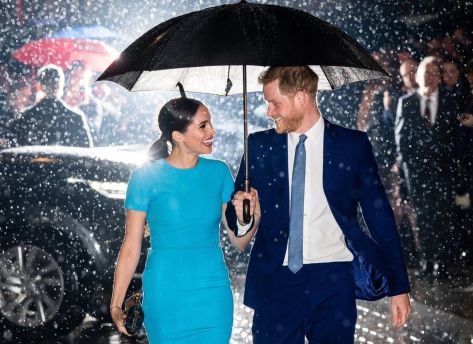
This short discussion of different ways of considering the use of the word ‘gaze’ shows many alternative ways of interpreting it and its use within photography. While I was considering this, in the work-up for exercise 3.4 I came across a photo-essay on the BBC news site. https://www.bbc.co.uk/news/in-pictures-51767925
I do not usually follow the British royal family – but I thought that many of these images demonstrated the types of gazes listed above. In order:
Pégard, C. (2019). Versailles, Visible invisible: Dove Allouche, Nan Goldin, Martin Parr, Eric Poitevin, Viviane Sassen : [exposition, Versailles, Château de Versailles, Domaine du Trianon, 14 mai-20 octobre 2019]. Paris: Éditions Dilecta, Dl.
Sontag, S. (1978). Susan Sontag on photography. London, Great Britain: Allen Lane.
Tagg, J. (1988). The Burden of Representation : Essays on Photographies and Histories. Basingstoke: Palgrave Macmillan.
Wells, L. (2010). The photography reader. Abingdon, Oxon ; New York, Ny: Routledge, pp.354–374.
Having been brought up as a child in the 60’s and 70’s I was very aware of the Cold War – but only as an abstract issue. We saw the leaflets. While at university we campaigned for nuclear disarmament but, in spite of living in Scotland – the site of Gruinard Island and testing for anthrax, knew very little about chemical and biological warfare (NBC). That was of the past. It was related in my mind to the mustard gas in WWI, with no assumptions that is was still current. At school we read Dulce et decorum est by Wilfred Owen (Owen, 1920). We acted it out. But it seemed so horrific that it was obviously something that wouldn’t happen now. Yes, there were occasional news items about Saran attacks – but they were elsewhere, nothing to do with the British Isles, honesty, lack of corruption and ethical behaviour. As I got older, I became less optimistic about the state of the world and more aware that there was still research into NBC, even in Britain. I became aware of Porton Down – which, according to the government website only researches NBC so that we can have counter measures, (see https://www.gov.uk/government/news/the-truth-about-porton-downq). I became aware of beaches that were contaminated with radioactivity due to use of radium to give luminance to dials for aircraft. I heard rumors of pockets of increased cancers and disabilities near old military sites – but little was ever verified.
Dara McGrath’s book Project Cleansweep (McGrath, 2020) tells the story of the, mainly unknown, sites where biological and chemical items were manufactured, stored, tested and dispersed. Starting from a report on Project Cleansweep (Edwards, 2011), which was a government investigation that was aimed at making sure that residual traces of chemical and biological manufacturing processes did not cause any ongoing risk to life, McGrath investigated further and ended up looking at 92 sites across the United Kingdom. The book shows a selection of the pictures he took, along with copies of newspaper reports and drawings. Many of the images are stark, the land and the buildings are destroyed but others are beautiful and belie the nature of the place they were taken in. Some of the images remind me of those of Edward Burtynsky, in that they show desolate and ruined places and other those of Fay Godwin, reminding me of her work in Our Forbidden Land (Godwin, 1990). The pictures are shown alongside a brief explanation of where they are and what went on, together with what the land is used for today. McGrath explores 4 sites in greater detail; Rhydymwyn – where bulk chemical weapons were made and stored and where there is significant ongoing contamination, Harpur Hill – where captured enemy ordnance was destroyed, Gruinard Island where anthrax was tested in 1942 and which was eventually decontaminated and declared safe in 1990 and Lyme Bay where trials of spraying bacteria and zinc cadmium sulphate across the coast were carried out leading (possibly/probably) to the clusters of health problems found in the area.
See McGraths blog for links to videos that show more detail on some of the sites including Lyme Bay and Gruinard Island: https://daramcgrath.wordpress.com/
Dulce et decorum est
Bent double, like old beggars under sacks,
Knock-kneed, coughing like hags, we cursed through sludge,
Till on the haunting flares we turned our backs,
And towards our distant rest began to trudge.
Men marched asleep. Many had lost their boots,
But limped on, blood-shod. All went lame; all blind;
Drunk with fatigue; deaf even to the hoots
Of gas-shells dropping softly behind.
Gas! GAS! Quick, boys!—An ecstasy of fumbling
Fitting the clumsy helmets just in time,
But someone still was yelling out and stumbling
And flound’ring like a man in fire or lime.—
Dim through the misty panes and thick green light,
As under a green sea, I saw him drowning.
In all my dreams before my helpless sight,
He plunges at me, guttering, choking, drowning.
If in some smothering dreams, you too could pace
Behind the wagon that we flung him in,
And watch the white eyes writhing in his face,
His hanging face, like a devil’s sick of sin;
If you could hear, at every jolt, the blood
Come gargling from the froth-corrupted lungs,
Obscene as cancer, bitter as the cud
Of vile, incurable sores on innocent tongues,—
My friend, you would not tell with such high zest
To children ardent for some desperate glory,
The old Lie: Dulce et decorum est
Pro patria mori.
The images are sharp and stand out against the backdrop
I was looking for a range of expressions on Sam’s face whiich I obtained – but it was limited by what he was prepared to do
I considered both black and white and colour images
I have gone for colour; but I am concerned that the faces can get lost against the highly coloured background and am still wondering about the advantage of black and white to minimise this effect
Quality of outcome:
There are a range of images taken of a difficult subject
The images do tell a story about Sam although somewhat limited
Demonstration of creativity:
I spent considerable time planning this exercise both in organising the shoot and the necessary pre-work
These are fairly straightforward portrait shots and I don’t think I have been overly creative in the actual pictures
Context:
The whole assignment was based on the work done in part 2
The work sits within the framework of images taken of people with mental health images and I referenced some similar works
ASD is a particular interest and I have been looking at ways of picturing it since starting EYV so there is a thread of work about it and about mental health though the course
I attended a recent zoom led by Andrea on reflective writing. I found it interesting and it pointed up several issues I have had about the topic. Like many of the people attending the zoom I have been reflecting after the event! Using reflection as ‘looking back’. This can be helpful, but it does depend on how long after something you are doing the reflection. I have recently read Annette Kuhn’s Family Secrets (see….for and extended review) – and she points out that when looking back over an extended period the memories become increasingly changed with the time, the viewpoint alters and other things become entangled in the memory.
During the zoom we discussed reflection from a different angle – looking forward rather than backward. Using reflection to think about what you are doing and where you are going. I found the revolving arrow a helpful way of looking at it, as are the questions around reviewing the issue and action to be taken forward.
Andrea suggested regular journaling or note taking as a way to keep reflection real and of the actual time. I started this earlier this year (having been given a diary) and try to write down what I have read and what I thought of it together with what I am doing. It does make it easier for my (roughly 2 weekly) progress reports. But I think I could take it further and write down more of my thoughts about where I am and where I am going.
Afterwards Kate suggested an essay by Mike Simmons with 3 core questions:
What?
So what?
Now what?
These are very useful points to consider as are the suggestions from Karen:
One thing I am going to do is
One idea I’m taking away is…
I am going to think about…
I have found out that…
I’d like to know…
In future I am going to…
The overall zoom was very helpful (even though I kept getting interrupted by family matters). I was reassured by Andrea’s comments that the tutors and assessors find the evidence of reflection valid – I have not really been adding to my blog – but will do so from now.
For some reason this assignment has been one of the hardest I have tackled so far. Part of the reason has been outside issues – the weather, health, family deaths. However, part has been pure procrastination on my part.
I initially planned to use some images that I had taken when doing exercise 2.3 – Exercise 2.3 – Same model, different background using some of the other images of Martin and his wife, either inside the house or more close up portraits in the garden – however it didn’t really fit the brief. I did make it into a newspaper, which I am moderately pleased with, and which was an interesting experiment. See Newspaper trial
I then decided to try and take some images of an autistic boy (Sam). This got delayed over and over for practical reasons, and I couldn’t seem to get past it. I then took some separate images of another autistic family – which seemed to work well.
But still I was stuck!
I finally decided to just do it, work up both sets of images and see what happened.
Learning points:
Read the brief carefully
Get on and take the photographs
Have a backup plan
Take risks – it might not be perfect (in fact, won’t be) – but just do it.
Spending too much time reading and researching the possibilities is only useful if you have infinite time
Family secrets by Annette Kuhn is partly an autobiography and partly an extended essay on memory and how memory supports out understanding of both our own lives and the historical context that we live in. Kuhn describes it as a book that has sprung from the genre of ‘revisionist autobiography’ (p.147) and points out that any autobiography is ‘inevitably the outcome of a considerable reworking of the raw materials of an identity and a life story’ (p.149).
I found this book in parts fascinating, in parts heart- breaking and partly terrifying. The later was because it managed to bring back so many memories of my own past. I was born only a few years later than Kuhn and brought up in an upper working-class family (my father owned a butcher’s shop). Unlike Kuhn’s, my mother was very pushy and was desperate for me to go to university. In retrospect I think this was because she had missed out the opportunity of doing so because of the war. My mother was German, living in the USA, and repatriated to Germany during the war and, I think, resented the missed opportunities. My father died when I was young, my mother worked hard to keep the family running, and eventually married my stepfather, who, by coincidence, was a professional photographer.
Mother
Me
Mother and me at similar ages!
I took multiple notes, and these led on to other thoughts, and I will attempt to summarise them:
‘Telling stories about the past, our past, is a key moment in the making of ourselves’ (p.2) – but how much do we tell, how much do we hide, and how much do we really remember? All families have secrets, and many are similar to those in other families – mine as much as Kuhn’s.
‘The past is gone forever’ (p.4) – what traces remain. Looking for them in your memory is like archeology, making a story from small fragments. Different readings of the fragments may lead to a different story.
The past is not single – the historical context informs your memory, as much as it informs what actually happened. WWII had a major impact on my past. Much of it was hidden as my mother was concerned about the stigma of being German. Much we only learnt from her in the very last months of her life.
Memory work can start from a single piece of information, a single photo found at the bottom of a box, or a hidden letter. This evokes emotions, uses the intellect and may become part of the truth – at least your truth. A photograph can be interpreted, it gives information about the person, the place, who took the image, who was missed out and why it was taken. The clothes talk about the social aspects. The event may be recalled – although, if many years ago, one may question the accuracy. If the image has been looked at and discussed many times, each time the story might have changed. There is no single, final story.
Family albums tell a more complex story, partly mediated by the order the images are shown in. My album is random – the pictures are not in any historical order – just the one I acquired them in. I also have boxes (multiple) of unsorted and unlabelled photos – the order I sort them into may change the story. Which ones get priority? And why? Looking at these images is like looking at a box of jigsaw pieces, without the picture!
‘This past-in-the-future, nostalgia-in-prospect’ (p.23) – makes you want to produce a ‘good’ story of the ‘ideal family’ – even if it isn’t quite right. Is the truth what you remember or what actually happened? Or what makes you feel good about the time?
How does culture effect what you take from images? What about the films you have watched as a child? How do you reconcile what you felt then with what you see when analysing them as an adult? What about the books you have read? Your reaction as a child may have been (probably was) mainly emotional – does this have validity in a critical response to a film or book as an adult concerned with theory? Will it make for a wider understanding – or does it cloud the issue?
Any given photo will hold multiple meanings, for different people, at different times and in different social contexts. It may be specific to a family – but also generic to the culture – the hyper-cute baby photo, smiling up at you, it’s your baby, it’s you as a child, it’s the picture that advertises the photographer’s studio, its something to embarrass your son with to his girlfriend. It’s a memory of a time that will never be repeated.
Are the main images in your library just of the child, just of the adults or groups? And why? What does this say about family relationships? I have very few of me with my parents but several of mum with her family. Why? Was I not there? Were photos saved for the ‘special occasions’ – family visiting from abroad. A very different situation from the multiple images taken nowadays – but will they still be around in 50 years from now?
Photos were often taken in best clothes, dressed-up, in uniform – to show pride? A credit to the mother ‘an end in itself’ (p.62). Or in a cute setting, an important place – “look where we have been”. Does the clothing and the dressing-up tell more about the dresser (usually the mother) then the person? What does it say about the family relationships?
Photos may be taken to mark a special occasion – the image then brings back memories of the occasion – not just the photo, both the local – we were in the pub, Aunty Mary’s house, the garden, – with Sam, Jane, that odd person from down the street – when the Queen was married, the Two Towers blown up or England won the World Cup. Moving from the specific and local to the actual event. Especially relevant when marking global celebrations.
The image tells about the relationship between the photographer, the person photographed and the person the image is for. Why does the child look uncomfortable? What was the parent expecting by dressing them like that? How subtle is the rebellion?
Popular memory of shared events – can be provoked by images of the time, celebrations, national and local. People’s memory of a major event is often surprising similar – but may focus on the specific – where they were at the time before the actual event is brought into focus.
Changing places, homes, schools, countries has an effect on not only where you are but who you are and how you interact with others. it’s a way of changing your social background – but you may never fit in totally. Not everyone can be a chameleon! Roots are important and abandoning them can/does lead to feelings of insecurity. You can ‘For survivals sake you can….learn to keep quiet about what really matters to you……but you risk forgetting the value of those ‘resources of generations gone before’ that might still be there inside you, your resilience , your courage’ (p.116).
School has an impact on what you do – not only then but much later on. Like Kuhn I was streamed into the ‘academic’ side, in my case science. I remember being told ‘It’s no point you doing art, you’re too clever, and anyway you can’t draw” – the latter comment was possibly true, but there was no consideration that other forms of art might exist, or that I might benefit from engaging with them. In spite of taking pictures all my life, it wasn’t until I was much older (in my 50’s) that I started ‘making art’.
Why do images from the past, that we are not directly involved with effect us so much? Kuhn gives the example of the St. Pauls’s picture in the London blitz. I can think of ones from the Africa corp in WWII. How does the collective memory that these invoke impact on personal memory? And vice versa?
Remembering, looking back, allows for changes. Memory can be sparked by other people’s pictures, paintings, music and writing. Anything can be used as a basis for memory work and allow you to make sense of what you see. Other pieces are very private and particular to you (Barthes’s picture of his mother as a child), an image I have just found of my grandmother who I never knew.
All this leads to the question – how much of memory is imagination?
Photographs can be used as groundwork – but they may still tell lies, partial truths – but rarely the whole truth. They lead to a ‘constant reworking of memory and identity (p.154). The act/activity (remember it is an ongoing process) is not neutral. There is always ‘secondary revision’. New stories can be told. Things can be healed. Lives can be changed.
This whole book is well worth reading (and re-reading). Maybe it spoke so much to me because I have a similar background – but the lessons learned are valid for everyone.
Reference:
Kuhn, A. (2002). Family secrets: acts of memory and imagination. London; New York: Verso.
A general theory book about art designed for A level students, read to try and update my woefully absent knowledge about the general history of art and therefore how photography fits into it. Most useful info gained is about the hierarchy of images from the past, a useful glossary and the final chapter on gender and ethnicity.
Fascinating book looking at memory and how photographs help you understand the past and its effect on you
Photography:
Finally took some pictures for Assignment 2, however they were probably the worst images I have taken in ages. The focus was not correct (no idea why), the background too complicated, his Mum liked them though!
Secondary to above I have now spent some time dying and painting a neutral backdrop to try out
Pictures of hands doing things for Exercise 3.2 – done.
On holiday for 2 weeks so lots of holiday images
Planning:
Had a meeting with Julie to discuss her input into ASP project
Sherman was born in America in 1954, so she is slightly older than I am. Her early experiences may well have been similar, although transmuted via an American, rather than British, perspective, you played on the street, you dressed up and pretended to be people, if you were a girl there were very tight gender specific jobs and roles. It took guts and extreme talent to move beyond them. Sherman was the youngest of five children, and no one else in her family was interested in art. She went to art college with very little formal knowledge about art and expecting to have to become a teacher. She initially started her career as a painter, but rapidly abandoned this and took up photography, initially concentrating exclusively on pictures of herself dressed up as various roles. However, Sherman does not describe these works as self-portraiture, but as using herself as ‘a vehicle for a commentary on a variety of issues in the modern world’ (Sherman, 2019). She portrays archetypes, a series of fabricated, fictional characters that are familiar to us because of our familiarity with TV and film people, mediated via the popular press (and more latterly social media). All of these early images are called Untitled, with a series name and often a number – further distancing them from any assumption that they are showing a specific person. A portrait almost always has the name of a person, or, at minimum, a description that personalises them. In later images Sherman used dolls and prosthetic body parts posed in highly charged sexual positions and clearly designed to shock the viewer. Recently she has returned to using herself as the subject, both in a further series of created characters and as a series of distorted images that are freely available to view on her Instagram site.
In a recent article Sherman, when talking about her own work and about selfies (and why her images are the reverses of selfies) says ‘It feels magical, I don’t know what it is I’m looking for until I put the makeup on, and then somehow it’s revealed. I’m disappearing in the world, rather than trying to reveal anything. It’s about obliterating, erasing myself and becoming something else’ (Blasberg, 2019).
Sherman is both a prolific artist and an influential one. Almost every article discussing post-modernism in photography references her. Grunberg describes her work as ‘Perfectly poststructuralist portraits, for they admit to the ultimate unknowableness of the “I”. They challenge the essential assumption of a discrete, identifiable, recognizable author (Grunberg, 2010, p.9). Her work is included in the list of 7 most expensive prints sold (Untitled 96) which is one of the Centrefold series that was originally commissioned for Artforum but never run as the then editor was concerned that they might be misunderstood. I wonder if the editor had really considered any of Sherman’s images as this comment could be applied to most (if not all) of them.
There is a fascinating (and long) discussion on the OCA website about Sherman, discussing her self-portraits – are they narcissistic or not? her background growing up in white, TV obsessed America – and the impact that had on her initial reactions to gender and make-believe that goes on to discus why we like, or don’t like her images and wether an initial ‘gut reaction’ has any validity as a starting point for analysis of an image (The Open College of the Arts, 2011).
I have seen a small number of Sherman’s prints in galleries
An early Madonna in the Sometimes I Disappear exhibition in Edinburgh – discussed in Sometimes I Disappear
Cindy Sherman – Early Works at the Stills Gallery, Edinburgh. This showed some of her very earliest self-portraits – Untitled (Murder Mystery People) together with some images form the untitled Film Stills collection and a very early film Dolls Clothes. Prior to this exhibition most of the images I Had seen were in books. I was surprised at how small the images were. This initially disappointed me, however it had the effect that I had to go in close to look at them in detail, and this drew me into the stories, possibly more so than a large image would have.
I find myself bemused by some of her work, revolted by other pieces (as I am fairly sure she meant people to be) and increasingly interested in it the more I examine it. Very little of it is ‘easy’. Some may be attractive to look at, but the closer you look at it the less obvious it becomes. Three years ago, I would have confidently stated that I did not like her work. My view is now different.





 Identity and Place