Category Archives: Learning Log

Deborah Orloff

Deborah Orloff’s work Elusive Memory is a series of images of photographs that she found in the basement of her parent’s house. They are severely degraded, water damaged and stained, often stuck together in piles. She has taken these photographs and re-photographed them and printed them large scale so you can see all the details of the damage and the underlying surface. In her work statement on them she says, ‘these banal objects become simulacra of loss and speak eloquently to the ephemeral nature of memory’ (Orloff, s.d.)

03. Orloff_Elusive_Memory_Mar65
Mar 65 © Deborah Orloff

My favourite on her website is simply labelled as MAR 65. I also love Madonna and Child. Third favourite is Guarded Smile. From this list you can gather that I am struggling to pick out individual ones that I really like more than any others. The most poignant is probably either Extended Pause or Lost Bridesmaid.

In an interview with Ain’t Bad’s Kyra Schmidt (Schmidt and Orloff, 2019) Orloff discusses her feelings about memory. They discuss whether our memories are our own and the fact that her mysterious images meditate on this question. Certainly, the images allow you to make up narratives, they are memories, but they are partially destroyed memories and therefore you can imagine whatever you like from them.

Orloff and Schmidt discuss the oft posed question of what is the connection between memory and photographs? Do we remember the past or is it because we have seen a picture so often that that becomes the memory? Orloff notes that she had been thinking about the connection between photography and memory since her father’s death when she realised just about every memory she had of him was connected to a photograph. When she salvaged the partially destroyed prints found in her father’s basement, she saw them as metaphors for loss and the ephemeral nature of memory.

This understanding of photographs contradicts the more usual reading of photographs when you see what you expect to see.  In this case what you expect is not always what you actually get.

Orloff  goes on to discuss the use of digital photography (especially phone digital photography) ‘ However, with the pervasiveness of digital technology, instead of trying to commit things to memory, we tend to pull out our phone and snap a picture, hardly paying attention to what we’re shooting. The visual reference is stored for potential use. We even use our cameras to take “notes” now. It’s certainly efficient, but I think it gives us license to forget as we’re not fully present in the moment. Instead of experiencing places and events we take photos, that we may never look at, often without really stopping. How can we expect to remember anything beyond the superficial? We process an overwhelming quantity of visual material daily, but we really don’t see most of it.’ The other problem is that everybody is so aware that the photographic image can be manipulated but often everybody assumes it is rather than thinking that it might not be.

The images in Elusive Memory are both beautiful and mysterious. They turn the usual meaning of archival images upside down. They are an archive in that they are a group of items that are found, stored and go together, but they do not give an easy explanation of the events they show. Rather they encourage multiple readings, and the use of one’s own imagination and memories to interpret them.

References:

Orloff, D. (s.d.) Deborah Orloff. At: http://deborahorloff.com/ (Accessed 10/08/2020).

Schmidt, K. and Orloff, D. (2019) In Conversation: Deborah Orloff on Memory, Representation and Objecthood. At: https://www.aint-bad.com/interview/2019/05/07/in-conversation-deborah-orloff-on-memory-representation-and-objecthood/ (Accessed 10/08/2020).
Write where you are

I attended a zoom discussion led by Suzannah Evans. I chose to attend this zoom because of the increasing amount of writing that is required in the photography course and my awareness that I have not done any formal learning on writing since school (a long time ago). She started by making some general comments about writing such as thinking about what we write, and, more importantly, why we write. This zoom focused on writing about place. She gave us three exercises:

  1. Writing about a place you have been to regularly during lockdown. I chose to write about the walk out the end of my street, the same one I made images of for exercise 5.3 about a local journey. I will add this as an appendix to that exercise.
  2. Thinking about some unusual place names and writing about those. I picked Arakan, which was both the name of the house I lived in as a child and also where my father served in WWII
  3. A short piece that is very place specific. I wrote about the harbour where I lived as a child.

We also discussed poetry and how it differed from general writing, a more considered use of words leading to the production of a feeling. Also discussed avoiding the need to impress, to be pretentious and look clever rather than just using the words that are required.

I found the zoom helpful. It has made me think more about how I say things, and why I say them.

My final piece was:

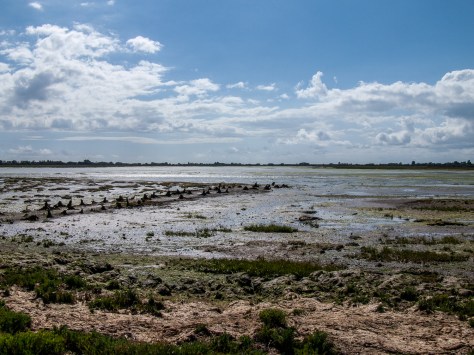
Pagham harbour

Day 5 - Aug 2007030-1

No boats, no water

Sand, mud,

Reeds and grass

Lapwings calling, peewit, peewit.

Thinking about Archives

Sue Breakell on Negotiating the Archive (Breakell, 2008)summary and my thoughts

  • What is an archive? A space where things are hidden? Rows of impenetrable boxes? A collective memory bank (the National Archive).
  • To deprive oneself of the archive is to lose one’s memory – but can the sheer volume become overwhelming?
  • If there is too much information does the ‘archive’ become more valuable, the most important part?
  • A professional archive is a collection of historical records relating to something and/or the place where the record is kept.
  • Popular meaning – any group of gathered objects
    • Ketalaar- ‘By the People, of the People, for the People’ (Ketelaar, 2003)
  • The significance of an archive can depend on what it contains, but also how it is arranged, and the relationships of objects within it (which may change).
  • An archive is (or should be) more than just a collection, a set of traces that each throw light on the rest
  • An archivist should describe, but not interfere. But looking at the archive cannot be unbiased, what you see depends on both your interests and what you are looking for.
  • Curtin University – archives are frozen in time… linked to the past but also carried forward ….as they are re-presented and used
  • The context of the items is important, where did it come from? how was it created? A document is what remains – but is only part of the original event. Parts of the event will always be absent leading to ambiguity (Derrida). There are always gaps.
  • Why do we want archives?
    • An illusion of truth?
    • Steedman’s point – ‘the past is searched for something …. that confirms the searcher in his or her sense of self’(Steedman, 2006)
    • They give layers of meaning to life
  • Archives can be used to create personal histories (Goshka Macuga) – to find one’s identity when creating something
  • The act of remembrance involves both storage and retrieval. Traces of things that we respond to, reflections of ourselves in the world.

References:

Breakell, S. (2008) Perspectives: Negotiating the Archive – Tate Papers. At: https://www.tate.org.uk/research/publications/tate-papers/09/perspectives-negotiating-the-archive (Accessed 31/07/2020).

Ketelaar, E. (2003) “Being digital in people’s archives”, Archives & Manuscripts, 31(2), pp. 8-22. Available at: https://publications.archivists.org.au/index.php/asa/article/view/9661 (Accessed: 31July2020).

Steedman, C. (2006) Dust. Manchester: Manchester University Press.


July Reflections

Reading and watching:

Still suffering from the problem that there is so much out there to watch at the moment that I get overwhelmed.

  • Watched Street Level talks with Graham McIndoe and Sakai Machache. Very different photographers but equally fascinating to hear talk about their work
  • Watched part of a TPG talk on surveillance in the digital age but got very confused (and my system kept cutting out) so gave up. It is something I am interested in though- so need to think about further
  • Read Justine Kurland – Girl Portraits
  • Continued to read Dorothea Lange autobiography
  • Looked at photographers for A5, Eggleston, Wentworth, Shore, Frank, brill, Lipper, etc (all written up in main posts.
  • Reread Charlotte Cotton – Photography as Contemporary Art – it made much more sense this time around (3rd go)
  • Read Perec’s book on Exhausting Paris – actually found fascinating
  • Looked at Obsessed by San Yunchu – really enjoyed this, A vision feeling about modern China and the people there
  • Looked at Lullaby for a Bride by Julia Borissova. A hand-made book/rat work (not bound but in a small folder) of images that tell the story of a Russian folk tale – minimalistic images interspersed with more archival looking ones
  • Continuing to read Siri Hustvedt essays on all things to do with arts and writing
  • Looked at Julia Crockett’s website o9n her grandmother – all archival work and fascinating reading
  • Reading a lot about travel photography – from early to right now. Change in ethos about the subject – new less straight documentary and more about feelings and emotions
  • Looked at Jonathan Levitt’s Echo Mask – loved it, telling about a place via emotive pictures and prose poetry.
  • Reading Diary of a Young Naturalist by Dara McNulty – not directly related to photography but his words are as good as pictures

Thinking and doing:

  • Attended IAP zoom – these are very useful – partly for support and partly as a way to float ideas that may or may not pan out
  • Started a Padlet for collecting learning outcomes for assessment
  • Attended zoom for crossover between IAP and level 2. Had several people who are doing/have done Level 2 talking about the different courses available. Useful information and lots of helpful advice that amounted to as long as you are prepared to put the work in they are all valuable, and can all work into your specific interests
  • Attended zoom for the OCA Scotland (or whatever it is) group
  • Had tutorial for A4 – went much better than I expected
  • Spent time working out how to show Polaroid type on the blog – you really miss out the feel of the actual piece in your hand
  • Started to think about A5. Planning to do a further archival series on my mother mixing words and images
    • Could be either a book /PDF or a video
    • Lots of research needed
  • Attended OCA zoom on Write where you are – very interesting, looking at ways of writing about things, on this case places, fits in well with the IAP work, writing differently

Photography:

  • Finished images for A4 and sent to tutor
  • Took pictures of eggs(!) for still life exercise
  • Pictures of dead flowers – also for still life
  • Images for Exhausting Cameron Street to go with the observation of the same
  • Polaroids type images of local journey- enjoyed doing this – point, shoot and pray – so very important to previsualise what you are trying to take .


Journeys – 1

Victorian and early 20th Century travels.

Journeys and travelling have been associated with photography from its very early days, well before Jack Kerouac’s work On the Road was conceived. In the Victorian era it was common to take a Grand Tour, and not unusual for the tour to be accompanied by a photographer.

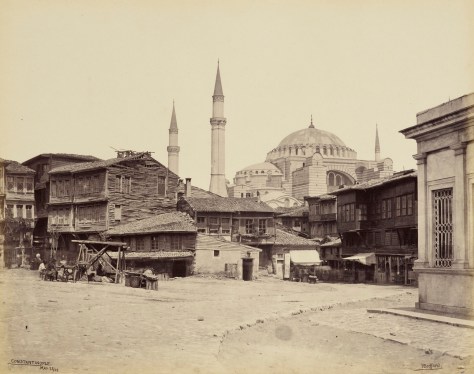
One of the most famous of the tours was that of Queen Victoria’s son, the future King Edward VII. He took a major journey around the Middle East and was a accompanied by the photographer Francis Bedford (1815-1984). A book of images from this tour has recently been published Cairo to Constantinople (Gordon et al., 2013) which shows many of the images accompanied by a travelogue and short excerpts from the Prince of Wales diary. One typical example shows the mosque Hagia Sophia alongside the comment, [the Prince thought Hagia Sophia] ‘the finestI have seen in the East. It was formerly a Xtian church’ (p.199). It is interspersed with maps showing the journey and gives a real feel for how the wealthy English found the Middle East in that era. Some of the pictures include people, although, unless famous they are rarely the focus of the image and may well have been included simply to show the massive scale of the monuments. On return to England the pictures were made into a portfolio produced by Day & Son and were also published more widely. This was definitely a commercial venture by Bedford, given extra kudos by the presence of the Prince.

Mosque of St Sophia - from the Hippodrome [Hagia Sophia, Constan
Mosque of St Sophia – from the Hippodrome [Hagia Sophia, Constantinople – Francis Bedford

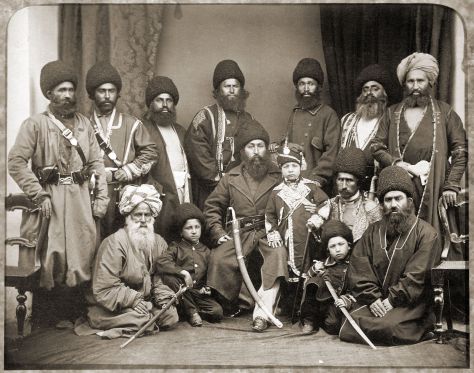
John Burke (1843 – 1900) traveled widely in Afghanistan where he took many images of the British forces during one of their earlier invasions of that land. Burke took pictures of the landscape, (devastated by war), some rather beautiful images of the countryside and portraits, both of the English soldiers and the local people. In From Kashmir to Kabul (Khan, 2002)  Khan shows many of the images but also points out the the attribution of many of the images is unclear as another photographer, William Baker, was his partner and they published (and sold) images jointly as Baker & Burke. The images have recently seen recreated in spirit by Simon Norfolk in Burke and Norfolk  (Burke and Norfolk, 2011) where he returned to Afghanistan in 2010 in a plan to respond to Burke’s Images. There is a fascinating interview between Norfolk and Paul Lowe which explains his aims in detail (Lowe, and Norfolk, s.d.).

John Burke
Group of the Amir Shere Ali Khan, Prince Abdoollah Jan and Sirdars

Francis Frith (1822-1895) also travelled widely abroad across the Middle East but his main focus was Great Britain. His plan was to take accurate records of as many of the towns in Great Britain as possible, and then sell them to people looking for souvenirs. Although he took many images himself, he also employed a team of people to both take some of the images and to sell them. His work was continued after his death by his family and has now been formed into the Francis Frith Archive (Francis Frith: Old Photos, Maps, Books and Gifts, s.d.).

JS70046035
Bridges in Newcastle – Francic Frith

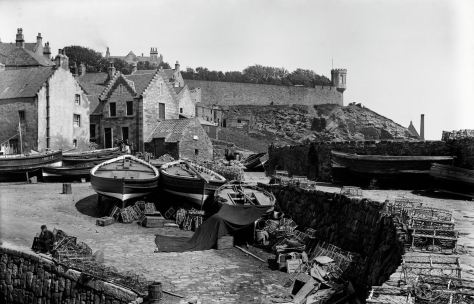
More locally to me, Erskine Beveridge (1851-1920) who was an industrialist and an amateur photographer/historian travelled widely in Scotland, documenting the building as and the people. It is surprising how little many of the places have changed over 100 years. He succeeded in his wanderings of building up a record of the places and both the important historical and domestic architecture. See Wanderings with A Camera in Scotland (Beveridge and Ferguson, 2009) for a record of his images.

Crail Harbour, Fife – Erskine Beveridge

Although all these early photographers travelled widely and took many photographs, it seems likely that for many of them this was their business. It is difficult to know now how much they were inspired by the love of exploring rather than the needs of the business. One exception to this may have been John Thomson (1837 – 1921) who travelled in China and was fascinated by the place and the culture, taking images of both scenery and the people.

John Thomson
John Thomson

Travel in this period was difficult, expensive and the cameras were all large, heavy, and cumbersome. They all initially used wet collodion plates, which needed to be developed immediately, and even when that technology moved on, glass plates were fragile, and many were broken in transit. In reality, it is surprising that we have as wide an archive of the early photographers travels as we do.

Unlike later photographers these images are about the specific place. They are rarely loaded with emotion. They tell a story, but it is limited. It says, “I went there”, “I did that”, “I met those people (usually the well-off)”. They showed the strange and different, the things that would excite the people who had never travelled. The images that would sell. And the images that would make their names by being included in important research publications such as those of The Royal Geographical Society.  The Victorians and early 20th century population had just started to travel en masse. It was no longer kept to the very rich. They wanted to see where they might go. They wanted souvenirs. They liked the picturesque. Catering to this need was the reason many of these images were made. Nowadays, they are historically interesting. The changes over time are important to see. Sometimes, like the `Burke images of war in Afghanistan they give a frightening view of how things have not changed. But they come from a different mindset and type of photography than the journeys that are taken now.

References:

Beveridge, E. and Ferguson, L. M. (2009) Wanderings with a camera in Scotland: the photography of Erskine Beveridge. Edinburgh: RCAHMS.

Burke, J. and Norfolk, S. (2011) Burke + Norfolk: photographs from the war in Afghanistan by John Burke and Simon Norfolk. Stockport: Dewi Lewis Publ.

Francis Frith: Old Photos, Maps, Books and Gifts (s.d.) At: https://www.francisfrith.com/uk/ (Accessed 22/07/2020).

Gordon, S. et al. (2013) Cairo to Constantinople: Francis Bedford’s photographs of the Middle East. London: Royal Collection Trust.

Khan, O. (2002) From Kashmir to Kabul: the photographs of John Burke and William Baker 1860-1900. Munich: Prestel.

Lowe, P. and Norfolk, S. (s.d.) Burke + Norfolk – In conversation. At: https://www.simonnorfolk.com/burkenorfolk/conversation.html (Accessed 22/07/2020).


IAP to Level 2 Discussion Meeting

The IAP group had a very useful crossover meeting with people who had done some level 2 courses to discuss the options in more detail than is easily available.

Present were:

  • Zoe, Iain, Caroline, Julia and Michael from IAP
  • Lynda W., Lynda K., Andrew, and Simon from level 2 and 3

We discussed all the options available in some detail. Everybody seemed to have enjoyed the ones they had done. Simon was particularly enthusiastic about DIC! Everybody said to be aware that Level 2 involved more research and reading and generally less practical work and it was easy to go down the ‘rabbit hole’ of research (a problem I have at the best of times).  There is opportunities in all the courses to investigate things you are specifically interested in, such as archival work, abstracts, landscapes and people. There is a lot of theory involved in all of them.

Everybody said that the courses are not defined by the titles and you can ‘bend’ them to fit your particular interests.

Simon was very clear that he felt DIC was essential as it had completely changed how he looked at photography and had allowed him to become more adventurous and think more about why you take photos and what they mean. What is truth in photography? He commented that he had ended up using all sorts of media, including collage, to extend his work. He had thought it would be very 3rd person based – but it actually became very personal. Certainly not all photoshop.

Lynda W. Re Landscape, noted that the time scale had really allowed her to extend her work and think about things in more depth, crystallised her thinking, experimented with abstract

Lynda K. Reminded us not to see the genre names as boxes and pointed out that you might completely change what you were doing part way through. Landscape does not have to be outside, might be on a tabletop, or archival. Documentary is also not strictly reportage – but is being rewritten at present. Documentary needs a lot of research (but so do they all).

Andrew commented that SAO was initially very photo intensive and might (but could be done) be difficult at the present – but there is a lot of opportunities within it to meet with people and have discussions about their lives.

The big differences between Levels 1 and 2:

  • More time
  • More freedom
  • More academic work

Noted – none of us are teenagers (!) – therefore have more life experiences to help ground the work and the essays. The essays can be difficult to keep to the limits – so title and subtitle to narrow down exactly what you are talking about. Possibly write the introduction last when you know what. You want to say.

It is useful to have a side-project to work on as otherwise you might not actually do a lot of photography!

Lynda K. – gave 2 useful references

https://www.youtube.com/watch?v=ZBJR23iD5T4&t=6s

https://aub.cloud.panopto.eu/Panopto/Pages/Viewer.aspx?id=d232a5bc-0058-4472-bfd2-abed00e42582

Thanks to all the people for sharing their time.

Graham MacIndoe

Interview with Graham MacIndoe by Street Level Gallery, Glasgow 16/7/20

Graham gave a long discussion about his background and his work. In summary:

  • Born in Scotland but now works as an associate university professor of photography in America.
  • Early influences were punk rock, protest music and protests against racism (late 70’s, early 80’s)
  • Initially studied painting at Edinburgh Art College
  • Started taking photos on a trip to New York and has never stopped since, carries his camera everywhere he goes
  • Went to Ireland and photo’d a horse fair (recently released on Café Royal
  • Likes being both in the middle of the action and finding the quiet places on the outskirts
  • Always been intrigued by people, the expressions on their faces, the weird moments
  • Initially not interested in commercial work but got involved with it – money – drugs – Coming Clean & Chancers, dicussed at length in Coming Clean
  • Took pictures throughout drug scene but doesn’t show the pictures he took of other people – ethical dilemma
  • Just take the pictures – put them away – may make sense later and fit with others to make a piece of work
  • Early pics are relevant to your life, chunks are missing, but use what you have
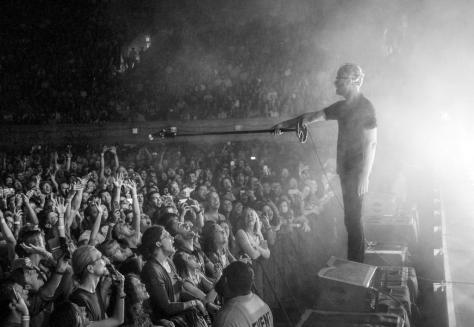
  • Went to concerts, got backstage passes, now works a lot with band The National.
  • Interested in running – so takes pics of that
  • Protest photography ongoing – been involved since early days – feels that most of the images should come from the Black photographers
  • Racism/ colonisation/slavery/poverty/injustice/incarceration needs to be addressed
  • Quoted Robert Frank – black and white are the colours of hope and despair
  • Documentary – are we overwhelmed by all the images. Much is just wallpaper. Need to engage – but how much effect does it really have
  • Everybody lives in their own bubbles
10_6_2017-The-National-Forest-Hills-10008272-1024x708
© Graham MacIndoe

Suggested photographers to look at:

  • Kirsty MacKay
  • Matt Black
  • Neil Greer
  • Disturb (?)

Advice:

  • If you are passionate you will get there
  • Make pictures all the time
  • Just keep on shooting
  • Engage with the world to find out how your personal trauma fits in
  • Who are you making things for?
  • What’s the takeaway?
  • You want people to think about what you have done

Penny Klepuszewka

005
Living Arrangements 05 – © Penny Klepuszewka

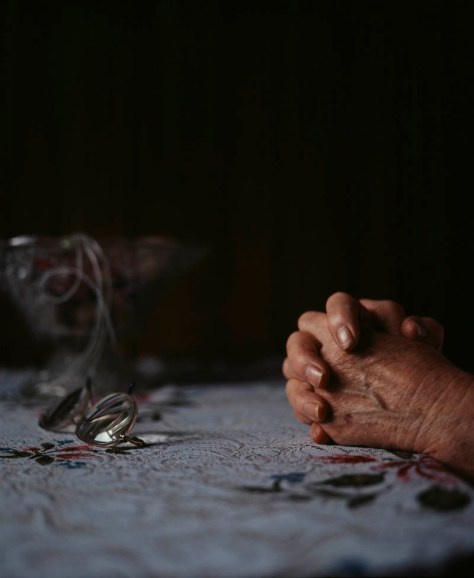
in Living Arrangements has considered the changing social face of out time which leads to many elderly people living alone. She says in her artists statement ‘The home is often regarded as a place of shelter but for some in later life if can decode an island of isolation’ (Penny Klepuszewska, s.d.) . In this series she uses small details, barely visible against a black background to show what might be present in someone’s home. There is a folded blue rug, part of a cooker, remains of a meal on a tray, and, most poignant of all, folded hands on a lace cloth with a pair of glasses. The images are gentle but telling. They describe a visual isolation that is terrifying but unfortunately common. The black emphasises the isolation, the paucity of the images that the elderly are often invisible in our society.

Reference:

Penny Klepuszewska (s.d.) At: https://www.newcontemporaries.org.uk/2007/artists/penny-klepuszewska (Accessed 17/07/2020).

Research point 2

Historically, still life was considered to the lowest ranked genre within art. Up to the 20th century art was often ranked according to its perceived cultural value. This ranking tended to follow the hierarchy developed by Andre Felibien (1619-1695). History (or mythological) paintings ranked highest, followed by portraiture (including self-portraits), genre (scenes showing everyday life), landscape, then still life. Still life was considered lowly because it was ‘devoid of human figures and more demonstrative of artistic skill than imagination and intellect’ (Huntsman, 2016). The images were often small and hung in private spaces rather than on grand public display. However, there have been multiple examples of famous still life paintings over the years ranging from the vanitas images of the early Dutch and Flemish artists to Frida Kahlo’s Viva la Vida, painted in the last year of her life. Still life continues to be a rich subject for exploration today.

In photography, still life images were some of the first explored, simply because they were still, and therefore relatively easy to portray with the long exposures needed. Talbot demonstrated images of vases in The Pencil of Nature and Anna Atkins cyanotypes showed a wide range of botanical specimens. More recently, Mapplethorpe, who is probably better known for his portraiture, produced a stunning series of still life photographs, mainly of flowers, but also of the traditional memento mori object of a skull.

© Estate of Robert Mapplethorpe

Still life can be used as a formal series without including other genres or mixed with portraits and landscapes to broaden the story. A recent example of this is the work by Øyvind Hjelmen (Hjelman, s.d.)who, in his recent work, Moments Reflected, shows an unexplained cone on a desk, and a lightbulb hanging from a ceiling amongst a series of hazy images of people and animals. He is (according to Laura Serani in his artists statement) telling about the past and the present, memories and dreams. Another example of this mixture of still life, portraits and landscapes is shown in Bed and Breakfast by Susan Lipper .

© øyvind hjelmen

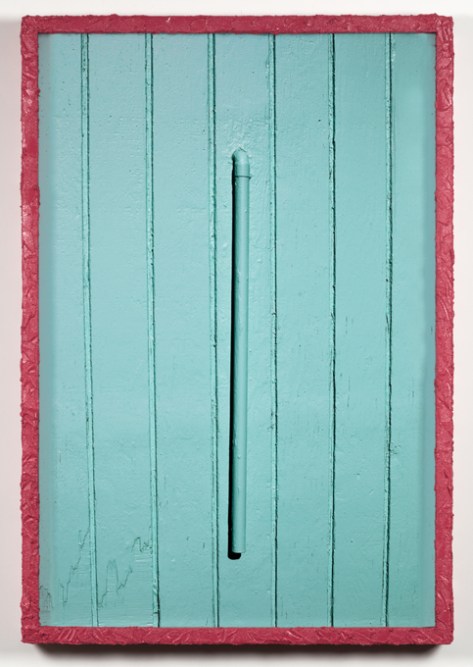
Still life images can be made from ‘found objects’, used as they are, in their environment, such as in Making Do and Getting By by Richard Wentworth and Dingbats by Chris Wylie (Wiley, s.d.) where he takes images of close-up details seen on buildings and objects and shows them in a  formal setting against a vividly patterned frame. He says ‘ the works in this series are concerned, at least in part, with the concept of the ersatz – a descriptor of things that strive to be something other and better than they are, whose existence is defined by being like rather than simply being….Photography is like the real, but is not the real’ (Cotton, 2015).


Dingbat – © Chris Wiley

Other photographers choose to take the objects out of the environment and make elaborate ‘sculptures’ which they then photograph. Sarah Lynch with her carefully balanced objects, suspended with wire and thread and the Laura Letinsky images of left-over things and torn out, repurposed items show this. Another example is the work of Tim Brill (Brill, s.d.) whose Still Life series draws of 17th Century Dutch and Spanish masters. On his website he says, ‘The term Still Life is essentially oxymoronic and in this body of work I look to animate that stillness by removing the quotidian nature of the objects’. He uses fruit and vegetables set against a simple black background on a marginally visible dark surface. Sometimes the items are suspended, sometimes lying on shelves. The colours are intensely vibrant, almost unreal. In a further series Teddy Bear he uses a similar technique and places an old teddy bear with a variety of fruit, broken toys, a skull. He then adds a simple statement is a chalkboard style typeface such as ‘is it time?’ (with the very dilapidated teddy and the skull). He describes this series as exploring the loss of innocence. Tabea Mathern undertook a personal project to produce 52 still life images, one a week for a year. She shows them all on her website (Mathern, s.d.), they vary from collections of found objects to elaborate staged sculptures. All come with the date and an explanation, some long, some just a sentence.

Week 52
Number fifth-two. My last stilllife. A year is a bag full of weird, beautiful, scary, precious, dangerous, exhausting, empowering things, people, stories and encounters. I’m thankful for it. Happy 2015! © Tabea Mathern

It is clear from this very brief overview that still life images can be used to illustrate all parts of life, from childhood to extreme old age, from dreams to memories. A rapid Google search came up with 4,660,000,000 results and an almost equally massive number of images. Most (at a quick scan) seem to be the classic images of fruit, jugs, silverware and skulls. Many of the colours are luscious, the backgrounds often dark. If I am going to add anything of meaning to this array it needs to be personal, to represent something that I care about, and something that will add extra value to the topic. A big ask, but worth exploring.

References:

Brill, T. (s.d.) TIM BRILL. At: http://www.timbrillphoto.com/index.cfm (Accessed 16/07/2020).

Cotton, C. (ed.) (2015) Photography is magic. New York: Aperture.

Hjelman (s.d.) Oyvind Hjelmen. At: https://www.oyvindhjelmen.com/ (Accessed 16/07/2020).

Huntsman, P. (2016) Thinking about art: A thematic guide to art history. Chichester, West Sussex, UK: Wiley Blackwell.

Mathern, T. (s.d.) STILLLIFESTORIES. At: https://tabeamathern-stilllifestories.tumblr.com/?og=1 (Accessed 16/07/2020).

Wiley, C. (s.d.) Chris Wiley – Dingbats. At: http://www.chriswiley.net/index.php?id=works/dingbats (Accessed 16/07/2020).


Susan Lipper

Susan Lipper is an American photographer. The majority of her work has involved travelling around America to record the events that can occur in the rural areas, playing on the trope of the documentary travel photography and the cross-country travelling that frequently occurs in American photography. Much of her work has centred around the small area of Grapevine Hollow in the Appalachians, where she initially took a series of images of the houses and the people between 1988 and 1992. The images are black and white, sparse and do not glamorise the area. She clearly had a good relationship with the people although I suspect outsiders are rarely welcome. She returned to Grapevine between 2006 and 2011 to make a further series Off Route 80 (Lipper, s.d.).  In contrast these images show the countryside, still in black and white. They remind me of the images by Robert Adams in An Old Forest Road (Adams, 2017). Few show any traces of life other than rough tracks. One shows a motorway (freeway) bridge – presumably the eponymous Route 80. Between the two series she tells the story of a place that is, to an extent, left behind. The cover image for the book Grapevine (Lipper, 1994) shows a deer, hung from a baseball hoop, with cars and a house in the background.  Another image shows a smiling girl with her Halloween pumpkin, yet another a snake on a bed. According to O’Hagan (O’Hagan, 2010), while her characters are real, the scenarios may often be staged. It tells about the poverty and the background of alcohol and violence that this both causes and contributes to.  There is a tension in the images, anything could happen. In the book Lipper also records some of the conversations she had with the people, a narrative to give depth to the story. When talking about the later images she describes then as ‘Nature viewed as lush and enveloping—almost biblical, a found Eden. However also lawless, scary and threatening.’ (Williams, 2009).

untitled
from Grapevine © Susan Lipper

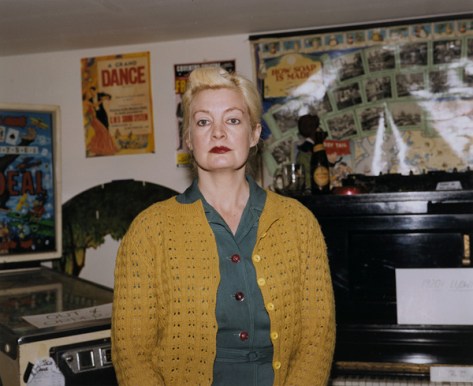
Bed and Breakfast  (Lipper and Chandler, 2000) is a very different series, it is in colour, it is much gentler on the surface. The book was made as a commission by Photoworks in response to the George Garland Collection of photographs of rural England. The images seem old fashioned and out of place for the time (1998) and place (West Sussex). Some remind me of B & B’s I have stayed at, the folded towel, the kettle. Others are somewhat disturbing; the picture of the groping hands on the wall, sex scratched on the bathroom door, the terrifying landlady. This is a place I grew up in, a time I have lived though, but I find it surprisingly difficult to recognise.  As Chandler notes in his introduction to the book ‘Lipper’s account of West Sussex is a purely subjective one, it is her response to a particular formation of English country life. Others will inevitably see things differently’. I am one of those who remember it differently.

bb_06
from Bed and Breakfast © Susan Lipper

References:

Adams, R. (2017) An old forest road. Exhibition. Köln: Walter Konig.

Lipper, S. (1994) Grapevine. Manchester: Cornerhouse.

Lipper, S. (s.d.) Off Route 80. At: https://www.susanlipper.com/or.html (Accessed 15/07/2020).

Lipper, S. and Chandler, D. (2000) Bed and breakfast. Maidstone: Photoworks.

O’Hagan, S. (2010) ‘Myth, Manners and Memory: Photographers of the American South | Photography review’ In: The Observer 02/10/2010 At: https://www.theguardian.com/artanddesign/2010/oct/03/myth-manners-and-memory-review (Accessed 15/07/2020).

Williams, V. (2009) ‘Susan Lipper, Collisions of Experience’ In: Photoworks May 2009 (12) pp.56–57. At: https://www.susanlipper.com/text_gv_williams.html (Accessed 15/07/2020).