All posts by scottishzoe

Richard Wentworth

Richard Wentworth was originally a sculptor who used the everyday world as his model and his photography uses the same source. He looks at the objects found in the environment – often incongruous- and makes them into a piece of work that describes the place and time.

index

In an interview with Ben Eastham (Eastham, 2011) he talks about observational intelligence. ‘that’s something of what an image is – it has to have a component which is unaccountable, which sweeps over you.’ He thinks (I think) that we are made up of instinct and curiosity – which sometimes work against each other. That we recognise the spatial environment and respond to it unconsciously, use things as we need them. That words (and their origins) are important. That things happen to him.

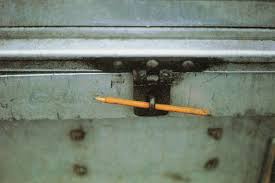
The work Making Do and Getting By (Wentworth, 2015) documents small found sculptures where an item has been used beyond its intended purpose (a boot as a door wedge), something that has been mended with  a purely functional method (twine or gaffer tape to fix an open gate), a pencil to secure a lock. The images tell a story, not so much individually, but en masse, a story of the practicalities of everyday living. A story about the people who make and mend. A story of what you do to fix the small inconveniences.  A quick walk around my local neighbour can produce similar images. As can my house. Flowers from the roadside in a plastic water bottle. The difference is that he sees them and records them.

IMG_7361

References:

Eastham, B. (2011) Interview with Richard Wentworth. At: https://www.thewhitereview.org/feature/interview-with-richard-wentworth/ (Accessed 07/07/2020).

Wentworth, R. (2015) Making do and getting by: with an interview by Hans Ulrich Obrist. London: Koenig Books.

Project 1 – Reflection Point

Is the photographer a historian or a storyteller? Why can’t they be both? History is telling stories. Well, stories that are supposed to be factually based. But the facts are always picked by someone – famously the victor. And then the facts are made into a story. That story gets repeated over and over, changing slightly with each iteration until the people that were involved in the original event might well not recognise themselves. A storyteller uses facts to make up something different deliberately. But any good story, one that is worth reading holds a kernel of truth. It has come from something the writer sees to be true. It might even be a history, a story of a journey. The most important thing is being honest. You do not need to be explicit with the reader, but you should not tell lies. Is it history (a straight factual documentation of an event)? If so, it should be as accurate as possible – but even then, your own interpretation and views will colour it. Is it a straight factual piece, a half-way house, your feelings on something? That is fine – as long as you do not          pretend otherwise. Is it a complete fiction? Also fine, fiction can tell as deep a truth about an event as fact.

Where do I sit? I think that straight factual telling of an event is easier. It, usually, takes less of a personal emotional toll on the photographer.  When I look at photobooks the ones that grab my attention, the ones that I want to emulate have a fictional component. The images tell a story. Do not get me wrong – I like straight documentary too.

Can I make a story? You need the ideas first. Can I take some documentary images I have taken and use them to form the start of a story? Can I blend fact with fiction? My personal history with events in the world?  I certainly do not just want to be a documentary photographer. Even with the subjects I know best and am most interested in. It is the storytelling aspect that holds me. The subtle changes that include the emotion. This is a topic I need to explore.

-2006_untitled006006

Where is this? What is happening? What does the storm portend? Whose house? There is not anyone there – but that leaves it open. What is next?

William Eggleston

William Eggleston is said to have interpreted his surroundings by the objects they contained rather than by the people. His pictures are often thought of as being devoid of people – however a look at the website of his foundation shows that this is far from true. See: http://egglestonartfoundation.org/

cocktail
© William Eggleston

His images are brightly coloured and are often about the small details. On the front page there are images of a car (and its advertisement),  a deserted shop (possibly a diner), 3 light fittings (on varyingly coloured backgrounds), landscapes (including a beautiful image of either coloured leaves or blossom), road signs, a glass on an aeroplane table, stuff on (probably a kitchen) table , dolls, a bowl of fruit, as well as six pictures focusing on people and another car. This covers most of the possible subjects of photography. The difference is that he thought to take these varied images in colour at a time when the norm was black and white and mainly either street images or formal photography, carefully considered and correctly viewed. I am not suggesting that Eggleston did not carefully consider each of his images – just that his eye for what made an image was different. His images use the items to tell about the place. The image of  the glass on the aeroplane table immediately makes me think of holidays, travel, excitement, and also fear – but it is a very simple image utilising the light coming in the window. Eggleston is said to have ‘legitimised’ the use of colour in art photography when, up to that point, it had mainly been used in commercial work. He used a dye-transfer printing process that gave vivid colour and makes things look hyper realistic. His images are often of the ‘ordinary world’, things left on the pavement, broken items, street signs. His composition includes skewed lines, odd perspectives, and unlikely items.

In the introductory essay to William Eggleston’s Guide (Eggleston and Szarkowski, 2014) by John Szarkowski which was initially published in 1976, Szarkowski is dismissive of the use of colour in most photography, for instance comparing it to paintings ‘ it is their unhappy fate to remind ups of something similar but better’ (p.9) and ‘Most color photography, in short, has been either formless or pretty’. But he goes on to say that the best of modern colour photography ‘derives its vigour’ from taking images of ‘commonplace objects’, the things found in life, the people and the ordinary places, ‘visual analogues for the quality of one life. This certainly describes Eggleston’s work. The book instantly takes you back, to mid last century America, neither rich or particularly poor. The life of the ordinary person. He does not make fun of it, it is a simple statement – this it what it is. The bikes and the cars, the barbecue, the rubbish in the streets. This is the way at it was.

Eggleston’s lifestyle was eccentric, he was rich, southern and did not need to work. He plays the piano, draws, paints and almost incidentally takes photographs. There is a fascinating extended interview answered life story by Sean O’Hagan (O’Hagan, 2017) which describes how people were originally offended by his work both because of the colour and the subject matter. The ordinary world. The world most people inhabit.

References:

Eggleston, W. and Szarkowski, J. (2014) William Eggleston’s guide. (2nd ed.,) New York: Museum of Modern Art.

O’Hagan, S. (2017) ‘William Eggleston: ‘The music’s here then it’s gone – like a dream’’ In: The Observer 19/11/2017 At: https://www.theguardian.com/artanddesign/2017/nov/19/william-eggleston-interview-i-play-the-piano-musik-photography (Accessed 06/07/2020).

IAP group meeting – 04/07/20

Present:

Zoe, Caroline, Debra, Julia, Ben and Michael, apologies from Mark.

We started by welcoming Michael who is based in Cambridge and has just sent in A4 and plans to go for assessment in November.

There was some discussion about tutors and their role. We would all like more input, although we are aware that they are only paid for specific work around doing a report on the assignments. Everybody prefers face to face (well, on-line) reports rather than just a written feedback as it allows a fuller discussion about the pluses and minuses of the work together with what can be improved (and possibly how). We noted the very useful zooms from Andrea Norrington (links available on IAP Padlet and next one on 15th July) and also the library webinars (also see IAP Padlet). We all also found the recent zooms from Anna Fox and Susan Bright inspiring. I reminded people about the Scottish Group – we are having a zoom meeting on 07/07 at 1900 as we have missed our usual meeting due to lockdown.

Reports:

Zoe – just sent in A4. Work on family memories using archive photos. Caroline and Julia were both positive about it although somewhat conflicting views – Caroline liked the chronological theme, Julia wondered if it would be better random! This led onto a long discussion about family work generally, and the making of family trees. We discussed that many of us have boxes of family photo in attics or garages, what will happen to all the memory photos when they are all taken digitally and not printed? Will they just disappear? Should we make summary photo albums for our descendants?

Caroline – just sent in A5 (!). Fascinating work on memories and the loss of a previous home (Dubai). She noted that she had wanted the work to be more about the emotions of the place rather than specific images. I (Zoe) found the research fascinating especially the photographers she used and will go back to them in more detail. The video was a new move for me – worth investigating further. She had also made a 3D Art Gallery to show all her work. This gave a great overview of the course – but some of the posted videos were glitchy.

Ben – has mainly been working on his CN assessment. He found the digital assessment worked well for him although he did have to go back over his blog posts and rewrite some for the learning outcomes. He told us about the assessment

  • Work related to the learning outcomes with 2 pieces of work to demonstrate each, these can include things that did not go so well and how you improved them.
  • 6 – 12 creative pieces
  • Tutor reports
  • An artist’s statement

This is a significant change in that we are responsible for making the decisions about what we think is good! And also working out whether or not we have met the learning aims and how to demonstrate that.

Ben – sent in A1 – which is his work based on the photos he took at the Glasgow City Mission. Do note, taking pictures of strangers is Ben’s job – so unlike the rest of us he did not struggle with that. We discussed a number of strategies we had used

  • Bribing with cake
  • A dog making the initial choice of person
  • Using Facebook groups to link with local people
  • Putting notes through doors

Debra – has now submitted A1 and got immediate feedback. She used the Facebook page for her contacts and took people on their doorstep using a standard set up of lens and tripod. She found talking to the people she met the most interesting thing. She is planning to continue the Covid 19 theme throughout her IAP work. Of note, it may change as lockdown eases/lifts – but these will still be a before/during/after theme available.

Michael – submitted A4 (canals and newspaper headlines). It expressed what he feels about the present situation with Brexit. Is now working of A5. Thinking about doing work related to his family and words they use to describe themselves

Julia submitted A4 and working on A5. She lives in North Norfolk where her husband has strong roots. She has been listening to a poet she knows (Kevin Crossley Holland) and is thinking about a mixed media presentation, including photographs (possibly overpainted with watercolours) and some video work. She noted that she herself is rootless – due to her family history of refugees. That took us back around to the idea of roots and family and a photographic response to that.

Most of this group are nearly at the point where we will need to choose our Level 2 modules and we are all conflicted

  • Julia – possibly moving image and landscape
  • Caroline – possibly landscape and self and other – but interested in all
  • Zoe possibly self and other and documentary or DIC
  • Michael – documentary and landscape
  • Ben – movie and documentary

We all agreed that it would be useful to have more info on all the courses so thought we would set up a specific zoom meeting to discuss them further and hopefully invite people ho were further along to talk about the pros and cons. We came up with some possible names and Caroline will try to arrange.

Planning:

  • Next general meeting for 01/08/20
  • Future planning meeting hopefully – 18/07/20

Assignment 4 – Self Reflection

Demonstration of Technical and Visual Skills:

  • The images of the still life set ups are sharp, and the background is deliberately out of focus
  • I considered both black and white and colour images. The initial pictures used as the basis are both black and white (the earlier images) and colour (the later images).
    • I considered making the whole series black and white either by changing the later of the pictures to black and white – or by making the whole series completely in black and white.
    • Overall, I decided colour gave a more accurate portrayal of how I am feeling at the moment and the pictures were varied  however black and white would give more consistency.

 Quality of outcome:

  • Getting the images without reflection was difficult
    • I ended up removing the plans from the frames
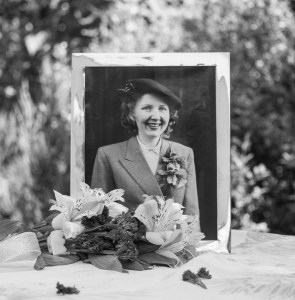
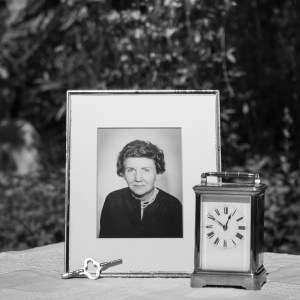
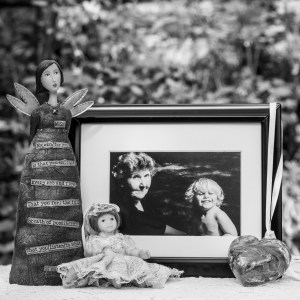
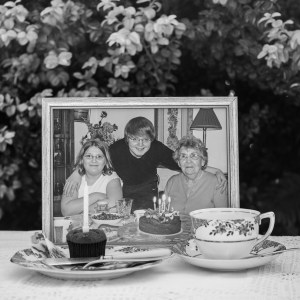
  • The light was variable – it would have been easier to do these as indoor still life’s where I had total control, but I wanted to do them outside to reflect on my Mother’s love of gardens

Demonstration of creativity:

  • I spent considerable time planning this exercise both in organising the set ups and the necessary pre-work of searching for the pictures
  • There was a large emotional load when making and taking these images
  • They link directly with and from exercise 4.5 and would be better seen together

Context:

  • The assignment was based on the work done in part 4
  • The work sits within the framework of memory and families and I have done reading around this (referenced in the research).

Assignment 4 – My Mother’s Pictures

Assignment 4 asked for a series of images that were informed by and developed from text.

Research:

Much of the work for assignment 4 is based on the reading that I have been doing in and around Part 4 of IAP. I have read several books on memory and how it can be portrayed in photography, specifically  Geoffrey Batchen – Forget Me Not(Batchen, 2006), Marianne Hirsch – Family Frames (Hirsch, 2012) and Annette Kuhn – Family secrets (Kuhn, 2002). Non of these were directly related to the use of text with images, but they all talked about memories and identity and how this can be shown in images. This was relevant to me as I chose to focus on my mother, her memories (Exercise 4.5 – My Mother’s Memories) and my and other people’s memories of her (assignment 4). I have also been reading A.S Byatt’s book (Byatt and Harvey Wood, 2009) on memory for interest and background information about how our memory works.

For more specific photographic work on using text with images I looked at Time in New England  by Paul Strand and Nancy Newhall (Strand and Newhall, 1980), Anna Fox has done much work that involves words such as My Mother’s Cupboards and My Father’s Words, (Fox, 1999) Work Stations, and Cockroach Diary (Fox, 2000),  Aaron Schuman – Slant (Schuman, 2019)and the work of Sharon Boothroyd/YoungDavid Favrod    – Hikari (Hikari, 2015) based on words he heard his grandparents say about their history in Japan. This influenced the work in exercise 4.5.

I have also recently looked at the work of  Zarina Hashmi – Home is a Foreign Place who , when she was wanting to make a piece of work that helped her understand her feelings about her childhood home, took a series of words in Urdu that made her think of home, had them written out in Urdu script and then illustrated them with wood cuts which she made into a grid.  This piece made me think of the use of single words that linked to a memory and that could be illustrated with images.

Practice:

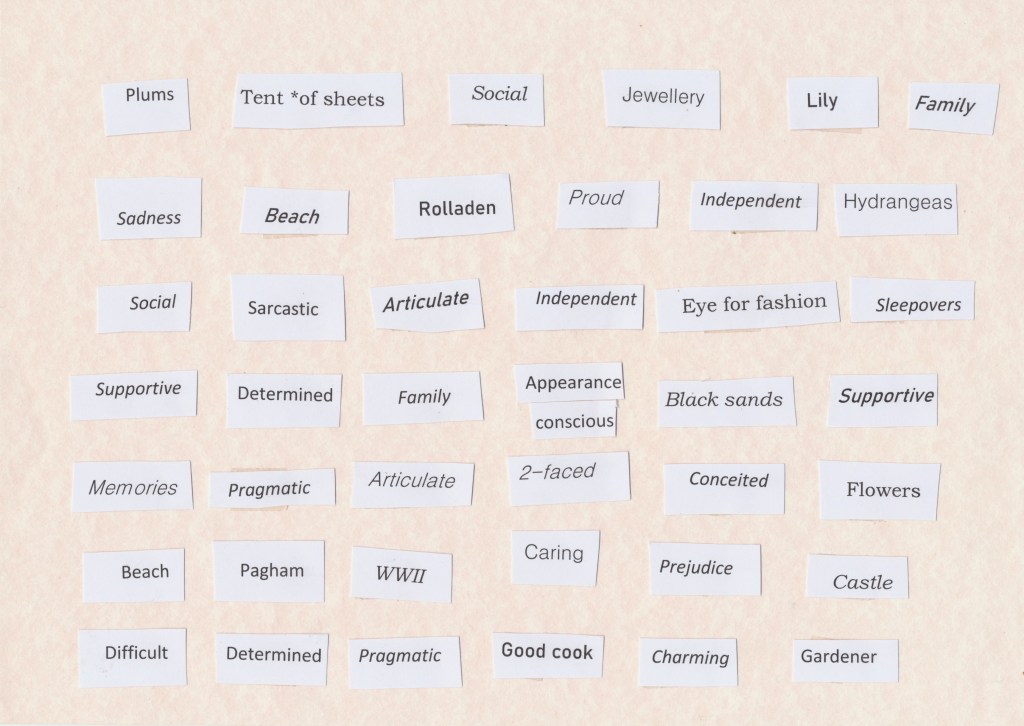
I am very aware that I have few exact memories of my mother, far less than I feel I should have, so decided to explore this.  I started by using her words and memories in in Exercise 4.5 – My Mother’s Memories to produce a video and an album. I then decided to explore this further by using words triggered by the family’s memories of her to produce text to base images on.  The details of how I obtained the text words used is described in Assignment 4 – Initial Thoughts.

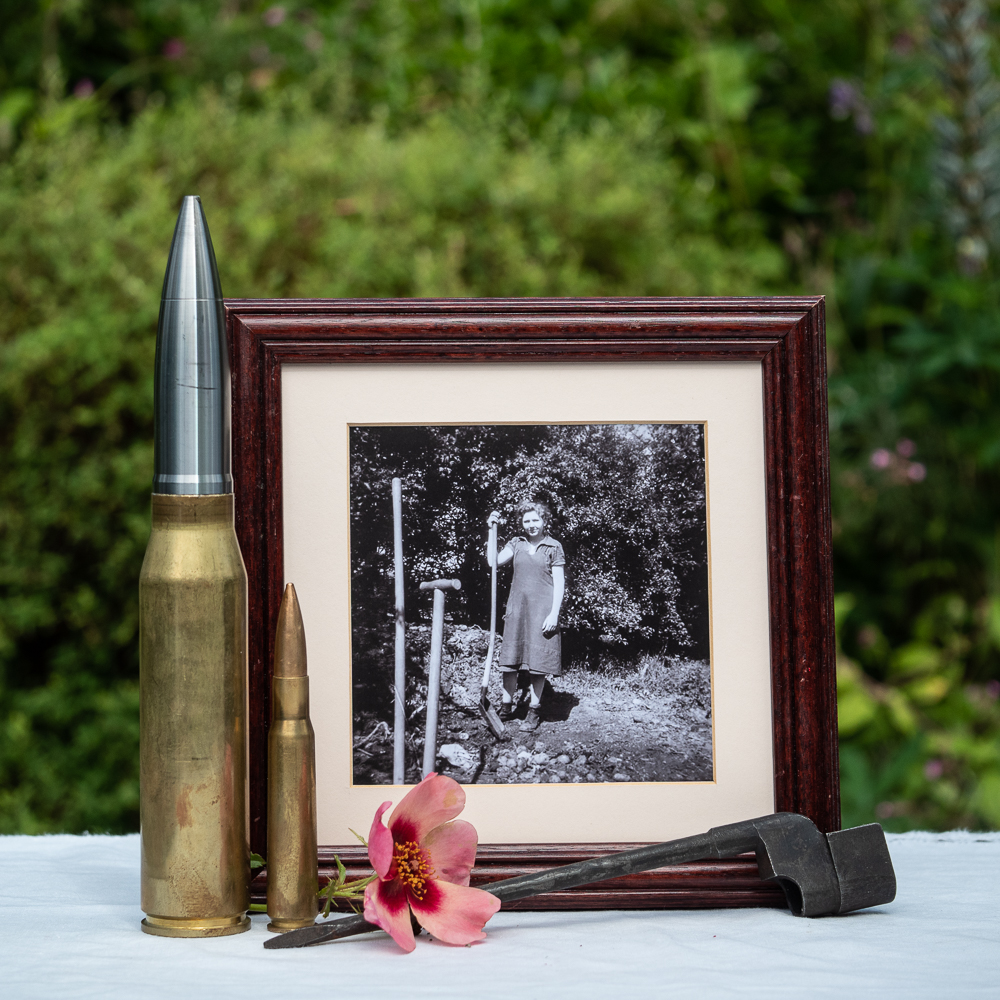
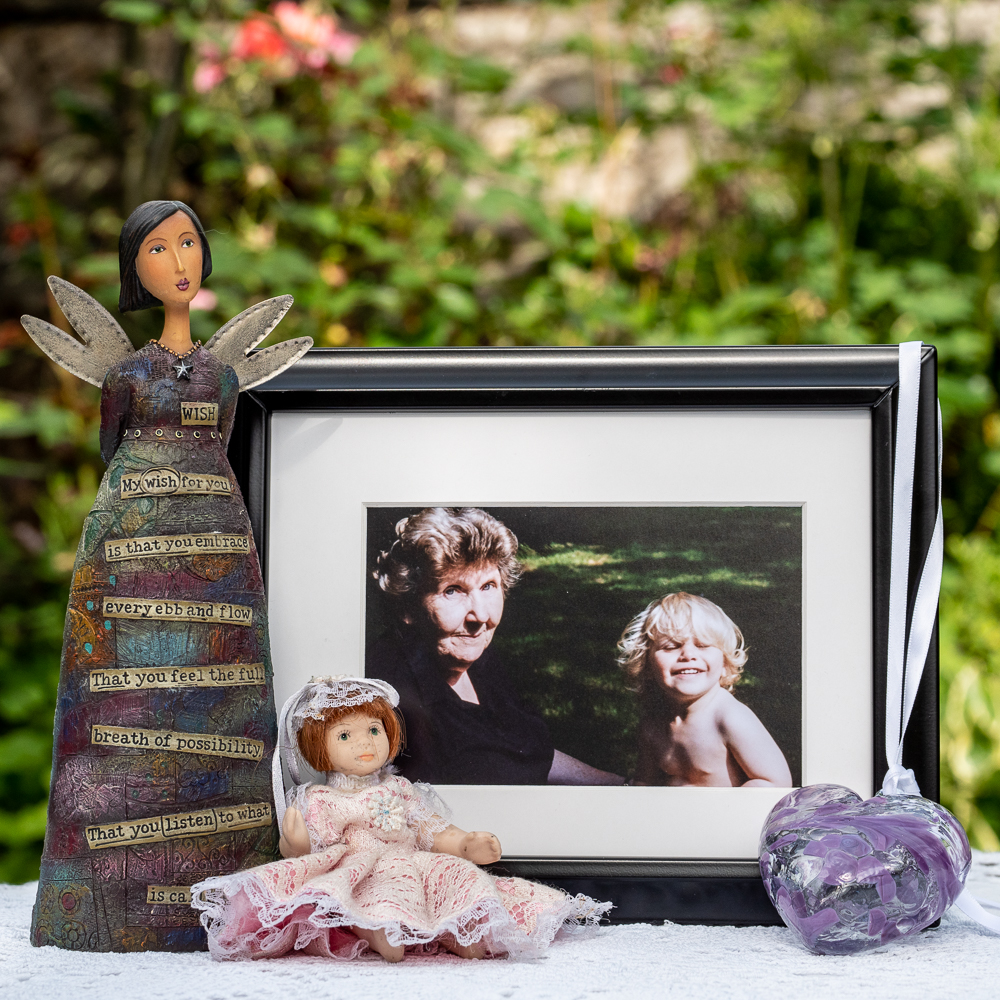
Having acquired the words, I grouped them into categories. This is detailed in Assignment 4 – First images.  I then looked through both my mothers and my old photo archives to find images that showed her at important parts of her life. While looking for these images I found an image of my grandmother and a family shrine they had set up after her death. I followed this idea and made a series of still life images that included a picture of her and some relevant items (my mother’s when possible). As many as possible of the images and frames are the original ones, but some of the pictures were so small that I had to scan them and enlarge them to enable the detail to be shown. I took the images outside as the garden was always her favourite place.

Images:

Child
Articulate
Scholar
Beach Baby
Land Girl
Gardener
Pragmatic
Pragmatist
Caring
Carer
Socialite
Matriarch

Learning points:

  • Sorting though archives is a very slow process
  • When re-photographing pictures in frames it is wise to remove the glass to avoid undue reflections
  • Family work takes an emotional toll
  • Still life set-ups are difficult to make without either being overly repetitive or using so much detail that it obscures rather than helps the original image
  • Adding text – here in the form of titles – is hard because the images were inspired by the word categories, and not always exact links

Contact sheets of possible images of my mother:

References:

Batchen, G. (2006) Forget me not: photography & remembrance. New York; London: Princeton Architectural; Hi Marketing [distributor.

Byatt, A. S. and Harvey Wood, H. (2009) Memory: an anthology. London: Vintage Books.

Fox, A. (1999) My Mother’s Cupboards and my Father’s Words: a short story in words and pictures. London: Shoreditch Biennale.

Fox, A. (2000) Cockroach diary 1996-1999. London: Shorditch Biennale.

Hikari (2015) At: https://www.co-berlin.org/en/hikari-david-favrod (Accessed 28/05/2020).

Hirsch, M. (2012) Family frames: photography, narrative, and postmemory. Cambridge, Mass.: Harvard Univ. Press.

Kuhn, A. (2002) Family secrets: acts of memory and imagination. (New ed) London; New York: Verso.

Schuman, A. (2019) Slant. London: Mack.

Strand, P. and Newhall, N. W. (1980) Time in New England. Millerton, N.Y.: [New York]: Aperture ; distributed by Harper & Row.

Project 3 – Fictional Texts

In Redheaded Peckerwood  (Patterson, 2011) Christian Patterson tells the story of two teenagers who went on a killing spree in Nebraska in 1956 including the family of one of them, Cyril Ann Fugate. It has inspired a film, Badlands (1973) and a Springsteen song – Nebraska.  The male, Starkweather, is said to have done all the actual killings and was sentenced to death. Fugate, now Clair, spent 17 years in prison, although claiming she was a victim, a hostage, rather than a willing accomplice. She is, at present, asking for a pardon.

Patterson has made an extensive photobook which includes places and images central to the story together with re-enactments and landscape photography. There are also images of items that belonged to the pair, together with maps and letters. The book is presented as a visual crime dossier. Much is left to the reader to interpret. The book and the individual images are available to see on Patterson’s website (Patterson, s.d.). It includes pictures and inset documents that are made to look like originals. The images are a mixture of black and white utilising various formats. Some are factual, a shotgun shell, a jackknife. Others show places, a road, one of the victim’s houses. The relevance of others is less clear, a painted sign – FRUIT CAKE – 98c, another one – Ask for ETHYL, I assume these are linked to Nebraska in the 1950’s.  The book reads as a mythical tale, a horror story, although it is a retelling of a real event, shown though images that build up and up to the final arrest. The interspersed images of fiery skies, bushes and trees that appear aflame increase the tension. The included texts, a confession, a poem (it doesn’t say who by), a list Confasius Says, increase the breadth of the work and the need to think about it. What are they saying? What does the book say about the story? What does it say about the world – both in 1956 and now?

Badger says ‘The result is not just a blurring of the boundaries between then and now, or between fiction and non-fiction, but a profound demonstration of photography’s ineffability — and also its power to resurrect a past event and make it relevant for a contemporary audience’ (Parr and Badger, 2004) . This is a better description than I can give. It is a book I would love to have.

Rubber Flapper by Michael Colvin (Colvin, 2015) is a story (fictional) about a family in the 1930’s. It was partly made in response to the cutting off access to the Alice Austin photographic archives to gender theorists, and as a voice for the LGBTQ+ community showing coping strategies. It shows constructed images, stained newspaper reports, and most telling, a letter from the (imaginary) society that holds the archives telling him to stop work. It could be real! Is it? The project talks about lack of power to tell your story which continues to be a frightening issue and is very topical in 2020. In the OCA article Colvin talks about hidden history and reminds us that all history is written by the victor, which, at this moment, in the Western world, is white, patriarchal and heterosexual and (I would add) neurotypical. He is talking about the hidden nature of the Gay population within photography – but this also applies to all minorities. He reminds us that ‘History is not facts. Facts are facts. History is storytelling from a particular point of view’.

The Fae Richards Photo Archive (Leonard and Dunye, 1996) by Leonard and Dunyeis an entirely fictional photo archive of a black film star Fae Richards. It shows her life though photographs and is entirely convincing, right though to the list of photos, with details made on an old typewriter, with blurring and a poor typeface. The images could have been taken from an archive although the are actually acted out. I particularly like 58, with Fae in Black Guns , as a gangster’s moll and 16/17 of Fae in the Garden State Park – 1933  in a typical shot with friends ( I have similar images in my mother’s archive – which would have been taken in the same place at the same time). While this book relies less on text, the list of images is crucial to making it seem real. Like Colvin’s work it is telling the story of a group of people that were widely overlooked – who knows the names of the film actresses of that era unless they were white?

All three of these pieces of work blur the lines between fiction and fact, reality and story. Patterson tells a real story in a way that could be fiction, and so makes it more real, Colvin and Leonard tell fictional stories as though they were facts.  The length and complexity of the works helps to make them real. Does it matter if a story is fiction if it tells the truth? And there – we are back to the argument about what is truth and how do you portray it.

References:

Colvin, M. (2015) Rubber Flapper. At: https://www.oca.ac.uk/weareoca/photography/rubber-flapper/ (Accessed 01/07/2020).

Leonard, Z. and Dunye, C. (eds.) (1996) The Fae Richards photo archive. San Francisco: Artspace Books.

Parr, M. and Badger, G. (2004) The photobook: a history. London: Phaidon.

Patterson, C. (2011) Redheaded Peckerwood. London: Mack.

Patterson, C. (s.d.) CHRISTIAN PATTERSON | Redheaded Peckerwood (2005-2011). At: http://www.christianpatterson.com/redheaded-peckerwood-info/ (Accessed 01/07/2020).

June Reflections

I don’t seem to have done a reflection at all this month. I have been struggling to work or concentrate still.

Reading and watching:

  • Finished reading Michael Freeman – The Photographer’s Eye –a useful reminder of what I covered when I initially did TAOP several years ago
  • Memories – AS Byatt – lots of essays on memory – useful general reading especially in context of IAP
  • Watched the Susan Bright lecture and the following zoom – very interesting – separate post on that
  • Aaron Schumann –Slant – again a post done
  • Watched Anna Fox zoom and wrote up
  • Read Batchen Forget Me Not very relevant for the work I am doing for A4
  • Read Paul Strand New England and posted
  • Watched a talk by Margaret Mitchell done by Street Level – wrote up and posted

Thinking and doing:

  • Attended study visit for London’s Hottest postcode – written up
  • Finished MoMA Coursera on Modern Art – very useful as background knowledge, mainly painting based but did discuss some photography such as Migrant Mother , gave me some useful ideas about emu of text
  • Redid A3 following tutor report
  • Transcribed tapes by my mother for my work on Exercise 4.5
  • Zoom meeting with IAP group. These are very useful . Posted full report to IAP Padlet

Photography:

  • Made up video of Mother’s word and images for Exercise 4.5
  • Printed images and made up album as above
  • Sorted out images for use in A4
    • Printed out
    • Randomised words
    • Made a series of images of ‘still life ‘setups – this took ages as had to keep redoing, steep learning curve here.

Assignment 4 – First images

Having looked at length at the words collected for A4 I realised that there were several duplicates and others that grouped together:

Scan_20200628 (2)
  • Beach, Black Sands and Pagham – are all talking about the seaside
  • Jewellery, eye for fashion, appearance conscious – all about dress
  • Flowers, lily, hydrangea, gardener – all about flowers
  • Social, plums, rolladen, good cook – about meals and occasions
  • Family, memories, sleepovers, tent (of sheets), castle, sadness – all about childhood and the past

Others are more difficult to categorise:

  • Independent, proud, determined, pragmatic, conceited are personality traits
  • Articulate, sarcastic, charming – how she presented to others
  • Prejudice, 2-faced, WWII, difficult – how she could be about others and the past
  • Supportive, caring

The first group are (reasonably) easy to picture, the second group much less so.

I then need to decide how to show case the images and link them to the words/ideas given by the words. One way I thought about was to place the images in the environment.

The difficulty with this was that we are in lockdown, and I simply could not travel to many of the places that would make sense of this as an idea; a beach, where she lived when younger (Germany and America) or even the castles she loved to visit. So more thought was needed.

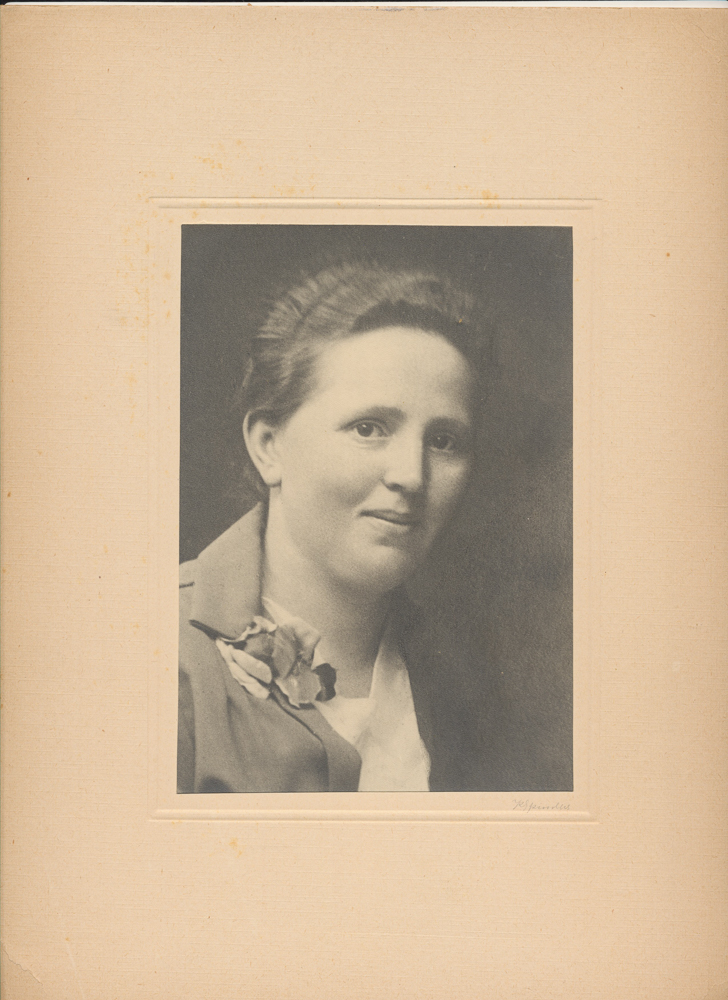
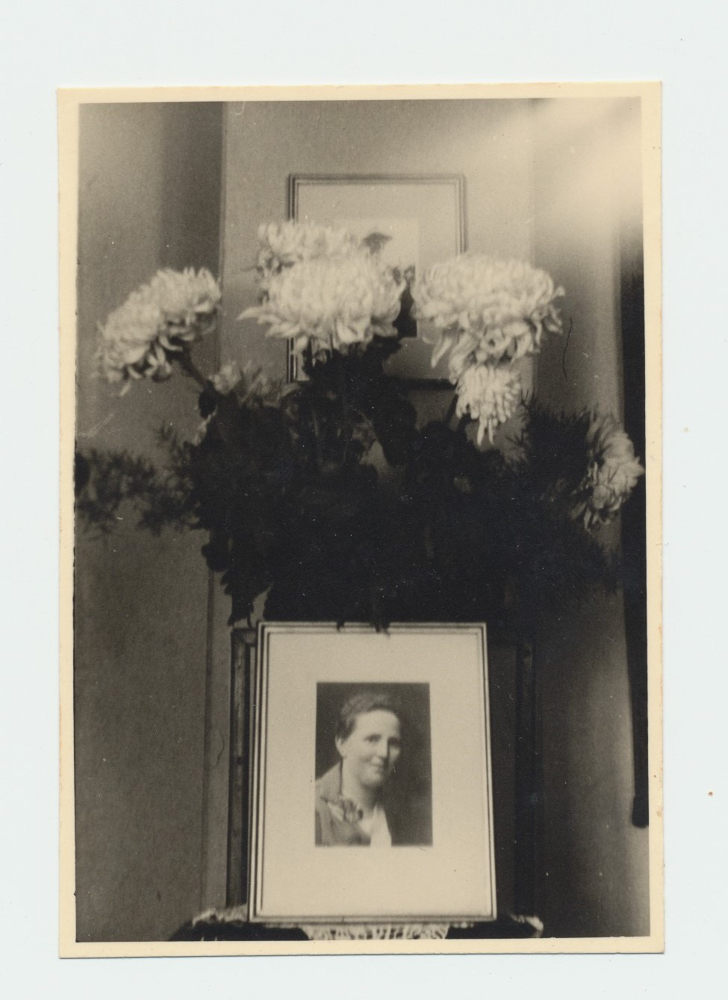
When I was looking though our old archives, I came across these two images. The first is of my grandmother, the second is of the family shrine they put up in Germany after her death in about 1948.

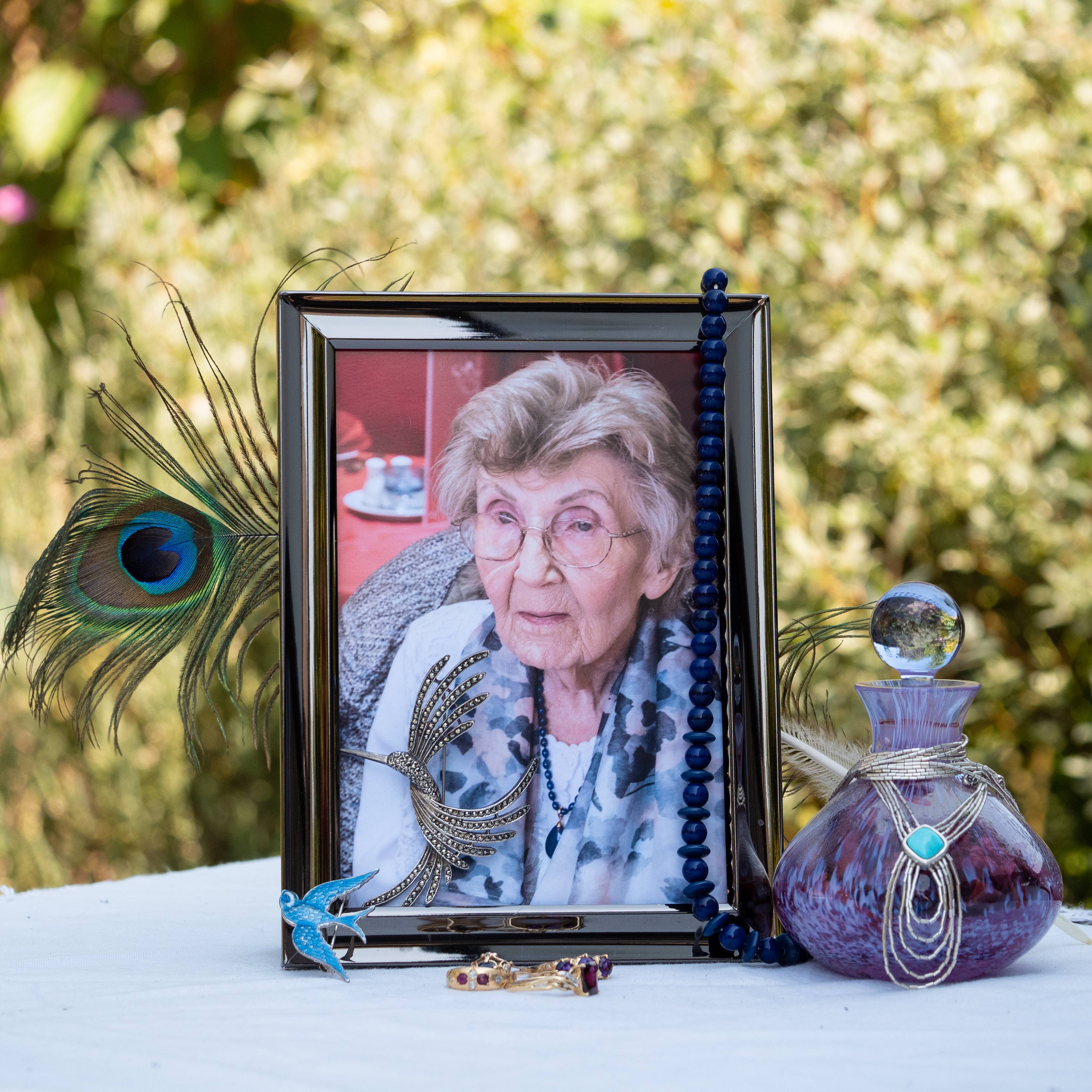
I decided to attempt to use the words and some of the pictures I had found of her to make a series of still life’s , using the old photos and items that linked them to some of the memory words. I deliberately shot the images outside in the garden as that was her favourite place.

Childhood
Childhood
The Seaside
The Seaside
Flowers
Flowers
Parties
Parties
Dress code
Dress code

This is a starting point. I have some others in mind.

Time in New England

Time in New England (Strand and Newhall, 1980) is a book by Paul Strand and Nancy Newhall that came out of an exhibition of Strand’s work in MoMA in New York in1945. The book consists of pictures taken by Strand set against the history of New England in a series of pieces of writing chosen by Newhall. It tells the story of New England from 1630 to 1945. The writing contains diary excerpts, fiction, poetry and history. It demonstrates the changes in attitudes towards people, nature and race over the years. Some of the writing is horrific, at least to the modern ear, some is gentle, and some is funny. I particularly liked the information about ‘bundling’ (the process of getting to know someone during courtship by sleeping (mostly) clothes in bed with your incipient partner (p.87), the Diary of the Learned Blacksmith – who reads Arabic, German and Garlic in between shoeing horses (p.121), the poem By the Morning Boat by Sarah Orne Jewitt (p.218) and the almost final piece by W.E.Burghardt du Bois which I will quote as it is particularly pertinent today.

I dream of a world of infinite and invaluable variety; in human variety in height and weight, colour and skin, hair and nose and lip. And far above and beyond this in the realm of true freedom: in thought and dream, fantasy and imagination: in gift, aptitude and genius – all possible manner of difference, topped with freedom of soul to do and be, and freedom of thought to give to a world and build with it, all wealth of inborn individuality. Each effort to stop this freedom is a blow at democracy – that real democracy which is reservoir and opportunity and fight against which is murdering civilisation. There can be no perfect democracy curtailed by colour, race or poverty. But with all, we accomplish all, even Peace (p.248).

The images are all black and white, beautifully composed straight photography. They are interposed between the passages of writing, some link in clearly, such as the nautical images (masts, the sea) with the sea stories (passages from Moby Dick and a disastrous story of a shipwreck). Others have less obvious links. They show the countryside, close-ups of tree bark, houses, churches, and the occasional person. There are leaves and gravestones, local woodcarving (a duck), doors and windows. My favourite (today) is a very calming image of the sky over a small sliver of sea (p. 231).

Stieglitz’s famous description of Strand’s photography “brutally direct. Devoid of all flim-flam; devoid of trickery and of any ‘ism’” still stands today. His images look like what they are. A window is a window, the glass looks like glass, the wood like wood. The images are clear and serene. Calm and quiet. They bare repeated looking, or rather demand it, even so many years after his death and all the changes in style that have come since.

The book is an exemplary example of the use of both words and text to tell a story. The images are not directly illustrative. The words are not simply descriptive. The two together are synergistic – greater than the sum of the parts.

Reference:

Strand, P. and Newhall, N. W. (1980) Time in New England. Millerton, N.Y.: [New York]: Aperture; distributed by Harper & Row.