All posts by scottishzoe

Max Kozloff – The Theatre of the Face

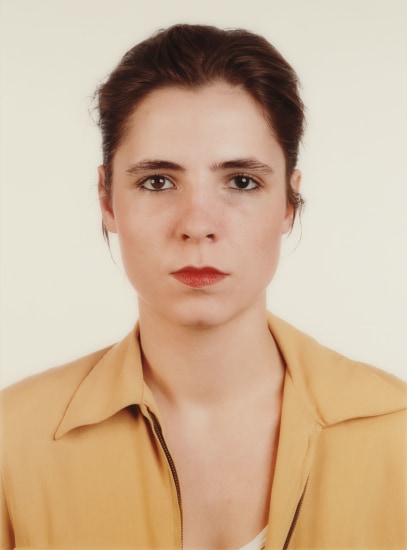
© Thomas Ruff

I have just finished reading (and taking extensive notes on) The Theatre of the Face by Max Kozloff. It is one of them suggested course books for IAP and talks extensively about photographic portraiture in the 20th Century (just overlapping into the 21st).  It is a heavy book, in both senses of the word, but I found it both interesting and enlightening. He introduced me  to a range of photographers that I had not come across previously, and I found his thought on much of the sub-genres provoking. The last chapter particularly talks about how there has been a change in the use of photography in portraiture. In some cases people make an effort to show the ‘why’ of a person and in others they seem to make the image so deadpan (although he does nor use this word)  that, while they are looking for objectivity, Kozloff clearly feels they fail to say anything about the person. He uses images from Ruff to illustrate this. He also talks about the genre of artists who make themselves up as someone else, either to play out a historical painting (Morimura) or to tell a story (Sherman and Nikki S. Lee).
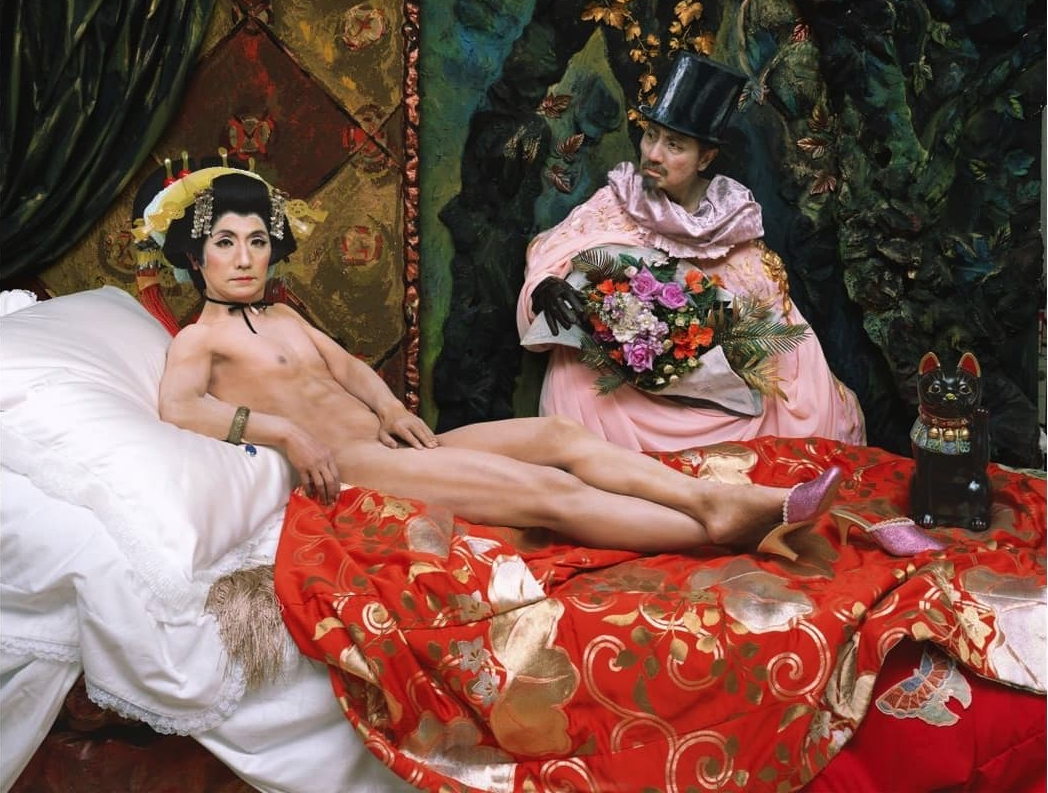
Interestingly, while looking for images for this post, I came across this image by Morimura. What does it mean when one person makes an image that riffs of another’s image which is already a fantasy?

© Yasumasa Morimura – To My Little Sister / For Cindy Sherman, 1998

I am not going to try and summarise 317 pages of words and images here, as I have already made notes –Notes and thoughts from The Theatre of the Face. His final paragraph sums up his whole book,  ‘Still regardless of their social status, we understand most subjects to be individuals who have struck a pose – some ones or no bodies on a stage, be it literal or metaphorical. Portraiture illuminates the stage and fixes some little trace of our brief performance. Looking through portrait archives, we learn how much our joint good will, and therefore our wellbeing, is dependent on appearances. At the same time, appearances excite us by the mystery of individuals, who assume that they will be taken at face value. Here is a quandary that, happily or not, must keep us guessing. From one charnel era to the next, the quandary endures, insinuating its challenge, as much when the individual is known as nameless.’ (Kozloff, 2007, p.317).

Reference:

Kozloff, M. (2007). The Theatre of the Face: Portrait Photography since 1900. London: Phaidon, p.317.

Notes and thoughts from The Theatre of the Face

Introduction:

  • The face is where we are – Jonathan Miller
  • Face is active even in repose
  • Portrait photography = frozen moments
  • Modern communication has changed the static viewpoint, fixed by class and race of the Victorian times, laced by expectations of propriety to impulsive/nosey vision
  • But still a question about what you can learn from a single instant, an isolated moment
  • In photography the power is divided between the sitter and the photographer, but exactly what will be caught is unknown
  • And how does candid imagery fit in?
  • Nowadays photographers bring their own thoughts into the images
  • Self-portraits allow for all possibilities, masquerades, theatre, gender changes
  • Portraits tell stories, even/especially in social reform pictures
  • Some show stereotypes, others get beneath them
  • Portraits show mortality and memory

Early 20th Century

  • Major changes
  • Wars and riots, civil unrest, mass movement of people
  • Changes in technology, international exhibitions, mass production
  • Marxism, suffrage, the middle class
  • Loss of euro centricity in the arts, Freud, the id and the ego
  • The camera became user friendly and available
  • Often middle class
  • Pictures to record customs eg Benjamin Stone, role-players, showing what is soon to be past
  • Pictures to record different cultures (although how real they were is questionable)
  • Tableau’s were staged, for political reasons or to show the world how good things were eg Francis Benjamin Johnston
  • The image of the exotic other
  • Curtis and the Native American peoples, recording a way of life, but? alienating it. Pictorialist images, soft focus, but how real were the images
  • Chambi taking pictures of own culture, often with odd captures, the female bullfighter, the smoker in the graveyard
  • Casasola takes news images, social documentary, pictures of dictators, new things!
  • Hine’s images of immigrants, child workers, faces of the children, a clear bond with the subjects, a liberal idealist, empathetic
  • Storyville images of prostitutes, unpolished, background showing, sad but appealing, surprisingly warm
  • Development of the culture of the celebrity, things previously private became public
  • Pictorialists made images more idealised and poetical, the sitters looked ethereal, other worldly, used soft focus to give symbolist ideas.
  • Stieglitz took mainly images of friends, used natural light, showed melancholy, lyrical nature, careful positioning, women especially beautiful, looked for their essence, studied their faces, looked for a timeless moment

Introversion of the Self

  • I worry about who I am, therefore, I guess, I am (William Ian Miller)
  • Development of the photobooth – what do people think about seeing a photo of themselves. immediately – pre selfie age, make faces. Pretend to be someone else, very different from commissioned portraits, fun? Silly? Tend to be stereotypical, not self-reflective
  • Artists try to explore their inner self, often wary, haunted eg Egon Schiele 9 self portraits
  • Use of caricature, human face blending with animal,
  • Futurists – aimed at shattering perceptions of time and space, multi-layering of images, and use of multiple reflections, disruption of time
  • Multiple images taken involving mirrors, reflections and the camera in the image eg Ilse Bing, how important is the sitter, or does the camera and mirror hold more importance?
  • Self portraits can be voyeuristic – who are they meant for – the artist or the viewer? You can pretend to be anyone, anything, any gender. Infinite possibilities of exploration
  • What is then true? everybody has a range of personalities depending on situation Many artists choose to change their name. Does that mean the person also changes?
  • Claude Cahun, multiple guises, deadpan faces, tell little about her life or the real person
  • What is self-portraiture then? anxiety, fear, narcissism? an escape from ‘real’ life? A courageous act?

Shades of Valour: development of irony, and where it might be successfully used

  • Propaganda- use of images to say what you want others to hear – an icy instrument whose influence is pathological, truth becomes hostage to the powers (Ellul)
  • Images of humans came to be personified by an ideology – if the cause was social justice – a deprived individual must look worthy of it. – led to the common man v. The confident leader
  • Led to archetypes of race and class eg migrant mother and Churchill
  • Development of magazines – picture post, Life etc with often paparazzi images, taken ta least semi covertly
  • Portraits were often taken to represent the environment eg underworld, agrarian poverty, demonstrations by the people (Capa)
  • Confident stance, taken from lower down – chin juts
  • Early documentation of the people in conflicts – eg Spanish civil war (again Capa)
  • Street image s- Cartier-Bresson, also Doisneau- both very different CB – upper class and travelling randomly, Doiseau – working class and identified with his subjects- shared values
  • Also other views of Paris – Brassai – vagrants and underworld, people interacted with him, not the candid images they sometimes appear to be
  • Brandt does similar thing in Britain – images are almost tactile, studies contemporary English mores (1930’s) , he had an interesting what he found in the slums – although was upper class himself.
  • Vishniac – images of the Jews in their communities just before the Nazi pogroms, empathetic to his own people – despair
  • Same time as image taken by the FSA – but different ideals – deprived yes, but still part of America, no money a different type of despair (Walker Evans, Ben Shahn) took images of people but also objects and places – looking at societal needs
  • Miyatake – took pictures in Japanese interment camps, children and teenagers carrying out same rituals as the Americans outside
  • Walker Evans took hi subway images – circumspect images, from a man who was anti-corporate
  • Weegee was not circumspect took pictures wherever he saw them exposed human nature, underworld and glamour of crime – sensationalism .
  • A time of worry! Painted on the faces across USA and Europe- harsh reality or a film set, or both
  • Development of fans clubs around the idols of the time, a polished illusion, a fantasy,
  • Fashion images also increasing, excelled with graphic design, appealed to the middle classes while in reality only affordable by the upper class, a charade as the models themselves were not important only their ability to show off the clothes (Beaton an exception as showed the person as well) – ‘camp’

The Sander Effect

  • The relationship between the portraitist and the sitter is not intimate (usually). The sitter is human material. The sitter is shapes and patterns as well as a person. Formal portraiture acts to animate the sitter and there is a risk involved.
  • Viewers look for stories and become bored if there is nothing
  • Early small-town portrait studios – the photographer was a craftsman and understood the social background of his subjects, they are respectful, and people dress their best for them
  • Many photos taken simply as records- or to send to men overseas, factual, minimal posing, but how were the photographers involved – some distant some part of the society and this would later the tone of the images
  • Sander! Interested in the condition of the sitter, rather than their emotional life. The type of the person, representations rather than individuals. All classes and sexes were treated the same. The classes are shown by their clothes and accoutrements, beautifully detailed. He takes them as they are, without encouraging any change.
  • Penn – Indians in Cusco – much more sensuous, looked for decorative people. Mixed fashion, minimalism and still -life together. Not really looking at the individuals, or even the realities of their society. Different when he was taking famous figures – allowed them their individuality.
  • Avedon– increasingly theatrical (good taste didn’t matter). Fame was important. Larger than life. Not kind! Many of his portraits imply mental illness – or seem to. In old age portraits he shows every wrinkle. People of the American west – shows judgement and squalor.
  • Arbus – ‘all families are creepy in a way’ , her proposal for her Guggenheim Fellowship talked about ‘A Study of American Rites, Manners and Customs’ and described all the things that would be of interest in a small town – but that was certainly not how she took them! An introspective reporter – if open can be both. The families all slightly off kilter, the loners who are all rather odd. Her images of the disabled are usually surprisingly kind, unlike those of the ‘normals’– where she would strip away their pretences. Leading to her ‘uncomfortable sense of wonder’. Consider R.D. Laing – normal=alienation, unconsciousness.
  • Sander’s work informed that of Arbus and Avedon – but was dissimilar in that they took on board psychological readings of the people not just their work.

Insiders and their Cultures:

  • Portraits always local – of their time and space with cultural markers
  • Cold War allowed the possibility of crossing boundaries and showing that stereotypes should be questioned
  • Reportage/news showed disaster areas, but other photographers looked at more confined/personal images looking at faith, ethnicity, class etc
  • Images of suburbia (Bill Owens) and less well-off areas (Martin Parr/Daniel Meadows)
  • Are you a participant in the ‘rite’s or an observer? Insider or not? Neal Slavin – American – looking at British (actually English) social groups – but all looked at ‘normal’ activities
  • Where does carnival fit in – Cristina Garcia Rodero with images of occult/quasi- religious practices in Spain.
  • Mexican images that cross between religion and ethnicity. Graciela Iturbide flouting taboos (Magnolia). Two different classes (for want of a better word) spread across the generations
  • Disaster images – compassion fatigue – Salgado and his work on refugees and economic migrants, the tribulation of communities – beautification of tragedy – but why assume poor photographs are any better?
  • Joseph Koudelka and gypsies – he was at home with them but does not glamourise them, personal images not a study of ethnographics, becomes an insider
  • Brenner on the Jewish diaspora, same religion but looked at them from the outside
  • Shelby Lee Adams – Appalachian Portraits – dark, ? Virulent – how well does he know them – Similar to Arbus images – but very different as more prepared and less instinctive.
  • How do you show madness – Erdinger with fear, Fellini out of? love
  • Privilege and the rich – again – how to show it? Refined, gay abandon, riches everywhere?
  • Family albums, stories told from Nan Goldin on. Verene with his extended visual diary of his family and friends

Celebrities to nonentities

  • In 80’s change of portraiture to look not just at who and where, but also why and to use a degree of imagination to show this
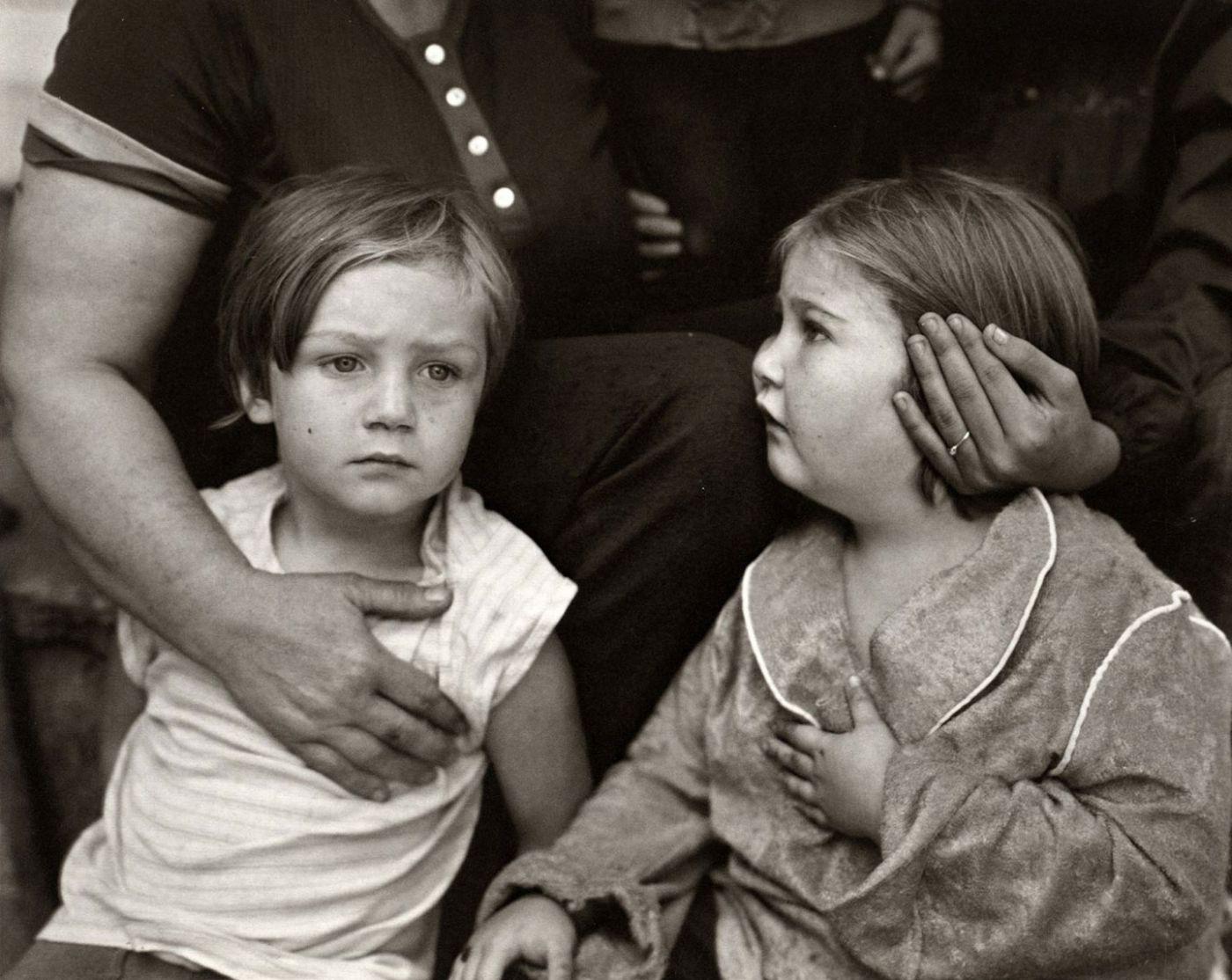
  • Construction of contradictions such as Groves reworking of the migrant mother image
  • Role of photoshop and unnatural smoothing of skin, equivalent to use of plastic surgery
  • Reworking of previous images and paintings – often including the artist themselves. Why? Looking at issues of race etc or need for notoriety? Morimura
  • Warhol’s images, tragedy or show biz? Detached or degraded? Objectification of people and images. Flesh that does not create desire.
  • Mapplethorpe different – he does show desire, craftsmanship, also consider Hujar and Candy Darling
  • Showing changes in body, whether real or imagined, using themselves as the canvas, looking at alter egos (Duane Michals). Images of approaching death, or even post-mortem. What is the role of religion especially Catholic in these images? Or more in the thoughts of the photographers?
  • What is the involvement of the ego? Samaras? A voyeur? Acting and mimicry -? Cindy Sherman whose photos do not allude to her own persona – an actress
  • What about when the portrait is of someone unknown- Boltanski – what does that make us feel? Photo is an agent of memory – but that is only true when we know what we are memorising.?
  • What about mixed faces – Nancy Burson – doesn’t give as much as a single image, that face is diluted, vaguely familiar
  • Late 20th c – constructed faces and people – don’t feel real
  • Blank – forward facing images, Ruff, Dijkstra, – look for total objectivity, but what. If anything, does that say about the person? No personal relationship.
  • DiCorcia – more involved, Baroque

The mystery of individuals

Reference

Kozloff, M. (2007). The Theatre of the Face : Portrait Photography since 1900. London: Phaidon.

Mary Kelly

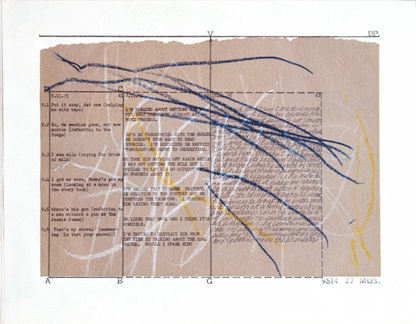
Mary Kelly is a conceptual feminist artist who was a member of the Berwick Street Collective who produced radical, feminist documentary films such as Nightcleaners Part 1 and who is interested in project-based work. Her best-known piece is Post-Partum Document 1973 – 79 in which she documented her life, and the way it changed, as a mother and the ever changing mother/child relationship – causing scandal on route by including stained nappy liners. She has picked six important stages of her child’s life to document, early life (including the nappies), first words, early markings (scribbles), transitional items (including a footprint), diagrams and statistics and pre-writing alphabet. She combines actual items with analysis. These are all stages that any parent will know well, and relate to, however, they are not what, certainly in that era , would have been considered either ‘art’ or something that should be shown to the public and as such caused an outcry. She focused on the domestic aspects of being a woman – but she suggests it is not simply autobiographical but includes academic discussion and debate. In the Tate’s description of the work they say, ‘Kelly subverts the artistic tradition of sentimentalising the mother-child relationship, showing its complexity’ (Tate, 2018). Kelly herself talks about the work in a film as ‘needed to understand the psychological underpinnings of  sexual/social division of labour was…..to document of the daily activity associated with the child….the stained nappy liners were the record, they were the evidence… (I)… wanted to do this without a conventional image of the mother and child… at the time it was quite controversial, and I just ended up making almost everyone unhappy…. Theorists (asked) ‘Why have you got that stuff in there?’ , the women  (asked) ‘Why have you got the theory in there?’…..it could stretch the artist out of the very different directions … what is femininity?’ (Kelly, 2006) and ‘the relationships between men and women are very different for the younger generation…women are much, much better placed to fulfil their potential’ (Kelly, 2015).

Kelly continues to follow her ideals of feminism and the need for artists to articulate the voices of those who cannot speak. Fowler notes that ‘Kelly’s work has always retained its personal, emotional payload’ (Fowler, 2018). Her more recent work looks at how to show war related atrocities and  includes using the lint fluff from a dryer to make war memorials in On the Passage of a few People Through a Rather Brief Period of Time and in Dicere, 2014  she uses the words of witnesses to a drone strike which killed their grandmother.  Her work continues to fascinate, and although she has moved on from the aggressive feminist works of her earlier years, she is still an important worker in the liberation of people across the globe.

75_MaryKelly_Life-April-1945_H6681_2014_300dpi
© Mary Kelly – from On the Passage of a few People Through a Rather Brief Period of Time

References:

Fowler, W. (2018). 10,000 revolutions: meet Mary Kelly, the mother of all feminist artists. [online] the Guardian. Available at: https://www.theguardian.com/artanddesign/2015/may/18/mary-kelly-meet-the-mother-of-all-feminist-artists.

Kelly, M. (2006). Post-Partum Document, 1973-79. Www.bl.uk. [online] Available at: http://www.bl.uk/learning/histcitizen/21cc/utopia/methods1/bourgeoisie1/bourgeoisie.html.

Kelly, M. (2015). Mary Kelly – “Everything Seemed to Be a First” | TateShots. YouTube. Available at: https://www.youtube.com/watch?v=OaKXUVDSZdQ [Accessed 27 Apr. 2019].

Kelly, M. (2019). Post-Partum Document. [online] Marykellyartist.com. Available at: http://www.marykellyartist.com/post_partum_document.html.

Tate. (2018). ‘Post-Partum Document. Documentation III: Analysed Markings and Diary Perspective Schema (Experimentum Mentis III: Weaning from the Dyad)’, Mary Kelly, 1975 | Tate. [online] Available at: https://www.tate.org.uk/art/artworks/kelly-post-partum-document-documentation-iii-analysed-markings-and-diary-perspective-t03925.


Regular Reflections – November 3

Reading:

  • Bates – The Memory of photography, and then discussing it on the photographic readers group. Fascinating essay – which spiralled off into a range of discussions about archives and there meaning together with ‘fire hosing’ – a term I was not familiar with.

Online:

Photography:

  • Started working on the images for A3 – attending a club for war gamers. I put some of the images up on their website and asked for captions – which were often funny. The main complaint was – why isn’t there one of me – so I am definitely welcome back!
  • Still failing on images for A2 – combination of weather and health. May have to rethink.

Thinking:

About the issues involved in talking images of children combining today’s political climate with real worries about what is shown where.


Exercise 3.1

The exercise was to go through your archive. Pull out around 10 images and divide into mirrors at windows. Then look at again and see if any could be changed.

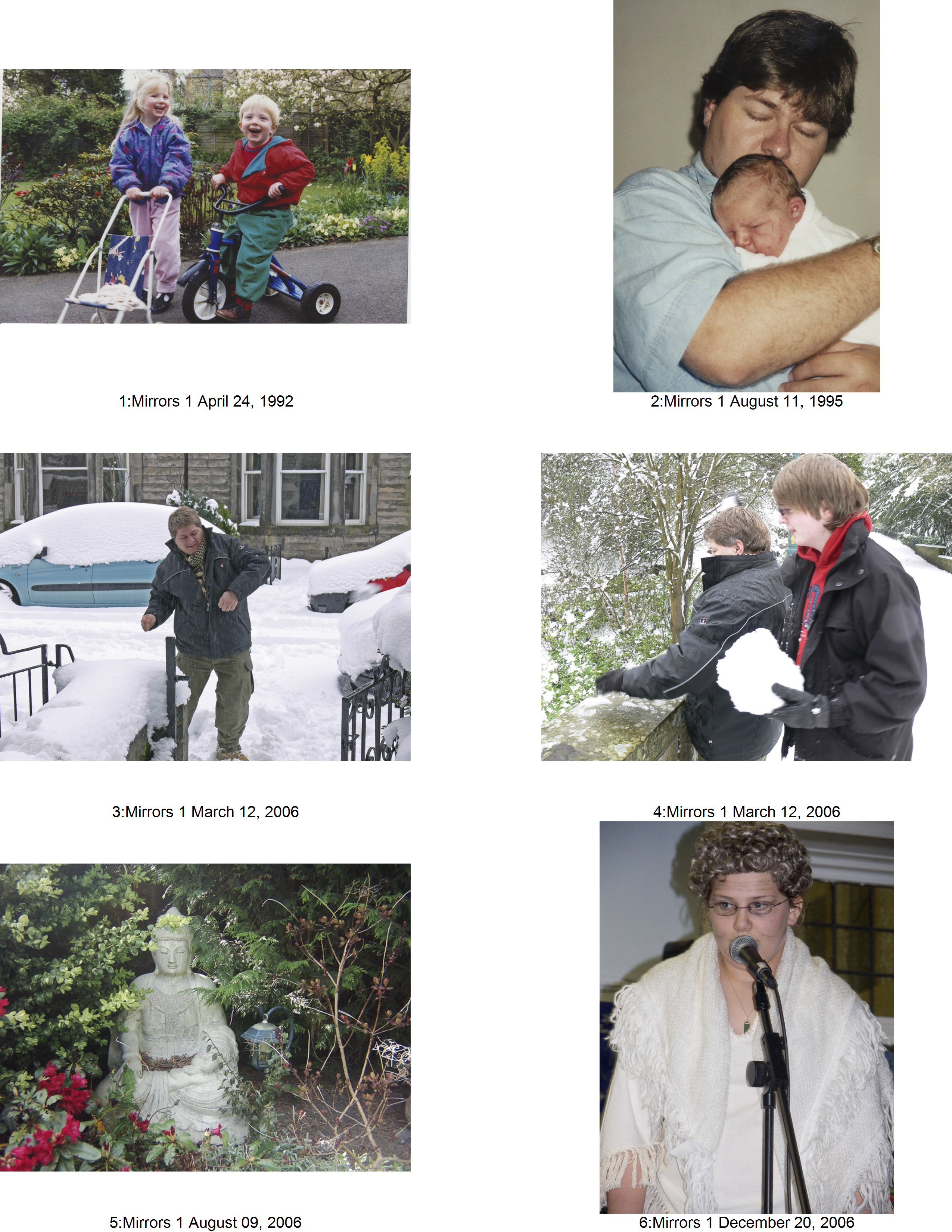
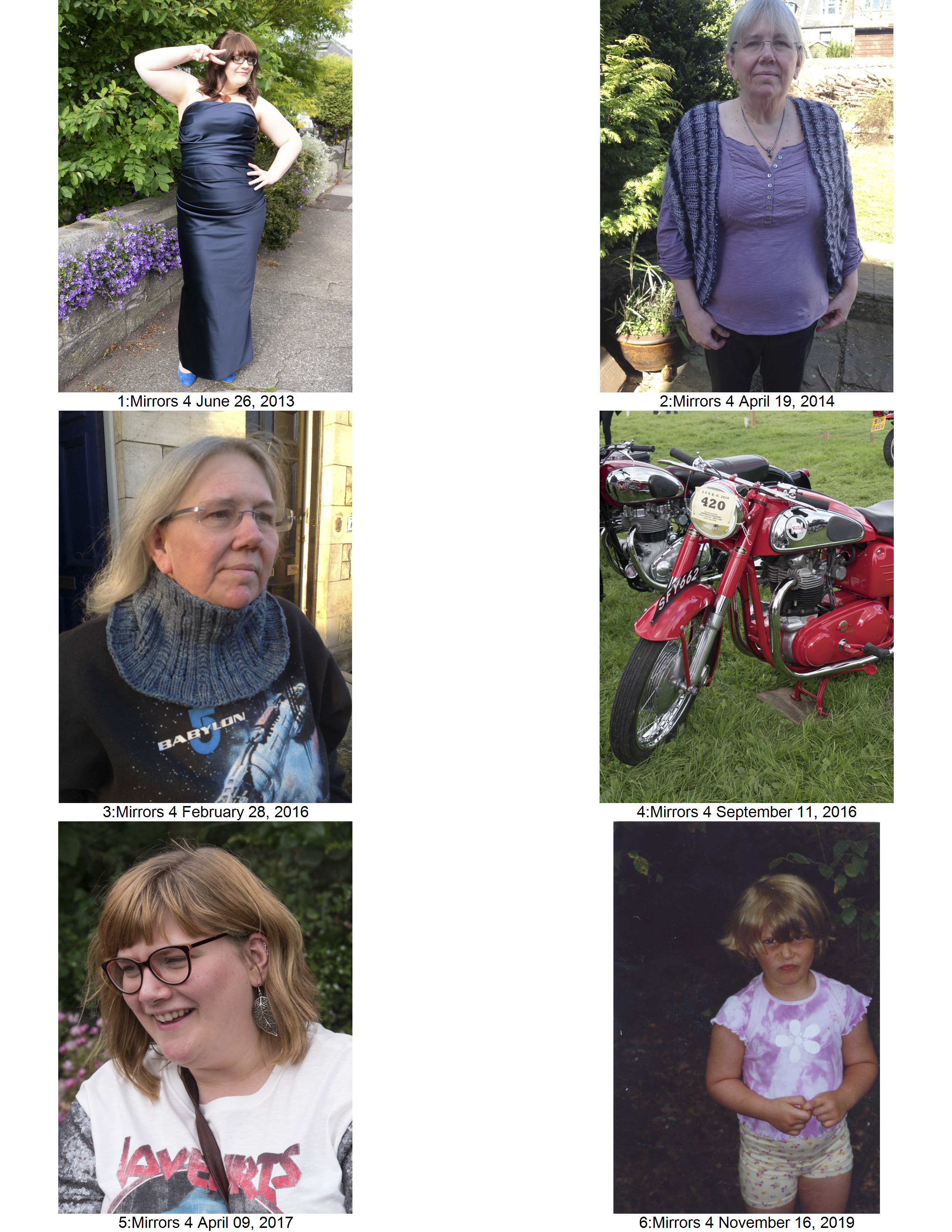
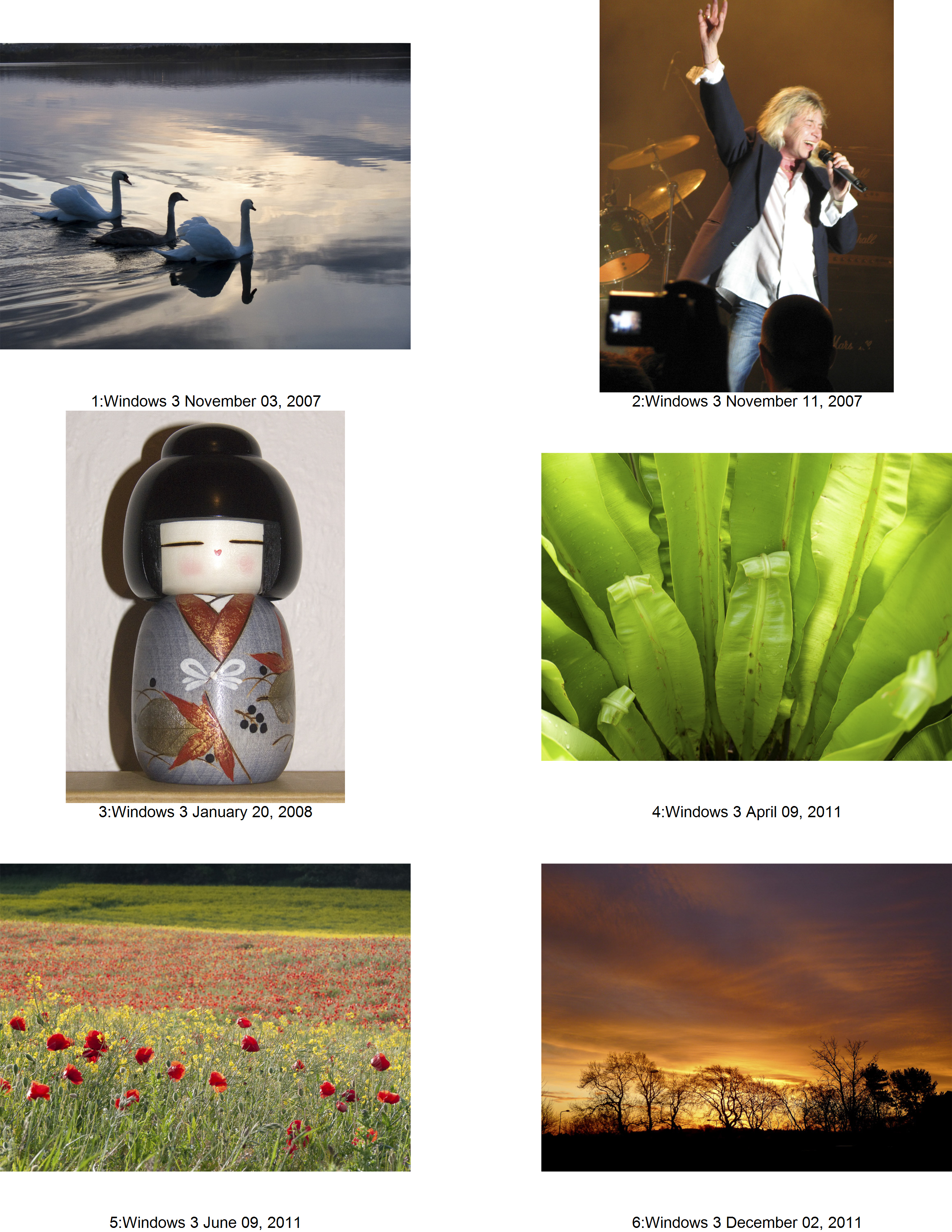
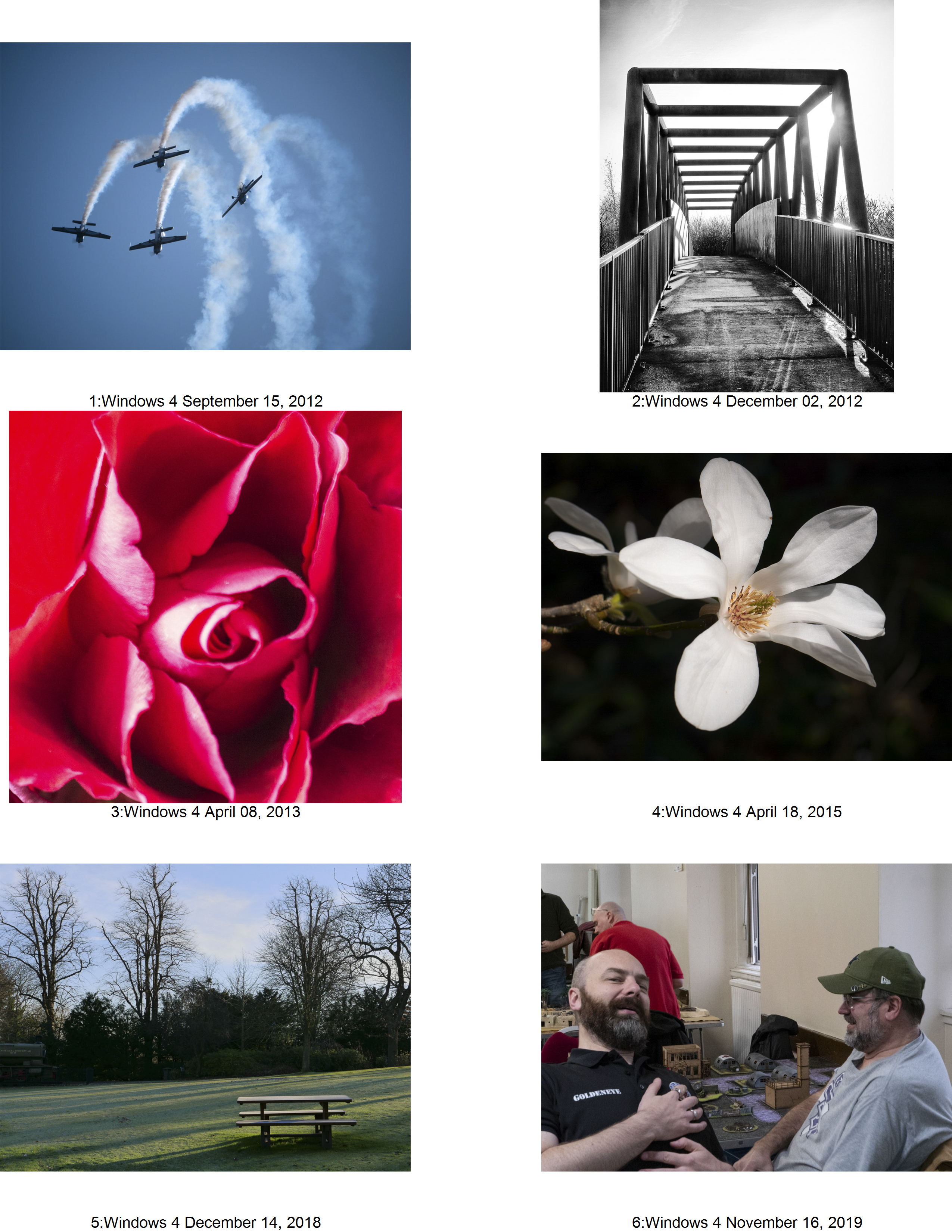
 I started with an archive trawl, which I did very rapidly, and ended up with 48 images, not 10. I decided to go with it, and split them into 4 sections of 12, organised only by the order of pulling out from the archive, which was generally, but not totally, date order.  For each set I divided into mirrors or windows. This was not always an easy task. Very few of them are direct images of me. The ones that initially ended up in the mirror pile are mainly of my family or places that are very personal, such as the church I was christened in. The set that ended up in the windows are more about places I have been and looked over, things that I am interested in, things that I enjoy investigating. In reality many of the images could go in either pile with a logical reason.

Initial trawl for mirrors:

Initial trawl for windows:

A very rapid overview of the two groups above shows that I have mainly placed people in the mirrors group and objects /scenery in the windows. This is rather a facile separation.

I then decided to look at one of the sets in more detail, analysing why my first instinct was to put into each pile and looking to see if with a more considered approach I would change then around. This was interesting. The initial selection was based on people or places that were very close to me becoming mirrors, but all of them could equally by classed as windows. In reality, there is only a small portion of my archive that shows people, but for some reason they caught my eye when pulling images out for this exercise. I tend to photograph things that are less personal, but equally, and illogically, all of them say something about my interests. The ones that say more about me, as a mirror of my interests are often the ones where I am looking out. The family ones that I initially classified as mirrors are more about me examining them. I think I am now totally confused!

Detailed analysis:

All these 6 images were initially classified as mirrors. They are all my family, with the exception of a view down the street I live in. On thinking about it further then only two that remain as mirrors are the image of my mother and me as a child and the street view, and I am not even convinced about the mother/me one. All the others are about me looking out at other people – therefore windows – but I am an insider in the situation!

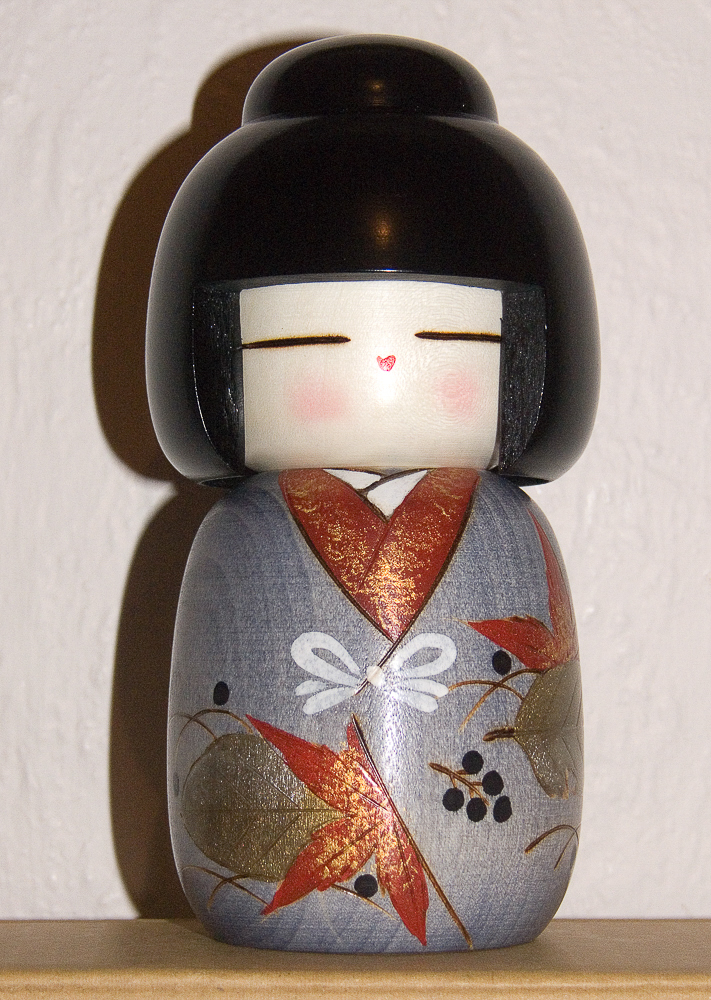
These images were all initially classified as windows, and, as they contain no family images are easier to think about. The doll tells about me and my obsessive collecting habit. Someone looking at it says – that is hers. The places I am looking out at are, I think, rightly classified as windows, as is the singer. The plant – obsessive interest again, so probably a mirror.

Summary:

  • This exercise was a lot harder than I expected it to be, and I kept swapping images around.
  • Using the straightforward classification of insider = mirror, all the family images and personal interests become mirrors
  • Using the straightforward classification of outsider = window, all the views, places and events become windows.
  • I have just done a rapid scan though the images I have taken over the last year. There are very few that are mirrors. a group of friends at a party, my daughter’s wedding, some of my cats and family. The rest are all examinations of other things, street images, landscapes and events.

Bates – The Memory of Photography

Today I attended the Photography Reading Group at which we discussed The Memory of Photography by David Bate which is available on line (link is in the group forum)

https://discuss.oca-student.com/t/photography-reading-group/5646/397

My Initial thoughts:

I found the paper fascinating. Thoughts I had (on second reading) were:

  • The presence of multiple archives effects one’s own feelings about your own archival material. What do they tell us? And who actually ‘owns’ them?
  • The concept of photography as a ‘time machine’ – I have recently been reading H.G.Wells Time Machine (published 1895) in which he refers to photography and pictures taken at different ages of a person forming a time line, and also the vividness that can come form recalling a specific instant in the past.
  • Freud talks about ‘artificial memory’, differentiating it from ‘natural memory’ and notes that the forms of producing it are modelled on human sensory functions – this has been occurring for millennia, probably starting with the earliest cave drawings in the Upper Palaeolithic , 40000 years ago, well before the invention of any form of writing. I find it interesting that the first aide memoire was visual.
  • Freud also comments on the ability of the camera to retain the fleeting visual impression. This reminded me that only some impressions are ever recorded, and they will only every show a partial truth and therefore must be carefully interpreted bearing in mind the adage that history belongs to the victor (a quote that itself is variably attributed to Winston Churchill or Péter Esterházy).
  • What is the effect of photography on memory? Is memory altered by looking at photographs of an event? Do you remember the event, the photograph or a hazy mixture of both? Is the truth altered? Memory is a combination of vision, sound, smell and touch – producing the mnemic trace – therefore a photograph is limited.
  • Archives were initially produced on behalf of governments. So – what is chosen to be archived will not be everything, and not be neutral. The role of the librarian is vital. Information can also be lost, or deliberately destroyed. Other forms on public memory are formed though building memorials (victors, soldiers, events) other the simpler and more poignant placing of written tiles on the street in Prague.
  • Family archives in the form of albums have mainly been replaced by photos published on social media – does this fulfil the same role? Will they last as long? Are they seen by the same groups of people? These images allow people to make links with others they may never meet, to form pseudo-families, to form identities and relationships. Are the images shown in this a context truthful? They may be or may be entirely artificial.
  • Derrida says, paraphrased, an archive is about the future not the past. So, do we have a duty to the future to keep truthful records, and does truth = neutrality? Information = power.
  • Photographs are an important source of visual memory because they can record anything the meta-archive. But they also record things that you were not expecting – the ‘bits around the edges’, the backgrounds, often the unwanted bits that change the meaning of an image.
  • The sheer number of images taken nowadays by any person, within a day, a week or year, multiplied by the number of people taking images, in your town, country, the world is impossible to comprehend. No-one cam look at them all. But can a machine – and what information can the machine draw from them?
  • Do photographs show what actually happened – or what some people think is important out of what happened and, somewhat scarily, if an image is shown over and over does it become true?
  • Memories are not always ‘live’ in the brain. They need a trigger. What is the role of what Freud calls ‘screen memories’? Memories can be manipulated and falsified. Do photographs help produce real memories? Do your memories make up your life? And what happens when they collide with someone else’s memories that are different?
  • Involuntary memory = An involuntary response to an image. An unexpected response to something in the past. Voluntary memory = studium – information that comes externally. Memories are a combination of a complex interaction between artificial memories, from a photograph, a book, or other external information with an ‘natural’ , internal memory.
  • Public memorial buildings and archives are often produced retroactively which leads to a question about accuracy.
  • Photographs demand analysis not just an emotional response – this applies to looking at others’ images and considering ones own.

 Thoughts following the discussion:

 Having read the paper, I was interested in other people thoughts on it. Unfortunately, my system was playing up and I found that I was missing the thread of the conversation at times. I did eventually find a ‘button’ that automatically transcribed the speech, with some hilarious obvious errors.

 I did take some notes, shown below, not attributed to the author, and in no particular order:

  • The overall text is useful and is relevant to everything we are studying at all levels
  • There is an idea that is someone is leaving something, a home, a school etc archival images of yourself and the others involved are need for maintaining the memory
  • Caroline Wright? – did some work on things that are no longer in use and how do we value these (not sure about this -may have been in context of archives)
  • How are things curated and archived? The role of missing memories, for instance those that were deliberately destroyed in Cambodia. How can people find these memories – either personal or ethnographical?
  • What is so important about the idea of not being in an image, either that you were deliberately left out of the photos, or you were not at an event? Should you photoshop someone in (or out)? And – my thought now – is this different from the practice of cutting people out of a printed photo post a relationship break up? But – more importantly – if you are not in a photo what does it say about you and how other people feel?
  • Everybody assumes that digital archives are everlasting – but how long do they really last. You delete images as the phone memory is full. What happens in an apocalyptic scenario with no electricity? What is the role of the cloud?
  • Photographs act as a container/trace of our own memories – but so does music, art, plays and books.
  • The role of ‘fire hosing’ – so much information is put out online that it becomes impossible to tell what is true and what isn’t. The role of ‘fake news’ – you tend to look at and agree with things that back up your own viewpoint of the world. It is easier to source this now because of the internet.
  • Why do we take photographs? Is it for the memory? Is it to show someone else? And when am I going to look at all these memories?
  • How many photographs of our lives are taken and shown now? The constraint between private images and those taken of other people and their children – leading to the need for adequate formal agreements about the use of them

 Suggested further reading:

  • Sophie Calle – Parcue Que – seems to be in French, but I think there is a very recent version called Because in English
  • Okwui Enwezor – Archive Fever: available on line at:

http://artsites.ucsc.edu/sdaniel/public_record/OkwuiEnzewor_ArchiveFever_PhotographyBetweenHistoryAndTheMonument.pdf

With thanks to Emma for organising this interesting group.


Regular Reflections – November 2

Week ending – 51/11/19

Reading and seeing:

  • Andrea Modica – Treadwell with an interesting essay by E. Annie Proulx
  • Attended an exhibition at the local library by David Mach – Odyssey, an which he has made a sculpture of containers and sea objects. Accompanied by a video talk about how he built it and the need for repurposing items together with the interest in the use of shipping containers across the world.
  • Also saw exhibition on the local collection of objects from the Far East, interestingly it showed how the marks on the china often were misleading, in that they were copied from earlier pieces onto ones made for overseas trade!

Online:

Planning:

  • Settled on work for A3 – have contacted a local gaming club and will start photographing and attending from the weekend.
    • Discussion with the chairperson about the problems of photographing under 18’s in todays restrictive society without formal permission from parents. There are interesting questions there
      • What age does the restriction cut in, heath uses a 16 year cut-off for all consent, which under Scottish Law is the age of adulthood while the council uses 18 which is the age people may still be in school
      • How much memory are we loosing? I have multiple pictures of my children at school events from nursery up – but there is a moratorium on taking these now, equally I was told you can’t take pictures at cub events such as sitting around a campfire if you show anyone’s face. Is this political correctness gone mad? Why are people so scared? What are the real risks? Is it all secondary to social media?

Exercise 2.4 – Same background, different model

The Brief: make portraits of 3 subjects, keeping the background to the image consistent. These can be inside, in a studio, or outside with an interesting background.

 Research:

All the work of this part of the course leads into these photographs and how you take them. I have summarised it in Project 2 – The aware and Project 2 – The Aware – 2

Planning:

I decided to take the images in or around our local abbey. It has several advantages in that there are options for both inside and outside images.

I spent a session in advance of the main event exploring the possibilities with one of the subjects. We found several inside possibilities and several outside, which allowed for variation on the day if weather altered plans. I had thought about taking the photographs against the interesting twisted columns inside the abbey, but when I looked at the trial images they did not work as the background was too complicated.

I asked people to dress in a way they felt comfortable and explained the exercise to them and showed the group some of the trial images. I also explained that, while I wanted a relaxed image, I didn’t particularly want them grinning from ear to ear.

Practice:

The weather was not ideal, as it was a very grey day, with little sunlight. This affected both the inside and outside images as there was limited light in the abbey, so some of the possibilities I had thought about were not feasible. I was not able to use flash in the area. We walked the site, stopping to take a group of images at 5 places. In each area I took photographs of each person and often a group image. Halfway through one of the people requested that her photographs were taken without her glasses on, so we went back and redid those ones.

I ended up with 2 sets of images taken inside and 3 outside.

The Tiffany Window. This stained-glass window was commissioned by Andrew Carnegie in commemoration of his mother and was originality planned to be placed in the original abbey but was thought to be not religious enough and after several placing in Dunfermline has now been mounted in the 19th century partial rebuild which is used currently. This option was the favourite of all the participants.

Inside the old abbey. There were several possibilities here, but on the actual day I was limited by the light and no flash. This meant that the backgrounds were not as interesting as I had hoped from the trial day.

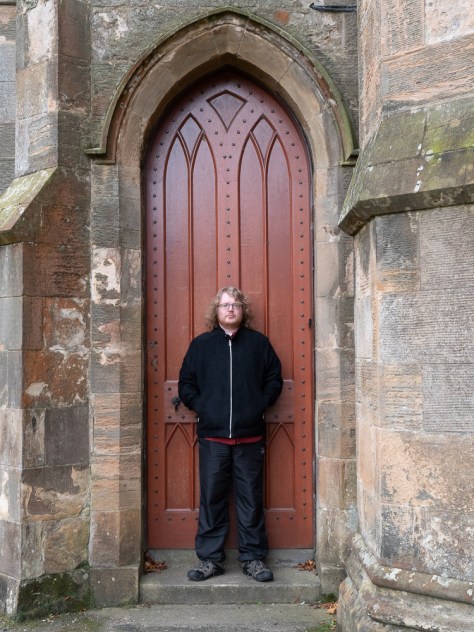
The front door. This massive door is not used but is spectacular. To show the whole door meant that the images of the people were small, and the focus was on the background rather than their portraits.

The side door. This showed a balance between the old building and the people

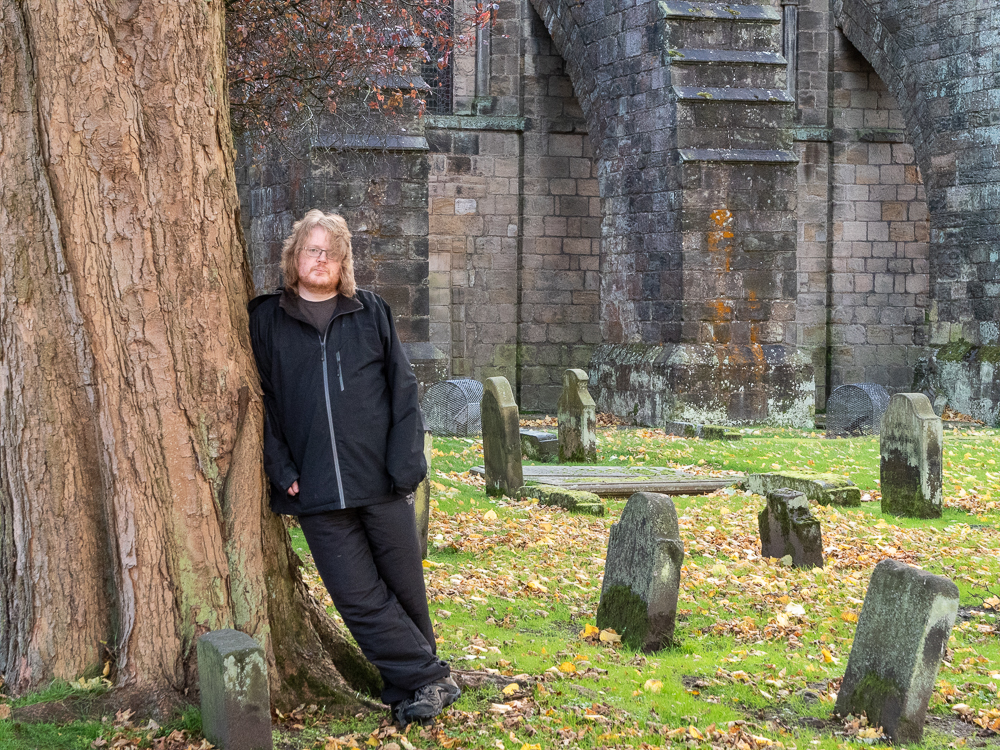
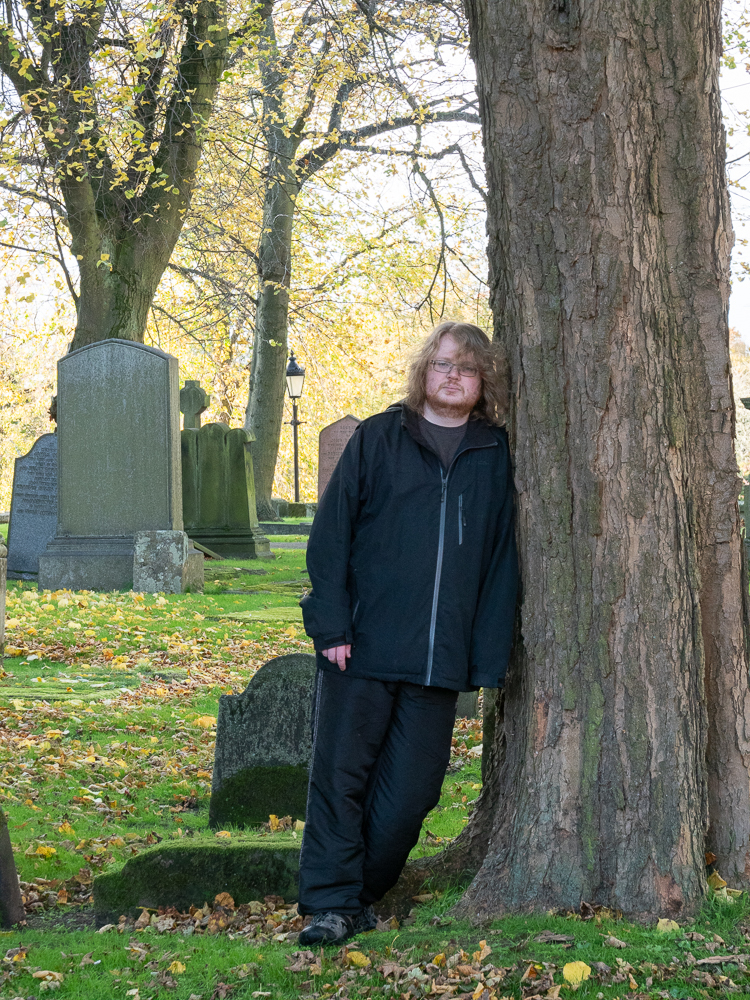
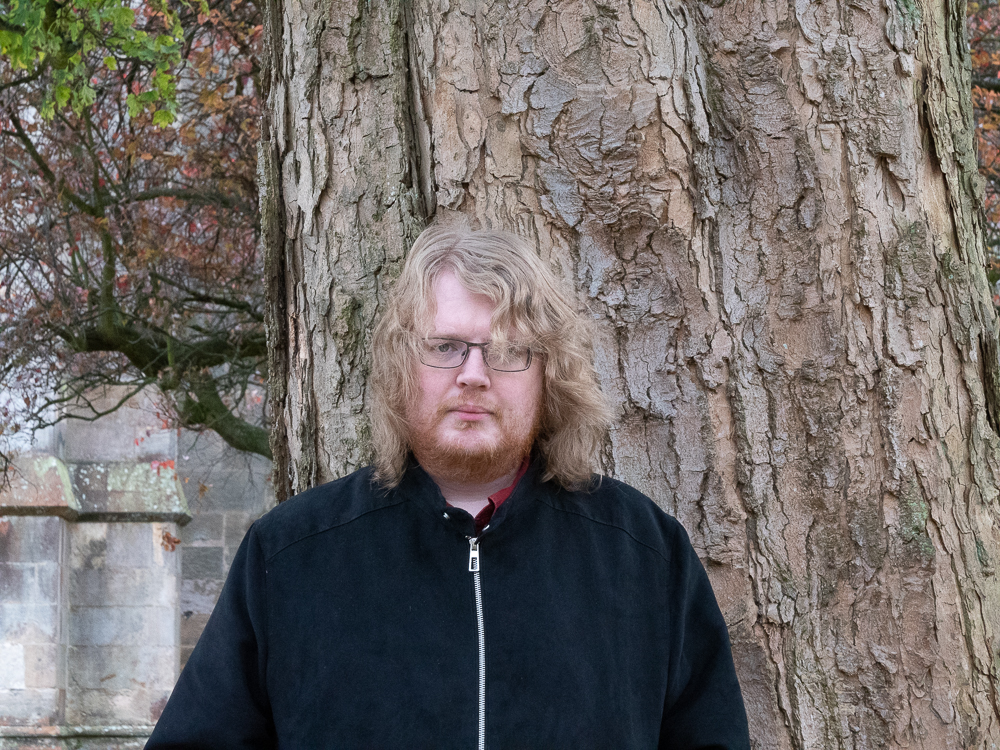
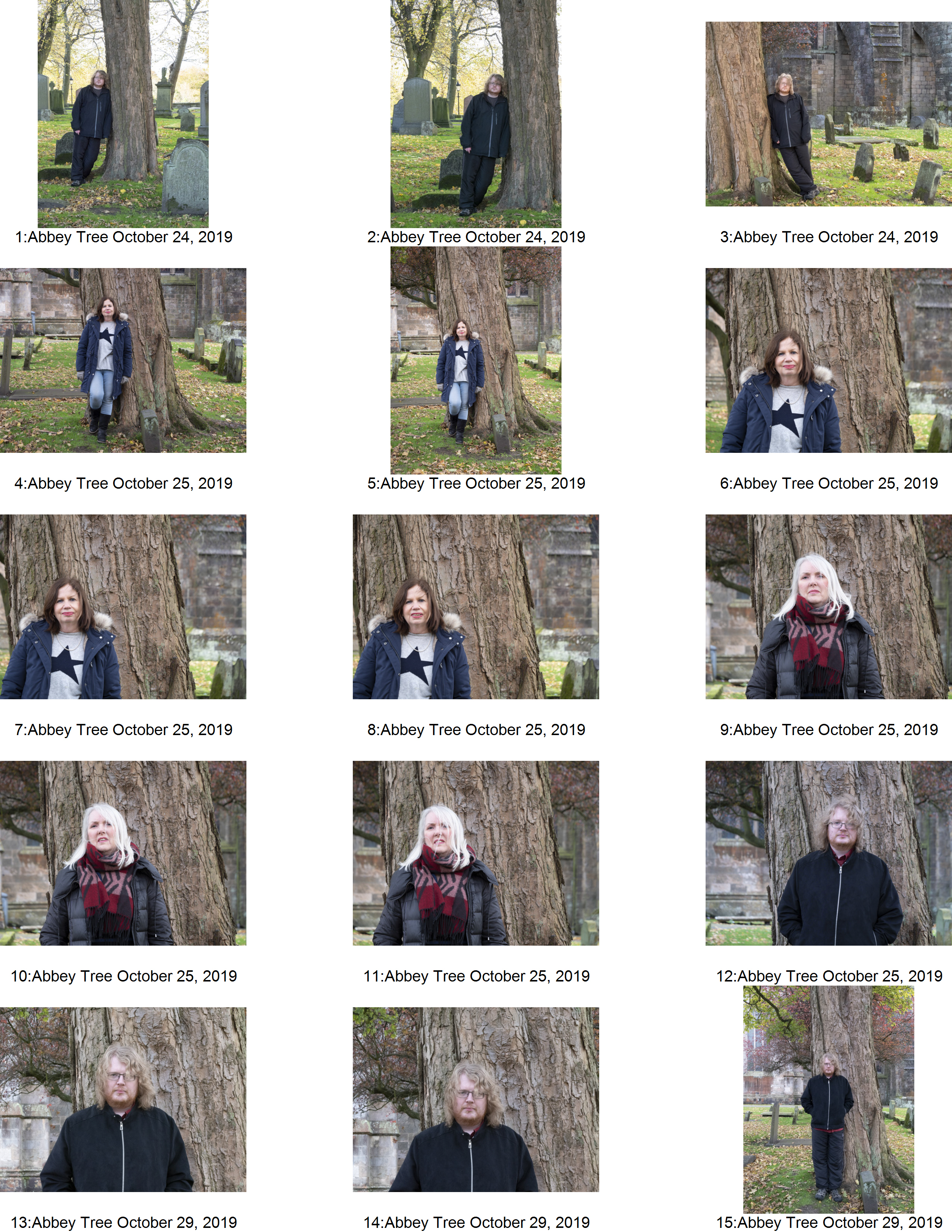
The graveyard. I had hoped for some images here, but it was raining so they were limited. In the trial images the tree and the old gravestones made a more interesting scene than the final images of more close-up portraits with just a tree.

Learning points:

  • However well you plan things the actual shoot may not follow it because of circumstances out with your control – here, the weather
  • Trying to get 3 people to stand in the same spot is difficult – I should have taken something to act as a marker. This was further complicated as one person was much shorted than the other two – which meant that when a close-up was taken the background was different (maybe consider taking a small stool).
  • An interesting spot for the background may overwhelm the portraits

Overall outcome:

I was reasonably happy with some of the final images. I struggled to chose between the images in front of the Tiffany window (which was the preferred spot of all the subjects) and the ones on front of the doors outside. The main door was very impressive – but became a photograph of the door (with the people for scale) rather than of the people. If the weather had been better (or there was the opportunity to re-shoot) I think the images against the graveyard would be worth exploring further.

Final Images:

Abbey (1 of 1)-9

Abbey (1 of 1)-8

Abbey (1 of 1)-7

Contact sheets:


Project 2 – The Aware – 2

When thinking about portraits as well as considering who you are going to photograph (Project 2 – The aware) you also need to consider where. Just as dividing up who you are going to photograph you can also divide up the place into types:

  1. Inside – examples of these are the June Street images by Parr and Daniel Meadows, Daniel Meadows 2 and the Mother series by Paul Graham
  2. Outside – many of the images of Eleanor taken by Harry Callahan

Both of the places can be further subdivided into:

  1. A natural environment – the images by Sian Davey in Martha and Looking for Alice.
  2. A studio, which can be further divided into:
    1. Formal – an example of this is the work Gone Astray by Clare Strand where people are photographed against a backdrop of a Victorian type frame
    2. Informal – the work of Irving Penn in Worlds in a Small Room could be considered as a relatively informal studio, in that it was portable, although it became more fixed as time went on. A more informal studio was shown in Daniel Meadows Omnibus Project where he travelled around with a converted bus.

Interestingly there is a recent series of work by Sandro Miller shown on Lenscratch  I am Papua New Guinea available at:

http://lenscratch.com/2019/10/sandro-miller-i-am-papua-new-guinea/

In this Miller went to Papua New Guinea on three occasions, set up a studio and offered the chance for people to come and have the photographs taken in all their finery. The images, although mainly in colour, are strongly redolent of Penn’s images of a similar area of the world. Like Penn, he noted that many of these people have had little or no previous awareness of a camera. However, Miller’s images do give more of a feeling of the person rather than just the exotica and he identifies the people both by name and tribe, rather than showing a group of images that are exciting but impersonal.

An example of photographs of people taken mainly outside, in a ‘natural’ environment, is the work of Andrea Modica – Treadwell.  Treadwell is ‘a place in the imagination…. a fiction about a little girl growing up’ (Modica and Proulx, 1996).  In the initial essay by E.Annie Proulx,  Modica describes how she  ‘entered into an intimacy with the situation of place’ and took a series of pictures, not all in the ‘real’ Treadwell that tell the life of a girl growing up in a series of decayed farmhouses and crowded places. The places are allegorical, essential to the meaning, often ghostly or reminiscent of death. Without the landscape the story would not be present. Without the children there would be nothing but depression and misery. Both together give a possibility of hope.

References:

Drew, R., Chandler, D., Eskildsen, U., Jeffrey, I., Mullen, C. and Strand, C. (2009). Clare Strand : a Photoworks Monograph. Brighton: Photoworks ; Göttingen, Germany.

Graham, P. (2019). Mother. S.L.: Mack.

http://lenscratch.com/author/aline-smithson (2019). Sandro Miller: I am Papua New Guinea. [online] LENSCRATCH. Available at: http://lenscratch.com/2019/10/sandro-miller-i-am-papua-new-guinea/ [Accessed 11 Nov. 2019].

Modica, A. and Proulx, A. (1996). Treadwell. San Francisco: Chronicle Books.

Penn, I. (1974). Worlds in a Small Room. London: Secker & Warburg.

Siân Davey (2015). Looking for Alice. Great Britain: Trolley Ltd.

Siân Davey (2019). Martha. Hertfordshire: Trolleybooks.

Regular Reflections November 1

Week ending 08/11/19

Reading:

  • Clare Strand – Monograph, a general overview of her work until 2009 accompanied by essays. The essays give an insight into how she thinks and her interest in fantasy and what photographs can mean
  • BMJ December (7890) – mainly on depictions of America
    • I really enjoyed Blackwater River by Lawrence and Patterson. The images are luminous and varied and interestingly show a mixture of black and white and colour images

Online:

This week there was a lot of articles about competitions and shortlists.

Another interesting article was about the work by Mike Goldwater on the London Underground- which fits in with some of my earlier reading

Thinking:

As I am nearly at the end of part 2 I am thinking about possibilities for final work for part 3 which will need some time. Possibilities are;

  • The local running club
  • One of the local knitting clubs
  • The local choral society.

I am not members of any of these so any will take some considerable work-up.