Category Archives: Photographers

Journeys – 1

Victorian and early 20th Century travels.

Journeys and travelling have been associated with photography from its very early days, well before Jack Kerouac’s work On the Road was conceived. In the Victorian era it was common to take a Grand Tour, and not unusual for the tour to be accompanied by a photographer.

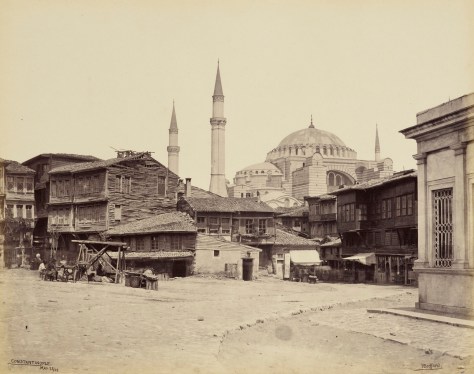
One of the most famous of the tours was that of Queen Victoria’s son, the future King Edward VII. He took a major journey around the Middle East and was a accompanied by the photographer Francis Bedford (1815-1984). A book of images from this tour has recently been published Cairo to Constantinople (Gordon et al., 2013) which shows many of the images accompanied by a travelogue and short excerpts from the Prince of Wales diary. One typical example shows the mosque Hagia Sophia alongside the comment, [the Prince thought Hagia Sophia] ‘the finestI have seen in the East. It was formerly a Xtian church’ (p.199). It is interspersed with maps showing the journey and gives a real feel for how the wealthy English found the Middle East in that era. Some of the pictures include people, although, unless famous they are rarely the focus of the image and may well have been included simply to show the massive scale of the monuments. On return to England the pictures were made into a portfolio produced by Day & Son and were also published more widely. This was definitely a commercial venture by Bedford, given extra kudos by the presence of the Prince.
Mosque of St Sophia - from the Hippodrome [Hagia Sophia, Constan
Mosque of St Sophia – from the Hippodrome [Hagia Sophia, Constantinople – Francis Bedford

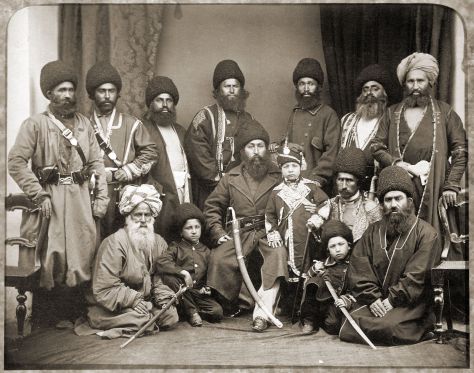
John Burke (1843 – 1900) traveled widely in Afghanistan where he took many images of the British forces during one of their earlier invasions of that land. Burke took pictures of the landscape, (devastated by war), some rather beautiful images of the countryside and portraits, both of the English soldiers and the local people. In From Kashmir to Kabul (Khan, 2002)  Khan shows many of the images but also points out the the attribution of many of the images is unclear as another photographer, William Baker, was his partner and they published (and sold) images jointly as Baker & Burke. The images have recently seen recreated in spirit by Simon Norfolk in Burke and Norfolk  (Burke and Norfolk, 2011) where he returned to Afghanistan in 2010 in a plan to respond to Burke’s Images. There is a fascinating interview between Norfolk and Paul Lowe which explains his aims in detail (Lowe, and Norfolk, s.d.).
John Burke
Group of the Amir Shere Ali Khan, Prince Abdoollah Jan and Sirdars

Francis Frith (1822-1895) also travelled widely abroad across the Middle East but his main focus was Great Britain. His plan was to take accurate records of as many of the towns in Great Britain as possible, and then sell them to people looking for souvenirs. Although he took many images himself, he also employed a team of people to both take some of the images and to sell them. His work was continued after his death by his family and has now been formed into the Francis Frith Archive (Francis Frith: Old Photos, Maps, Books and Gifts, s.d.).

JS70046035
Bridges in Newcastle – Francic Frith

More locally to me, Erskine Beveridge (1851-1920) who was an industrialist and an amateur photographer/historian travelled widely in Scotland, documenting the building as and the people. It is surprising how little many of the places have changed over 100 years. He succeeded in his wanderings of building up a record of the places and both the important historical and domestic architecture. See Wanderings with A Camera in Scotland (Beveridge and Ferguson, 2009) for a record of his images.
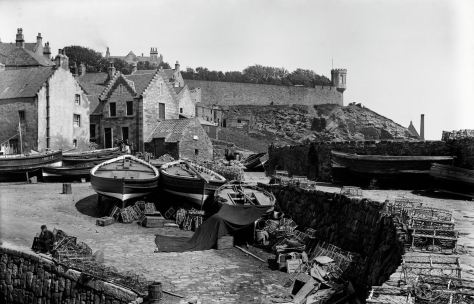
Crail Harbour, Fife – Erskine Beveridge

Although all these early photographers travelled widely and took many photographs, it seems likely that for many of them this was their business. It is difficult to know now how much they were inspired by the love of exploring rather than the needs of the business. One exception to this may have been John Thomson (1837 – 1921) who travelled in China and was fascinated by the place and the culture, taking images of both scenery and the people.

John Thomson
John Thomson

Travel in this period was difficult, expensive and the cameras were all large, heavy, and cumbersome. They all initially used wet collodion plates, which needed to be developed immediately, and even when that technology moved on, glass plates were fragile, and many were broken in transit. In reality, it is surprising that we have as wide an archive of the early photographers travels as we do.

Unlike later photographers these images are about the specific place. They are rarely loaded with emotion. They tell a story, but it is limited. It says, “I went there”, “I did that”, “I met those people (usually the well-off)”. They showed the strange and different, the things that would excite the people who had never travelled. The images that would sell. And the images that would make their names by being included in important research publications such as those of The Royal Geographical Society.  The Victorians and early 20th century population had just started to travel en masse. It was no longer kept to the very rich. They wanted to see where they might go. They wanted souvenirs. They liked the picturesque. Catering to this need was the reason many of these images were made. Nowadays, they are historically interesting. The changes over time are important to see. Sometimes, like the `Burke images of war in Afghanistan they give a frightening view of how things have not changed. But they come from a different mindset and type of photography than the journeys that are taken now.

References:

Beveridge, E. and Ferguson, L. M. (2009) Wanderings with a camera in Scotland: the photography of Erskine Beveridge. Edinburgh: RCAHMS.

Burke, J. and Norfolk, S. (2011) Burke + Norfolk: photographs from the war in Afghanistan by John Burke and Simon Norfolk. Stockport: Dewi Lewis Publ.

Francis Frith: Old Photos, Maps, Books and Gifts (s.d.) At: https://www.francisfrith.com/uk/ (Accessed 22/07/2020).

Gordon, S. et al. (2013) Cairo to Constantinople: Francis Bedford’s photographs of the Middle East. London: Royal Collection Trust.

Khan, O. (2002) From Kashmir to Kabul: the photographs of John Burke and William Baker 1860-1900. Munich: Prestel.

Lowe, P. and Norfolk, S. (s.d.) Burke + Norfolk – In conversation. At: https://www.simonnorfolk.com/burkenorfolk/conversation.html (Accessed 22/07/2020).
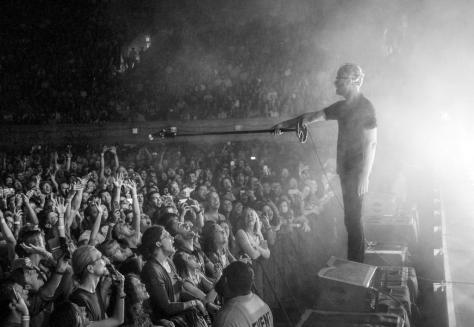


Graham MacIndoe

Interview with Graham MacIndoe by Street Level Gallery, Glasgow 16/7/20

Graham gave a long discussion about his background and his work. In summary:

  • Born in Scotland but now works as an associate university professor of photography in America.
  • Early influences were punk rock, protest music and protests against racism (late 70’s, early 80’s)
  • Initially studied painting at Edinburgh Art College
  • Started taking photos on a trip to New York and has never stopped since, carries his camera everywhere he goes
  • Went to Ireland and photo’d a horse fair (recently released on Café Royal
  • Likes being both in the middle of the action and finding the quiet places on the outskirts
  • Always been intrigued by people, the expressions on their faces, the weird moments
  • Initially not interested in commercial work but got involved with it – money – drugs – Coming Clean & Chancers, dicussed at length in Coming Clean
  • Took pictures throughout drug scene but doesn’t show the pictures he took of other people – ethical dilemma
  • Just take the pictures – put them away – may make sense later and fit with others to make a piece of work
  • Early pics are relevant to your life, chunks are missing, but use what you have
  • Went to concerts, got backstage passes, now works a lot with band The National.
  • Interested in running – so takes pics of that
  • Protest photography ongoing – been involved since early days – feels that most of the images should come from the Black photographers
  • Racism/ colonisation/slavery/poverty/injustice/incarceration needs to be addressed
  • Quoted Robert Frank – black and white are the colours of hope and despair
  • Documentary – are we overwhelmed by all the images. Much is just wallpaper. Need to engage – but how much effect does it really have
  • Everybody lives in their own bubbles
10_6_2017-The-National-Forest-Hills-10008272-1024x708
© Graham MacIndoe

Suggested photographers to look at:

  • Kirsty MacKay
  • Matt Black
  • Neil Greer
  • Disturb (?)

Advice:

  • If you are passionate you will get there
  • Make pictures all the time
  • Just keep on shooting
  • Engage with the world to find out how your personal trauma fits in
  • Who are you making things for?
  • What’s the takeaway?
  • You want people to think about what you have done

Penny Klepuszewka

005
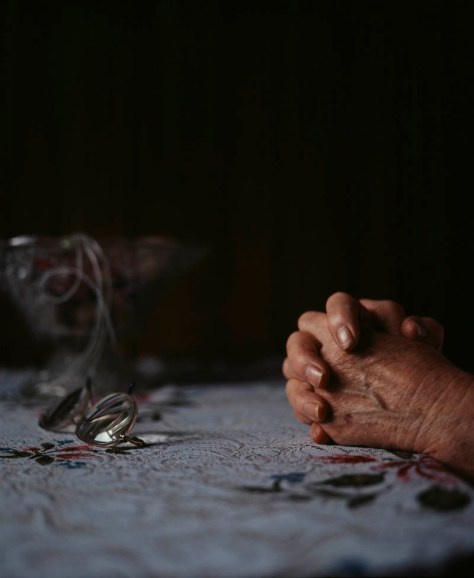
Living Arrangements 05 – © Penny Klepuszewka

in Living Arrangements has considered the changing social face of out time which leads to many elderly people living alone. She says in her artists statement ‘The home is often regarded as a place of shelter but for some in later life if can decode an island of isolation’ (Penny Klepuszewska, s.d.) . In this series she uses small details, barely visible against a black background to show what might be present in someone’s home. There is a folded blue rug, part of a cooker, remains of a meal on a tray, and, most poignant of all, folded hands on a lace cloth with a pair of glasses. The images are gentle but telling. They describe a visual isolation that is terrifying but unfortunately common. The black emphasises the isolation, the paucity of the images that the elderly are often invisible in our society.

Reference:

Penny Klepuszewska (s.d.) At: https://www.newcontemporaries.org.uk/2007/artists/penny-klepuszewska (Accessed 17/07/2020).

Susan Lipper

Susan Lipper is an American photographer. The majority of her work has involved travelling around America to record the events that can occur in the rural areas, playing on the trope of the documentary travel photography and the cross-country travelling that frequently occurs in American photography. Much of her work has centred around the small area of Grapevine Hollow in the Appalachians, where she initially took a series of images of the houses and the people between 1988 and 1992. The images are black and white, sparse and do not glamorise the area. She clearly had a good relationship with the people although I suspect outsiders are rarely welcome. She returned to Grapevine between 2006 and 2011 to make a further series Off Route 80 (Lipper, s.d.).  In contrast these images show the countryside, still in black and white. They remind me of the images by Robert Adams in An Old Forest Road (Adams, 2017). Few show any traces of life other than rough tracks. One shows a motorway (freeway) bridge – presumably the eponymous Route 80. Between the two series she tells the story of a place that is, to an extent, left behind. The cover image for the book Grapevine (Lipper, 1994) shows a deer, hung from a baseball hoop, with cars and a house in the background.  Another image shows a smiling girl with her Halloween pumpkin, yet another a snake on a bed. According to O’Hagan (O’Hagan, 2010), while her characters are real, the scenarios may often be staged. It tells about the poverty and the background of alcohol and violence that this both causes and contributes to.  There is a tension in the images, anything could happen. In the book Lipper also records some of the conversations she had with the people, a narrative to give depth to the story. When talking about the later images she describes then as ‘Nature viewed as lush and enveloping—almost biblical, a found Eden. However also lawless, scary and threatening.’ (Williams, 2009).

untitled
from Grapevine © Susan Lipper

Bed and Breakfast  (Lipper and Chandler, 2000) is a very different series, it is in colour, it is much gentler on the surface. The book was made as a commission by Photoworks in response to the George Garland Collection of photographs of rural England. The images seem old fashioned and out of place for the time (1998) and place (West Sussex). Some remind me of B & B’s I have stayed at, the folded towel, the kettle. Others are somewhat disturbing; the picture of the groping hands on the wall, sex scratched on the bathroom door, the terrifying landlady. This is a place I grew up in, a time I have lived though, but I find it surprisingly difficult to recognise.  As Chandler notes in his introduction to the book ‘Lipper’s account of West Sussex is a purely subjective one, it is her response to a particular formation of English country life. Others will inevitably see things differently’. I am one of those who remember it differently.

bb_06
from Bed and Breakfast © Susan Lipper

References:

Adams, R. (2017) An old forest road. Exhibition. Köln: Walter Konig.

Lipper, S. (1994) Grapevine. Manchester: Cornerhouse.

Lipper, S. (s.d.) Off Route 80. At: https://www.susanlipper.com/or.html (Accessed 15/07/2020).

Lipper, S. and Chandler, D. (2000) Bed and breakfast. Maidstone: Photoworks.

O’Hagan, S. (2010) ‘Myth, Manners and Memory: Photographers of the American South | Photography review’ In: The Observer 02/10/2010 At: https://www.theguardian.com/artanddesign/2010/oct/03/myth-manners-and-memory-review (Accessed 15/07/2020).

Williams, V. (2009) ‘Susan Lipper, Collisions of Experience’ In: Photoworks May 2009 (12) pp.56–57. At: https://www.susanlipper.com/text_gv_williams.html (Accessed 15/07/2020).

Sarah Lynch

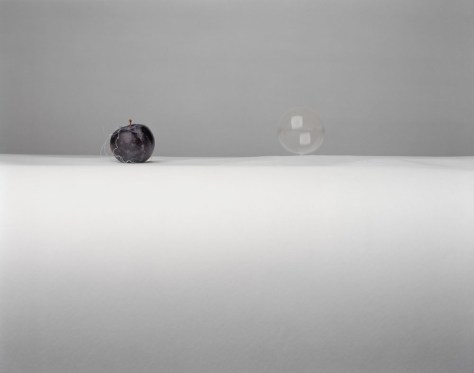
Sarah Lynch is a Scottish photographer who makes still life images by building up small sculptures, wire, fruit, pieces of paper and then photographing them and showing them at large scale. There is one that grabs my attention, a plum with some pieces of thread in a deep damson colour on a white surface with a bubble floating just above the same surface. It contrasts dark and light, solid and ethereal, permanent, and fleeting. Another shows a raspberry on a pile of torn white paper suspended by a string and wire. The images are delicate, appearing simple. Fragile but balanced. The fragments of colour stand out against a predominantly white and grey background.

sl_still_life_19
© Sarah Lynch

In the interview in Photoparley (Boothroyd, 2012) she says her goal is to make ‘people stop and pause for a while’, to spend ‘a moment contemplating everyday objects as beautiful and fragile’ and to ‘put our small selves into perspective’. Not a bad goal to aspire to.

Reference:

Boothroyd, S. (2012) Sarah Lynch. At: https://photoparley.wordpress.com/category/sarah-lynch/ (Accessed 14/07/2020).

Laura Letinsky

Laura Letinsky is a Canadian artist and photographer, who lives and works in Chicago. She is best known for her still life images, mainly using soft pastels colours. Initially she mainly used objects, fruit, china, tables, and napkins but more recently has added in photographs, magazine clippings and similar objects to her oeuvre. The pictures often show the end of things, the leftovers, the crumbs on the table. The images are surprisingly beautiful for all that they show the debris of life. In her interview with Brian Sholis (Sholis, 2013) (quoted in the OCA manual) she talks about her interest in still life as a genre that enables her to explore ‘the tension between the small and minute and larger social structures’. She describes how she uses images ‘already in the world’, including her own. She notes that ‘images are promiscuous……. they don’t care what we do with them’ and that ‘photography can help access the feelings that are intrinsic to being human’. In another interview she says, ‘Instead of inviting the viewer to partake in the traditional still life, I was interested in what remains. What gets left over, what you can’t get rid of, or what you try to hold onto’ and references Barthes’s comments about photography being always after the fact (Herrara, 2017).

In Ill Form and Void  (Letinsky and Tillman, 2014) it is often difficult to be sure whether she has photographed real items, or pictures of real items or a mixture. The delicate colours of the images are set against white, cloths nd paper. Much is torn and broken. The colours are smudged. They talk about the small things, the left-over things, the left behind items. It is similar to the series Albeit – however in this case the colours are harsher and the use of torn pictures more obvious. One shows a bird on a branch with an ivory handed knife, the kind of knife I grew up with, and that are still in my mother’s drawers.

web01_Albeit02_2010-1024x744
from Albeit – © Laura Letinsky

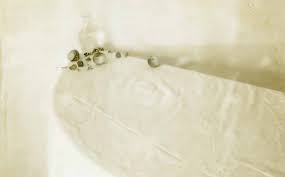
Time’s Assignation and Other Polaroids 1997 -2007 (Letinsky and Herschdorfer, 2017) is a series of Polaroids of still life’s. The surfaces are damaged, the colour is washed out. They are blotched and blurred. Some are barely visible. They are beautiful, show the small unimportant things in life. The images were made on Polaroid Type 55 film, now partly decomposed as part of her working process – but have become images in their own right, time worn.

from Time’s Assignation: The Polaroids, © Laura Letinsky

I had only seen the occasional image by her previously but, having looked at it extensively I find myself wanting to acquire it, to hang it on my wall, to be able to stare at it when I am tired. To luxuriate in the colours. To bring back the past.

See more of her images on her website:

https://lauraletinsky.com/

References:

Herrara, B. K. (2017) Laura Letinsky on The Great Discontent (TGD). At: https://thegreatdiscontent.com/interview/laura-letinsky (Accessed 14/07/2020).

Letinsky, L. and Herschdorfer, N. (2017) Time’s assignation. Santa Fe : Radius Books.

Letinsky, L. and Tillman, L. (2014) Laura Letinsky: Ill form & void full. Santa Fe: Radius Books.

Sholis, B. (2013) Interview with Laura Letinsky. At: https://aperture.org/blog/interview-with-laura-letinsky/ (Accessed 14/07/2020).


Sam Taylor-Wood

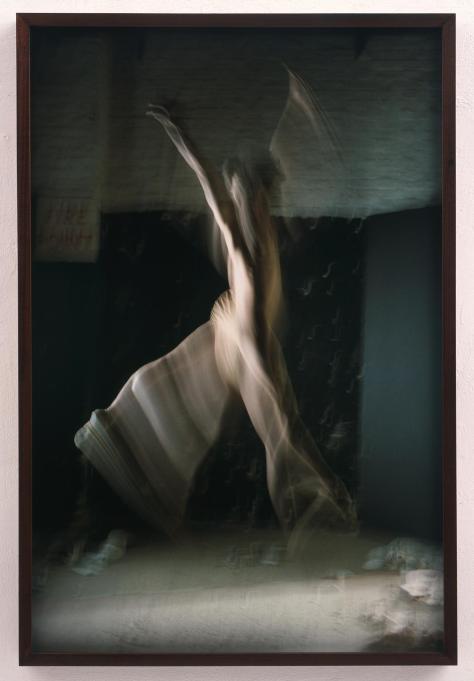
sam-Taylor-Wood-speed-2003-a3
Speed © Sam Taylor-Wood

Sam Taylor-Wood (now Taylor-Johnson) works across photography and film both commercially and within the fine art world. She has directed Nowhere Boy (about John Lennon) and 50 Shades of Grey. Her website (Taylor-Johnson, s.d.) shows a mixture of short film clips and still images. All make use of time, time suspended or sped up. There is an arresting photograph of a dancer in mid leap, set against a languid looking female on a couch –After Van Halen. Another image shows a dancer – Speed – where a slow shutter speed has caught her clothes swirling around her and there is the well know Suspended Self Portrait series with her hanging upside down, seemingly in mid-air, no obvious supports.

She says in short video interview Brief Applause (Brief Applause: Artist Sam Taylor-Wood, 2008)  ‘I have ideas and they wouldn’t go away…. they are very photographic, very strong. A lot of my photographs take a lot of organisation and set up. Suspended self portraits are images of me bound and hung from my studio …. there was a lot of pain and constriction …. Yet when you see them…. You sense more freedom than the constriction, …. (it is) frozen in time’.

 Still Life  (Still Life, 2001) is a short film of fruit in a bowl that shows the fruit decaying over time. It is set to music by Keith Kenniff in a piece called Preservation Devine. In 4 minutes, it shows a bowl of apples, pears and cherries gradually disintegrating. They first shimmer, become surrounded by a blue glow of fungal spores and then collapse. All to the accompaniment of soothing piano music. It is surprising beautiful and relaxing to watch. In another piece A Little Death  (A Little Death, 2002) she shows the gradual collapse of a dead hare via the life of insects into the remains of bone and skin. All the while a peach sits alongside, remaining seemingly whole. This time it is set to a short piece of chamber music by Royksopp. This is equally mesmerising although more horrific – I suspect because of the awareness that this was once a living animal.

Both of these pieces are related to the painters frequently chosen objects for still life, fruit, game, death and decay, carefully posed and translated into film.  In an interview with Wendt (Wendt, 2019) Taylor-Wood says ‘A still life is still a still life, even in the transformation from painting to film. I am interested in ideas connected to mortality and the passage of time, as were the Dutch master painters’ . The films make use of time passing and alteration in states of being to tell a very carefully composed story. They talk about life and death, now and then, time and standing still. The whole world in a compressed space.

References:

A Little Death (2002) In: A Little Death. Directed by Taylor-Wood, S. [Video] At: https://www.youtube.com/watch?v=H21ypJb7KJk (Accessed 13/07/2020).

Brief Applause: Artist Sam Taylor-Wood (2008) At: https://www.youtube.com/watch?v=gzuWjwcqTcs (Accessed 13/07/2020).

Still Life (2001) Directed by Taylor-Wood, S. At: https://www.youtube.com/watch?v=BJQYSPFo7hk (Accessed 13/07/2020).

Taylor-Johnson, S. (s.d.) Homepage. At: https://samtaylorjohnson.com/ (Accessed 13/07/2020).

Wendt, S. (2019) Breaking the Medium of Painting Down. At: http://artpulsemagazine.com/breaking-the-medium-of-painting-down (Accessed 13/07/2020).

Karen Bullock

06_Karen_Bullock_Refuge_-Alabama_2020
© Karen Bullock

Karen Bullock is a young documentary photographer from Alabama, USA. She has produced a body of work called Presence Obscured (George, 2020) which explores the changing nature of Christianity and faith in the south of America, and her own experiences within that setting. She says ‘Through these photographs, I share what I perceive as an ethereal sense of presence alongside themes of longing and loss. They are an open-ended offering to the viewer to ponder experiences of faith which sometimes arise in our lives, especially in the midst of trauma or crises such as the world is enduring now.’ Bullock made the images to after a severe personal difficulty and found that they helped her to cope.

The images show buildings, old churches (inside and out), abandoned statues, and religious icons. There are no people, just the traces left behind. It asks is faith still active, or has it long gone? Where is it now in people’s lives? The colours are vibrant even though the subject is occasionally sad. The lack of people is poignant.  It asks another question – if she went back tomorrow would there be someone there – or not?

Bullock’s use of absence lends strength to the work. It talks about the forgotten things, the things that may, or may not, have lost importance. People would dilute the message. It tells me about a life that is strange to me – I live in the cold and austere north.  The colours are different. The story is similar.

04_Karen_Bullock_Gethsemane_Mississippi_2019
© Karen Bullock

Reference:

George, D. (2020) Karen Bullock: Presence Obscured. At: http://lenscratch.com/2020/07/karen-bullock-presence-obscured/ (Accessed 08/07/2020).

Elliott Wilcox

Elliott Wilcox is primarily a fashion and sports person portrait photographer, working for some of the big names, Converse, Nike, Urban Outfitters.  In his website (Elliott Wilcox, s.d.) the first thing you see is people, people standing, people jumping, people in your face. Saturated colours. Moody glances. However, as you work down the page, past all the glitter and the glamour, you come across three very different pieces of work. More personal, although absent of people.

Courts is a series of images of sports courts. They are hyper saturated with colour, while remaining quiet and reflective. The walls show multiple marks were the ball (and bodies) have hit. The energy of the players has been transmuted into these tiny marks.

Walls shows climbing walls, or rather the close-up details that you would probably only usually see if you were close up and personal with them, hanging on. If you saw one of the images out of context mots people would not know what they were. They are abstract patterns, areas of light and shade. But with the minimal context given by the title they make sense. I can imagine (with terror) balancing on a point, clinging to the surface. The sheer strength required to do so.

There is a third piece Inhalers where he pictures the inhalers used to treat asthma, enlarged and isolated against a blue background, seemingly hanging in mid air. They show traces of life in the dirt and lipstick. They are lifesavers to many people.

The contrast between this work and his commercial work is startling. They use the same techniques, large format, highly coloured images. They tell about the person in their sheer absence of people.

Reference:

Elliott Wilcox (s.d.) At: https://www.elliottwilcox.co.uk (Accessed 08/07/2020).

Richard Wentworth

Richard Wentworth was originally a sculptor who used the everyday world as his model and his photography uses the same source. He looks at the objects found in the environment – often incongruous- and makes them into a piece of work that describes the place and time.

index

In an interview with Ben Eastham (Eastham, 2011) he talks about observational intelligence. ‘that’s something of what an image is – it has to have a component which is unaccountable, which sweeps over you.’ He thinks (I think) that we are made up of instinct and curiosity – which sometimes work against each other. That we recognise the spatial environment and respond to it unconsciously, use things as we need them. That words (and their origins) are important. That things happen to him.

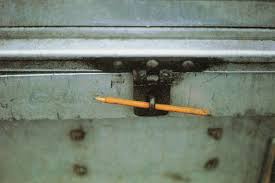
The work Making Do and Getting By (Wentworth, 2015) documents small found sculptures where an item has been used beyond its intended purpose (a boot as a door wedge), something that has been mended with  a purely functional method (twine or gaffer tape to fix an open gate), a pencil to secure a lock. The images tell a story, not so much individually, but en masse, a story of the practicalities of everyday living. A story about the people who make and mend. A story of what you do to fix the small inconveniences.  A quick walk around my local neighbour can produce similar images. As can my house. Flowers from the roadside in a plastic water bottle. The difference is that he sees them and records them.

IMG_7361

References:

Eastham, B. (2011) Interview with Richard Wentworth. At: https://www.thewhitereview.org/feature/interview-with-richard-wentworth/ (Accessed 07/07/2020).

Wentworth, R. (2015) Making do and getting by: with an interview by Hans Ulrich Obrist. London: Koenig Books.