All posts by scottishzoe

Assignment 3 – Starting point

The assignment was to take a series of images about a group of people, either a group you were already involved in (as a mirror) or a new group (as a window) to tell a story about the group.

 I spent some time thinking about the options. I am not a very social creature and the only groups I am already involved in are to do with my previous work. Using these groups is difficult because of ethical reasons. I am in the process of working on a long term project with the local ASD community, meeting with both people with autism and their parents/carers and this was a possibility – but I am thinking of this as a much longer scale project, and I suspect I will need some of the skills learnt here to complete it.

Planning:

Looking at groups that I could join to to act as a window for I came up with several options:

  • A craft group
  • A choral society
  • A running club
  • A gaming group

I investigated all of these possibilities, but the final choice was to work with the local gaming group, DWARF (Dunfermline Wargaming and Roleplay Fellowship).  I choose this for mainly practical reasons:

  • It is local and I can easily attend
  • They meet every week so gave plenty of opportunities to go on a regular basis
  • My son already is a member – so I had ‘an in’
  • I used to roleplay many years ago, so I knew the ‘language’ and the background of what was going on

Practice:

  • I started by going along to one of the meetings, introducing myself to the committee, explaining who I was and what I was hoping to do and leaving a business card. They got back to me the following week after having discussed it and said that they would be happy for me to come provided that I posted a selection of the images I took on the club Facebook page (https://www.facebook.com/groups/DWARF.GAMING).
  • The next week I went back for an initial go at taking images. This was moderately successful as the club was having one of their regular large tournaments (Winter War) and so there was a lot of activity to experiment with.
  • I rapidly discovered that light was a problem! The main room they use is very large and has an extremely high ceiling. The lights are a peculiar colour and give an odd orange tinge to everything. They are also not very bright. I could alter the colour in Lightroom, but this was not ideal. The upstairs room has much better lighting and gave a normal colour.
  • I has originally hoped not to use flash so that I would be less intrusive within the group, but this was a clearly not going to work.
  • I went back over 5 weeks and took images each time. I had planned to continue going but the club has been cancelled because of the Covid-19 problems.

Positive things:

  • The club was very welcoming, and I rapidly became involved with the different groups there to the point that they:
    • Wanted me to join in with the activities
    • Complained if I hadn’t taken pictures of them and their group
    • People who initially had said they didn’t want their pictures taken changed their minds
  • I obtained a very large number of images; some were quite repetitive because of the lighting problems and doing it over several weeks

Problems:

  • The lighting
  • The cancellation due to Covid-19
  • I found it difficult to get images that showed what was actually going on there rather than just portraits of the people involved.
  • The people got so used to me that they completely ignored me taking images – which was a good for reality but bad for focus!
  • The number of images obtained – which I now have to try and break down.

Where I am now:

The club has several different activities which go on each week, Warhammer, Bolt Action, tabletop games (lots of different one) and role playing (mainly Dungeons and Dragons). It will be difficult to show all the activities done at the club without using a very large number of images so I am considering whether to pick out one activity and concentrate on that rather than to attempt to show the whole club. I am also thinking about how to show the images. I am considering several possibilities:

  • Single images
  • A slideshow
  • A newspaper
  • Colour versus black and white

The next stage is to think about how best to put the piece of work together and, most importantly, choose the most appropriate images, which may not be my personal favourites.

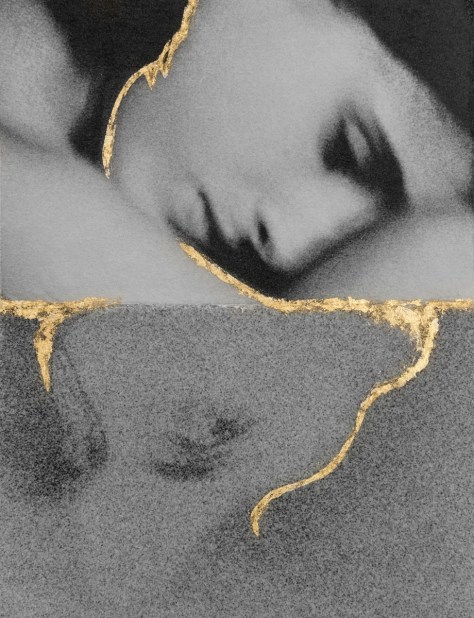
Borders of Nothingness – On the Mend

Infinity
© Margaret Lansink

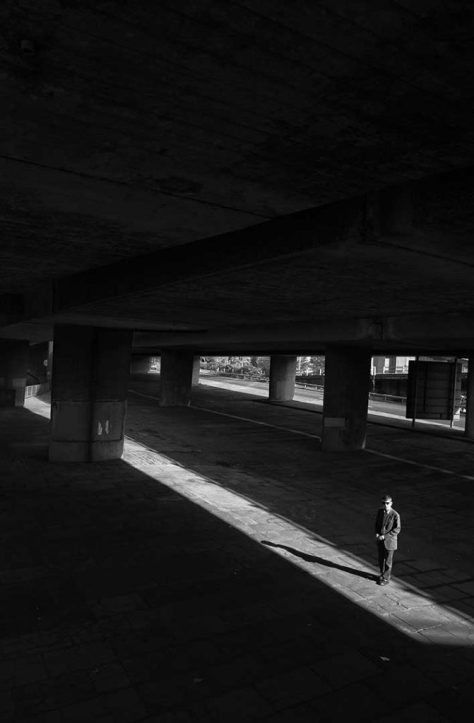
Margaret Lansink is a Dutch photographer who lives in a small village near Amsterdam. She was one of a very large family and uses her camera to connect with her emotions. She, according to her artist’s statement, often feels like a spectator of a play. Her images are intuitive, blurred and misty, full of emotion. Her new book Borders of Nothingness – On the Mend grew out of her estrangement from her daughter and subsequent reconnection (although you do not learn whether or not it was/is a success). In the introduction it says ‘In the infinite flow of everything, people come and go in our lives. While the presence of some can be so subtle that we hardly register when it begins or ends, with others its far clearer: they enter, or leave, with a bang’ (Lansink, 2020). In her interview for Leica, Lansink says, ‘Borders of nothingness is my way of telling people that life is not always what you expect from it’ (Klink, 2018).

The book is small, 14 x 18.5 cm and tactile. The original edition of 50 copies was hand bound in a Japanese style, the edition I have is still beautiful, although without the gold leaf collage of the original. The images are black and white, silver and gold and their lack of clarity makes one dream of what has happened and what might be. They are subtle, haunting, and I have found myself going back over and over to read slightly different stories.

I bought this for myself to break the miseries of isolation. It was well worth the price.

_Natsukahii

Lansink’s website shows more of the images and is worth a look both for this and her earlier series which are photographed in a similar style.

Reference list:

Klink, D. (2018) Margaret Lansink – Borders of Nothingness | LFI Blog. At: https://lfi-online.de/ceemes/en/blog/margaret-lansink-borders-of-nothingness-1641.html (Accessed on 26 March 2020)

Lansink, M. (2020) Borders of Nothingness – On the Mend. Belgium: Ibasho.

Lansink, M. (s.d.) margaretlansink. At: https://margaretlansink.com/ (Accessed on 26 March 2020)


Regular Reflections- March 1

I am well behind with my updates at present because of the general world chaos! However, that dories not mean that I have not been plodding on. Social isolation is difficult, not just not seeing people but actually functioning in an ordered manner.

Reading:

  • Project Cleansweep – fascinating and very scary book about military use of land in Britain
  • Marianne Hirsh – Family Frames, very dense book on memory and use of photo in memory work. Eventually finished it and made (very long) notes
  • Also re-read the work on the Hardman Collection by Keith Roberts
  • Daniel Chandlers work on the gaze – this was actually very helpful in my thinking process
  • Reading latest Aperture magazine – House and home – much of which is on architecture
  • Natural Light II (and some of the associated books)

Thinking and doing:

  • Spent a lot of time thinking about how I can do work with the present issues of social isolation. I am pretty much house bound at present, which makes taking pictures of people other than my long-suffering family very difficult. Maybe I need to invest in a very long lens and stand on the balcony!
  • I bought an old room screen that has decoupage (in a poor state) – which I am thinking about using as a backdrop for some inside images
  • Idea for a new project
    • Our local park has a lot of memorial benches. Can I take images of the benches and/or the nameplates and/or the settings and somehow use them in work about collective memory?
  • I attended the bi-weekly hangout for the photography course for the first time – interesting although just sat and listened today, it was useful though to be in contact with other people
  • Planned to attend the zoom on assignments – but missed it – that is the issue with the lack of structure. However, have downloaded to PDF and will look at the advice in detail

Photography:

  • Spent the first week of isolation trying to take regular hourly inside images, using my mobile phone and a square format
    • Where I was in the house
    • A selfie
  • I found this harder to do than I expected as, even with using a timer I tended to forget to take the images, and also they tended to be very repetitive as I was mostly inside either in the living room or at my desk. However, I think this is a piece of work that could possibly be repeated, or even used as is for an example of moving/lining in a confined space
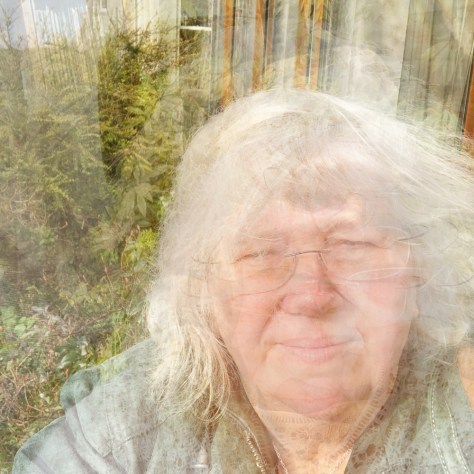
  • I also spent time playing with photoshop and layered all the selfies for each day together to make a composite image – this was definitely interesting. I would not say that they make me look my best – but interesting.
  • untitled (3 of 7)
  • Continued to take the images of DWARF that I will use for assignment 3. Good thing I did as I now cannot get them as closed for foreseeable future.
  • Took a series of images of son and husband for the gaze exercise. Remarkably difficult to get family to pose and do what you are asking rather than what they think you want!

Memory

Much, if not all photography is a way of looking at memory. Your memory, your family’s memory, the collective memory. A memory of a person or the memory of a place. Photos taken today will become memories for the future. Photographs are one way of engaging with the past. Marianne Hirsh uses the phrase ‘points of memory’ (Hirsh, 2012) to describe this. This memory can be personal – but does not have to be. Remembering the past, before you were even born, is a way of paying homage to it. Hirsh calls that ‘postmemory’ and discusses it in her book Family Frames together with other forms of describing memory and how images can be read in the context of the family. See Marianne Hirsch – Family Frames for an extended review of the book.

Annette Kuhn in Family Secrets talks about the way photographs trigger memory, both personally – in a photograph of herself as a child and collectively – in the photograph of a burning London with St. Pauls set against the smoke.  See Annette Kuhn – Family secrets for an extended review of her book.

Keith Roberts’s work on the Hardman Portraiture Collection of images of mainly servicemen discusses how memory can be personal or collective (postmemory) and can also be direct (something you remember) or a family memory. This memory can be invoked by photographs, which Roberts’s notes can be both an act of recall and an act of mourning. It also references Boym’s work on nostalgia (Boym, 2016) which again can either be reflective (looking at personal and historical past – how the images impact on the families of the servicemen) or restorative (looking a national past – in this instance how the images evoke WWII and its effect on the national thought and memory).

A recent book Project Cleansweep by Dara McGrath (McGrath, 2010) also talks about memory, in this case how the land holds memories and how images can reveal them.  War Sand by Donald Weber (Weber and Frolicking, 2018) talks at length about the memories held by the beaches of the Normandy invasion in WWII. He uses a combination of present images, stories and microanalysis of sand samples to tell the story of the invasion and the lives lost.

Memories can also be highly personal. Lesley McIntyre, whose daughter was born with a muscular abnormality that impacted both on what she could do and how long her life was likely to be, started documenting her life in photographs from when she was born and continued until her untimely death age 14. The book – The Time of her Life is a poignant memorial to a life lived fully (McIntyre, 2004).

A quick look at my shelves warns me that this list of books about memories could become extremely extensive – enough that it reminded me of where I started thinking about memory – much, if not all photography is a way of looking at memory. Making worthwhile memories is critical, hard and important both for myself and my family.

Reference list:

Boym, S. (2016) The future of nostalgia. New York: Basic Books, A Member Of The Perseus Books Group, Dr.

Hirsch, M. and Harvard University Press (2016) Family frames : photography narrative and postmemory. Cambridge, Mass. ; London: Harvard University Press, Dr.

Kuhn, A. (2002) Family secrets : acts of memory and imagination. London ; New York: Verso.

Mcgrath, D. (2020). Dara McGrath Project Cleansweep. Beyond the Post Military Landscape of the United Kingdom. Heidelberg, Neckar Kehrer Heidelberg.‌

Mcintyre, L. (2004) The time of her life. London: Jonathan Cape.

Roberts, K. (s.d.) ‘There Then : Here Now – Photographic Archival Intervention within the Edward Chambre Hardman Portraiture Collection 1923-1963’ At: https://www.academia.edu/12049291/There_Then_Here_Now_-_Photographic_Archival_Intervention_within_the_Edward_Chambre_Hardman_Portraiture_Collection_1923-1963?auto=download (Accessed on 24 March 2020)

There Then, Here Now (s.d.) At: https://hardmanportrait.format.com/ (Accessed on 24 March 2020)

Weber, D. and Frolick, L. (2018) War sand. (s.l.): Polygon.


Marianne Hirsch – Family Frames

I read the book Family Frames, photography, narrative and postmemory while inside during a period of ‘social isolation’. I admit that I might not otherwise have managed to finish it in one sitting (albite over several days) because of its complexity.  The book is a combination of an autobiography, a discussion of others work; written, photographic and cinematic and a description of how Hirsh sees both photography and writing as a way to describe memories of yourself, postmemories (of the past), and ways of making portraits (allo-portraits) by combining all of these together. It is interlaced with feminist and sociological theories and also other people’s thoughts on photography (specifically Barthes). Much of the book is based on ways of imagining the Holocaust and its description in photography and writing. It ended by raising more questions in my mind than it resolved – but maybe all books should do this.

While I was reading this, I walked around our local park and looked at the memorial benches in the formal garden. They all have a simple plaque, with a name, a date and sometimes a few additional words. I knew none of the people commemorated – but they still brought back memories of my own. These are family memories in themselves.

Some notes from this (very complex) book and added thoughts in italics.

Family frames:

  • Talks about Barthes and the picture of his mother that he refused to show. Gazes circulate. The mother becomes the child. The punctum is private. Text and image together tell a story. The photo is linked by an umbilical cord to the viewer. The referent (the thing that was photographed) is/was present and now absent. ‘Photographs, as the only material traces of an irrecoverable past, derive their power and their important cultural role from their embeddedness in the fundamental rites of family life’ (p.5). The photograph is evidence. It shows time.
  • Eastman production of Kodak was aimed at everyone – the means to tell a family story. It tells the family myth, a collaboration between photographer and the viewer. The photograph often shows what we wish – not was actually was.
  • Looking within a family is mutual – self and other, subject and object. How do we describe this? But what about the external gaze? Each culture has an ideal – and the images are read though that.
  • ‘Family photography can operate at this junction between personal memory and social history, between public myth and personal unconscious’ (Holland and Spence, 1991).

Mourning and post memory:

  • Pictures can become emblems, especially if disseminated widely (both for the family, and wider world)
  • Photographs represent both life and death; note Sontag quote ‘Photographs state the innocence, the vulnerability of lives heading towards their own destruction and this link between photography and death haunts all photos of people’ (Sontag, 1978) v. Barthes connection to life (umbilical cord)
  • Pictures can show horror (holocaust, but also any major trauma) – context helps. The horror is in the imagination of what happened and also the ‘might-have-been’. Family images do not always make for painless reading. I have a selection of images from my mother’s time in Germany in WWII having a great time with the army – her memories were of fun – but not linked to anything else occurring then.
  • Postmemory – the memory of a child of something that happened before they were born, mediated by stories from the past, especially traumatic ones. Memory itself is ‘a double-coded system of mental storage and retrieval’ quoted from W.T.J. Mitchell (p.22)
  • Photographs as leftovers, fragments, building blocks!
  • Does an image anesthetize horror – and therefore make it less (especially in the context of the amount of truly horrific ‘fantasy’ films and novels circulating at present). Are people desensitised by this as much as by repeated looking?
  • Photos can keep memory alive – but a shrine – any picture will be altered by other memories, altered by words (especially if modulated via someone else’s memory). The photo as a memento mori. The living may compete with the photo (and can never win). A photo can stand in for anyone (especially if indistinct).

Reframing the human family romance:

  • Family images act to consolidate the group – it may include ‘guests’ but they still remain ‘other’. There will be a familial gaze. Much photography has a function o support the family group. Photos are taken of the ’best bits’.
  • Photography came to show the idea of a global human family – the Family of Man, a ‘universal brotherhood’. A post-war attempt to show human universality.
  • The freezing of the image acts to perpetuate a myth of the family as stable and universal (very much a Western view) – a nuclear family. A romance. An ideal.
  • The family is constituted by ‘familial’ looks, the family album makes the relationship (or the shoe box of pictures) – the idea of a back and forward gaze – ‘the mirror sees you’. But how does that work in the context of an exhibition? Steichen’s idea of producing a sense that ‘everybody is the same’ depended on the photo’s being of individuals, seemingly private rather than public, a fantasy of love (although all white and heterosexual).
  • How does the fantasy of love fit against the images of war? How do the different races show similarity? Or does it actually point out the differences (and the American/European feeling of superiority)? ‘They can become like us, but we don’t have to become like them’ (p.58). Why are most of the photographers American or European even when the subject was not?
  • Paula Rabinowitz – “the story that seeks to ‘know’ though what it can ‘see’ of the other finds, not the other, but itself” (Rabinowitz, 1992) very relevant to identity and looking at images of other people
  • There is not a simple/single notion of a human family (true when she wrote this in the ‘90’s, even more so today in the 2020’s)
  • How are images different if they are taken by the person themselves rather than an outsider? What would they choose to show? (How much can you immerse yourself in another culture?). What does someone of another culture say about you?

Masking the Subject:

  • What do photos of relations taken many years ago tell you? How do they link with the people you know? What do they tell you about yourself and your relationship to them? Do they become autobiographical? How is it affected by history – both world history and family stories?
  • The familial look defines a boundary, an idea. The inclusion of people within your story is due to your interpretation, and only yours.
  • Family pictures can be self portraits, self portraits include the other
  • As we pose we assume masks, as we read the image we project masks (ideological frames) onto the image (are they the same?). Whose face are we photographing?
  • Lacoue-Labarthe’s idea of the ‘allo-portrait’, subject exists in time as “other”, as a mirror (Lacan’s theory), as a construction of the self, externally recognised, and as a previous self that was taken at a specific moment in time.
  • Do relationships construct the universal artist with ‘the power to express universal feelings’?
  • Different theoretical frameworks allow different understandings of images (all could be correct, or at least, equally valid)
  • What happens when you actually wear a mask? (Lucybelle Crater), becomes surreal, comic – but does the relationship stay? The images were taken in the lead up to death – and have become allo-portraits, self-images.
  • We all function as both subjects and objects in a ‘complex visual field not entirely determined by the gaze, but also the product of a series of more individual , local and contingent looks, which are mutually constitutive, reversible and reciprocal’ (p. 102).
  • Reading is affected by race, gender, class, historical moment, age, nationality etc
  • Lacan – looking and being looked at are identical processes
  • Images can be used to question, looked at alongside others, talked to, tell stories – they are not the truth always
  • Sherman’s images do not show a familial look – why not? And does it remain a human subject?

Unconscious optics:

  • Why do we put up family images? What do they mean? what do they tell us? Are we more likely to put us family pictures or other objects that are linked with earlier stages of our lives?
  • Optical processes that are invisible to the eye can be seen by the camera. It can expose hidden dimensions of actions, tension in photographs between flatness and illusion of depth, between what it des reveal and what it does not
  • Family pictures can be read differently by different family members and also over time (re novel Family Pictures)
  • Family memory is both shared and vulnerable, exposed in photos. ‘The mystery of the family’.
  • Jo Spence’s work on constructing and reconstructing images and phototherapy (need to read more of her work first hand) – her project is ‘begin to re-imag(in)e who we are’, talks about absence of photos that show much of her life. Using family photos in therapy – giving permission to make the stories work in our interest, also taking images that can allow memory to become conscious
  • Images of illness, images of sexuality – allowing them, making them real.
  • Carrie May Weems – reversing the traditional gaze of white people looking at black as poor etc, concentrates on the unseen, absence as well as presence
  • The camera can be a space for both reflection and self-reflection – you look at yourself
  • Can use a mixture of text and images to tell the story, one fills the gaps in the other, may have an incongruity – but that adds another layer

Maternal exposures:

  • Mann’s images of her children – controversial/beautiful/eerie/disturbing – loving images by a mother of her own children. How does the ‘position of power’ affect the maternal role?
  • What are the social pressures on mothers who want to be artists? And how does this affect the family dynamics and the type of photos taken?
  • Are the images of children ‘allo-portraits’ of the mother rather than representations of childhood?
  • How does it impact on the child to see themselves reflected in the lens of the camera rather than in the mother’s eyes? What are the implications for their relationship? Is the mother taking pictures to recreate her own childhood?
  • How much control does the child have? Every picture of a child is, too some extent, a picture of the mother. How vulnerable is the mother?
  • Where does the father fit into this (CarlVision), or the foetal image?
  • What happens when there are no family pictures? does it stop you understanding your history?

Resisting Images:

  • Family images/albums show the past – but does that make us happier?
  • Images and stories can be manipulated to reveal alternative stories, reinventions of the events and the social roles
  • Can you erase parts of the images, tell a part story, join them together again? A different start, a tabula rasa
  • Not all memories have photos, could have been taken but wasn’t! Can you (should you) construct an image to match them, words? Images? Collage?
  • Mutilating images may reveal an underlying anger, a rage (rage, rage against the dying of the light)
  • Cutting up images lets you out of the family frame (see Novak for examples)
  • A ‘maker and reader of images…. can make a space for see[ing] differently…. she can also reveal, through splits and contradictions, through incomplete suturing, the complicated and painful process of identity’ (p.215)

Pictures of a displaced girlhood:

  • Translation from child to adolescence can (usually is) be traumatic
  • Pictures can mediate the changes
  • Autobiographical reading can act as a pre-text, an ‘allo-portrait’, with shared resemblances
  • Do all people who have had a form of displacement end up ‘on the border’? In a shifting space.

Past lives:

  • How do past lives in the family, our experiences of their history affect our views of the world? Their stories (if they tell them) occupy a place in our childhood (and if they don’t, there is a gap) . Is there a sense of exile?
  • What about mourning, grief, rage, parental trauma, ‘absent memory’?
  • Are the actually too many stories? Leaving those who come after to wander, disenfranchised (from Nadine Fresco, p.245)
  • Memorial book as acts of witness, public mourning
  • If you alter an image does it still maintain its indexical nature? Or does the changes of reference take it away (thinking about Boltanski’s work on the holocaust and aftereffects)

References and suggested reading:

Barthes, R. (1988) Camera lucida : reflections on photography. New York: The Noonday Press.

Hirsch, M. (1997) Family Frames, photography, narrative and postmemory. London: Harvard College.

Holland, P. and Spence, J. (1991) Family snaps : the meanings of domestic photography. London: Virago.

Kelsey, R. et al. (2019) Vision & Justice: Around the Kitchen Table – Aperture Foundation. At: https://aperture.org/blog/vision-justice-around-kitchen-table/

Norval, E. (2018) Ralph Eugene Meatyard – Anything But Normal. At: https://www.compulsivecontents.com/detail-event/ralph-eugene-meatyard-anything-but-normal/ (Accessed on 20 March 2020)

Novak, L. (2020) Lorie Novak. At: https://www.lorienovak.com/ (Accessed on 20 March 2020)

Rabinowitz, P. (1992) ‘Voyeurism and Class Consciousness: James Agee and Walker Evans, “Let Us Now Praise Famous Men”’ In: Cultural Critique (21) p.143.

Sontag, S. (1978) On Photography. London: Allen Lane.

Spence, J. (1988) Putting myself in the picture : a political, personal, and photographic autobiography. Seattle, Washington: Real Comet Press.

Spence, J. and Dennet, T. (2005) Jo Spence : beyond the perfect image. Photography, subjectivity, antagonism. Barcelona: Museu D’art Contemporani De Barcelona.


Natural Light II

Angela-Catlin-10-1-671x1024
Ronald Frame © Natural Light II – Angela Catlin

Natural Light II is a book of photographic portraits of Scottish writers by Angela Caitlin. I acquired it because I was attracted to the cover image of an unnamed person (I think Alasdair Grey) and also because I read endlessly and voraciously. I am Scottish by habit (although not by birth) and much of the poetry, crime and other novels I read is by Scottish authors, so it seemed a sensible acquisition.

The images are all taken by natural light, across the world and vary from close up portraits such as the ones of Jackie Kay and William Boyd to ones where the person is almost hidden, Christopher Brookmyre and Ronald Frame. The combination of the image and the written text, a piece by the subject, a poem or a short extract of fiction was fascinating. The person’s portrait often did not give any clues as to the type of writing, other than some wild men from the north with their Gaelic poems! I spent as much time reading as looking – and have been seduced into enlarging my collection of both poetry and fiction.

My favourite image is one of Al Kennedy, shown outside, smiling, under blossom – contrasted with a rather scary piece of work about a girl (she feels young) being overwhelmed with the expectations of her lover. I look back and forward between the writing and the image and think – how do they fit together – but why should they? Why should someone’s looks mandate how or what they write about? Why should I be so naïve to assume they should?

Very few of the images show the subject looking at the camera, most are staring into the distance, or looking slyly sidewards. What are they thinking about? Are they imagining their next poem? These are the dreamers of our life and we would be poorer without them.

Reference:

Catlin, A. (2015). Natural Light II: photographic portraits of Scottish writers. Glasgow: Cargo.


Exercise 3.4 – The Gaze

The exercise is to produce a series of 5 portraits that show various types of ‘the gaze’ to tell a narrative.

I have discussed the theory behind ‘the gaze’ in The Gaze

I had two possible thoughts around this:

  1. To use some of images that I have been developing for assignment 3, which are pictures of people at a gaming club.
  2. To talk a completely separate set of images to illustrate the gaze.

I decided to do the latter, as not only would this avoid the risk of duplicating images in an exercise and an assignments, which although possible is not ideal, but this would also allow me to act as ‘the director’ and ask people to do exactly what I wanted.

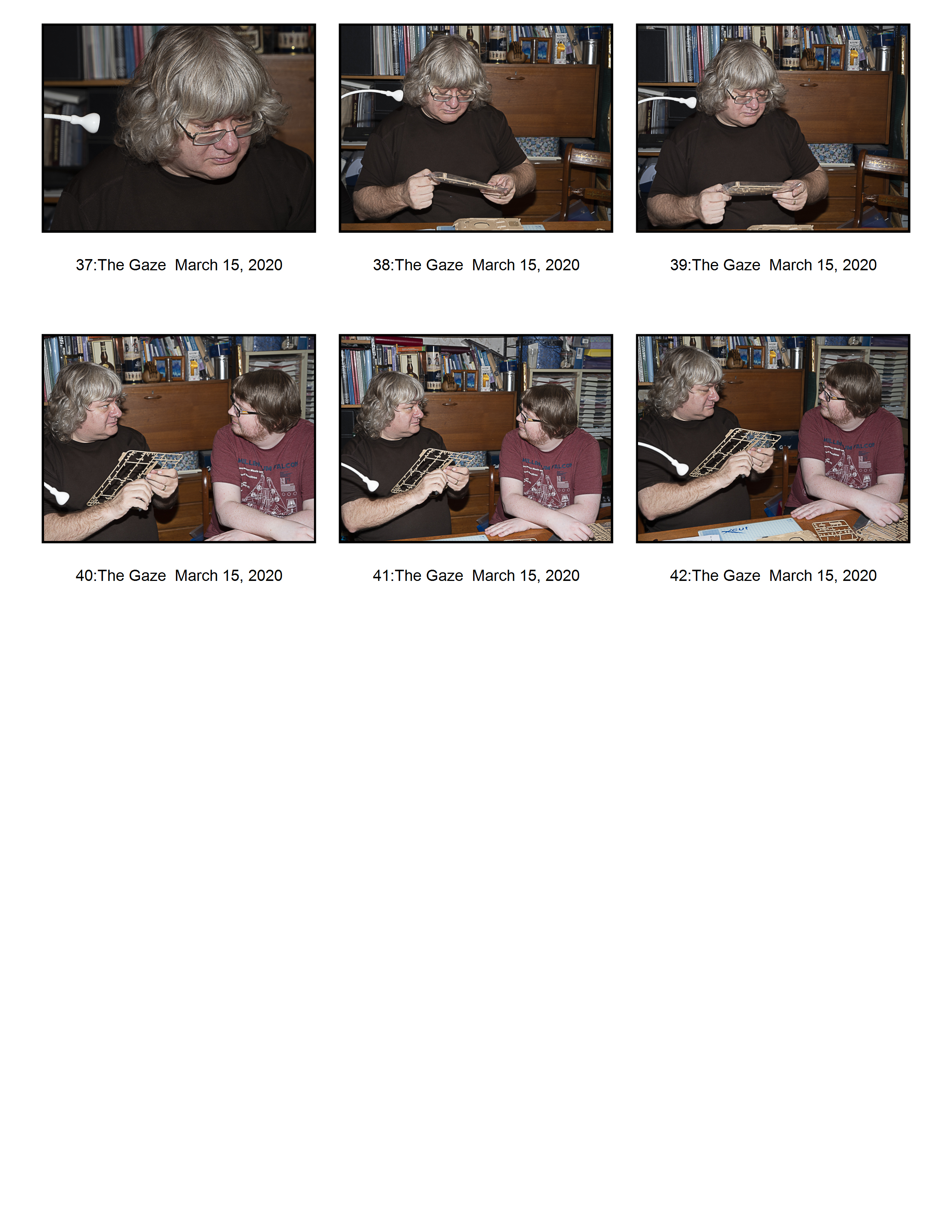
I asked my husband and son to help with this and took a series of images of my husband modelling (his hobby) with my son helping out and watching the process. The activity needed to be done inside and therefore necessitated the use of flash. They were moderately cooperative – but got involved in what they were doing so didn’t always listed to my directions.

The main protagonist was the modeller, with the watcher playing a secondary role.

Final story:

The Direct Address

The Averted Gaze

The Spectator's Gaze

The Internal Gaze

The Bystander's Gaze

This was a fascinating exercise, initially reading all about the gaze and how that term is used in a wide variety of ways and then trying to actually catch people doing the specific thing I wanted.  It would have been simpler to use a series of already taken images and pick out examples of types of gaze, but I wanted to have the extra control and practice of acting as the director in a shoot. I felt this was moderately successful – but something I want to try again with different people and specifically with people I did not know so well.

Learning Points:

  • Be firm and clear with your directions
  • Family don’t always listen well
  • Be prepared to go back and reshoot the images

Contact Sheets:

The Gaze

“To gaze implies more than to look at – it signifies a psychological relationship of power, in which the gazer is superior to the object of the gaze.”  Schroeder. J, in Barbara B Stern, ​Representing Consumers: Voices, Views and Visions ​(1998) London: Routledge. Pg 208.

The gaze is an important in the theory of photography. There are multiple ways of looking at what that actually means. A simple list that summarises it is:

  1. The photographer’s gaze
    1. What they are actually looking at and how they are looking, which might be though the lens of the camera – but could also be by looking at the image that they are planning (an example of this would be in the work of Gregory Crewdson).
  2. The viewer’s (spectator’s) gaze
    1. The male gaze is discussed in Berger’s Ways of Seeing (Berger, 1973) – ‘Men look at women. Women watch themselves being looked at’and usually implies power, ‘I own the image/object that is shown’. It was initially suggested in relation to film by Laura Mulvey in her essay Visual Pleasure and Narrative Cinema’ (Mulvey, 1975).
    2. The female gaze – initially discussed by feminists in response to Mulvey’s work and now widely used but not clearly defined. Is it about all work by females? Or only about that work with a feminist slant? There is an interesting recent article by Murray Brown that says, ‘if anything, the female gaze is simply an awareness that women do not hold half the power’ (Murray Brown, 2019).
    3. The LGBTQ+ gaze also needs to be considered and has more recently been explored, for instance in the context of the work of Mapplethorpe and Goldin.
    4. The ‘colonial gaze’ – about attitudes to ‘others’ (not white, European or American).
    5. The academics gaze – analysing the context, sources and details
  3. The gaze of the person/people within the image
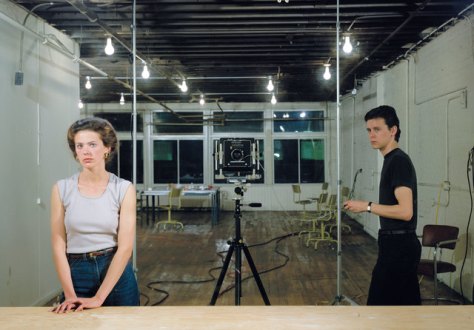
    1. Where they are looking and who they are looking at- an example of multiple gazes within an image is Jeff Wall’s photograph Picture for Women (1979).

      Picture for Women -© Jeff Wall
  4. The bystander’s gaze
    1. People looking at people looking! Good examples of these are in Martin Parr’s recent work on Versaille where he has photographed people taking images of themselves (Pégard, 2019).

For a more complicated consideration of the gaze  there is an essay by Lutz and Collins in ‘The photography reader’ (Wells, 2010, pp. 354-374) which starts by saying ‘the photograph……is not simply a captured view of the other, but rather a dynamic site at which many gazes or viewpoints intersect’.  The essay is written in the context of research on National Geographic images. They discuss seven different types of gaze which I shall summarise here:

  1. The photographer’s gaze which controls the subject matter, the structure, view and content, and which may be emotionally distant (alienated) from the subject
  2. The magazines gaze (they were talking in the context of the National Geographic), but there would be similar issues from any commissioned image – where a specific image is chosen, and the layout will give a desired ‘reading’ to the image
  3. The magazine reader’s gazes where ‘the reader….is invited to dream in the ideological space of the photograph’ (Tagg, 1988), anything that jars may put the reader off interpreting the image as the magazine would want. It is reliant on cultural models, gender and diversity of experience together with the context of reading (a quick skim or detailed look, alone or with other people)
  4. The non-Western subject’s gaze (or more generally the gaze of the subject in the image) divided further into:
    1. Confronting the camera, acknowledging the photographer and the reader ‘I see you looking at me, so you cannot steal that look’ (p.359), what it means is dependant on the expression (smiling, glaring etc.), a collaboration and an attempt at creating intimacy. They note that those who the West defines as weak are more likely to look directly at the camera than those defined as strong – is that editorial choice/political reasons?
    2. Looking at something else within the frame – gives information about the subject of the image
    3. Looking into the distance – may suggest things about the personality of the subject (dreamy, forward thinking)
    4. No gaze visible, too small, covered with a mask – ‘a boundary erected’
  5. A direct Western gaze – in the context of the National Geographic included Westerners in the image may allow the viewer/reader more identification with the image. The meaning will then partially depend on how the various people within the image interact – ‘the mutuality or non-mutuality of the gaze of the two parties’ (p.362). Is the gaze colonial? Is it patronising? These types of images are less frequent now – is that because of a changing view of Americans within the world – the other becoming more threatening and therefore safer behind the camera?
  6. The refracted gaze of the Other: to see themselves as others see them – ‘mirror and camera are tools of self reflection and surveillance’ (p.365), creating a double, looking for self-knowledge. The photo may actually increase alienation, see Sontag’s suggestion ‘the photographer is a supertourist, an extension of the anthropologist……the photographer is always trying to colonise new experiences……to fight against boredom’ (Sontag, 1978).
  7. The academic spectator’s gaze as a subtype of the reader’s gaze which here looks at a critique of the images and why they were made

They summarise by saying that ‘the multiplicity of looks is at the root of a photo’s ambiguity, each gaze potentially suggesting a different way of viewing the scene’ (p.171).

In the OCA handbook for IAP it states:

A key feature of the gaze is that its subject remains unaware of the present viewer. Academics and theorists have identified a number of different gazes:

  • the spectator’s gaze​ – the look of the viewer at a person in the image.
  • the internal gaze​ – the gaze of one depicted person at another within the same image.
  • the direct address​ – the gaze of a person depicted in the image looking out directly, as if at the viewer (through the camera lens).
  • the look of the camera​ – the way the camera itself appears to look at people depicted in the image (the gaze of the photographer).
  • the bystander’s gaze​ – the viewer being observed in the act of viewing.
  • the averted gaze​ – the subject in the image deliberately looking away from the lens.
  • the audience gaze​ – an image depicting the audience watching the subject within the image.
  • the editorial gaze ​– the whole ‘institutional’ process by which a proportion of the photographer’s gaze is chosen and emphasised.

There is a comprehensive overview of the gaze and accompanying  issues available at: http://visual-memory.co.uk/daniel/Documents/gaze/gaze12.html?LMCL=zhc8U6 . In this Daniel Chandler adds in discussion about the direction and angle of the gaze, proximity and how this is varied by race and custom (as is length of time someone will look at you and how direct the gaze will be). He also discusses the eye of the camera, although mostly related to film and TV and notes ‘Looking at someone using a camera (or looking at images thus produced) is clearly different from looking at the same person directly. Indeed, the camera frequently enables us to look at people whom we would never otherwise see at all. In a very literal sense, the camera turns the depicted person into an object, distancing viewer and viewed’ (Chandler, 1988).

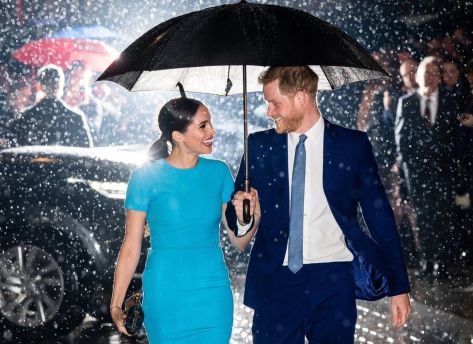
This short discussion of  different ways of considering the use of the word ‘gaze’ shows many alternative ways of interpreting it and its use within photography. While I was considering this, in the work-up for exercise 3.4 I came across a photo-essay on the BBC news site.  https://www.bbc.co.uk/news/in-pictures-51767925

I do not usually follow the British royal family – but I thought that many of these images demonstrated the types of gazes listed above. In order:

  1. The spectator’s gaze
  2. The internal gaze
  3. The audience gaze
  4. The editorial gaze
  5. The look of the camera
  6. The bystander’s gaze
  7. The averted gaze
  8. The direct gaze
  9. The direct gaze
  10. The direct gaze
  11. The internal gaze
  12. The internal gaze

    _111161168_94d1dbc3-d3bf-4e89-8619-336fe22cc0b1
    Meghan and Harry © Samir Hussein/Wireimage
  13. The direct gaze and the averted gaze
  14. The direct gaze and the averted gaze
  15. The direct gaze

    _111162043_022a039f-c8fd-4a5a-87bc-3fc5f97d5e10
    Meghan and Harry © Paul Edwards/Reuters
  16. The bystander’s gaze
  17. The audience gaze
  18. The spectator’s gaze

References:

Barbara B Stern, ​Representing Consumers: Voices, Views and Visions ​(1998) London: Routledge. Pg 208.

Berger, J. (1973). Ways of Seeing. New York, Viking Press.

Chandler, Daniel (1998): ‘Notes on “The Gaze”‘ [WWW document] http://www.aber.ac.uk/media/Documents/gaze/gaze.html [Accessed 12 March, 2020]

Mulvey, L. (1975). Visual Pleasure and Narrative Cinema. Screen, 16(3), pp.6–18.

Murray Brown, G. (2019). Can a man ever truly adopt the ‘female gaze’? [online] http://www.ft.com. Available at: https://www.ft.com/content/4e29215a-0f40-11e9-a3aa-118c761d2745 [Accessed 9 Mar. 2020].

Pégard, C. (2019). Versailles, Visible invisible: Dove Allouche, Nan Goldin, Martin Parr, Eric Poitevin, Viviane Sassen : [exposition, Versailles, Château de Versailles, Domaine du Trianon, 14 mai-20 octobre 2019]. Paris: Éditions Dilecta, Dl.

Sontag, S. (1978). Susan Sontag on photography. London, Great Britain: Allen Lane.

Tagg, J. (1988). The Burden of Representation : Essays on Photographies and Histories. Basingstoke: Palgrave Macmillan.

Wells, L. (2010). The photography reader. Abingdon, Oxon ; New York, Ny: Routledge, pp.354–374.

Regular reflections -February 2

Reading:

  • The Ballad of Sexual Dependency – I enjoyed it – although that is clearly the wrong word! Something I have been meaning to look at for a long time
  • Looked again at Family Secrets by Kuhn – made notes, this would use re-reading at a later date

Thinking and doing:

  • Zoom on reflective writing – written up separately, definitely something I need to practice
  • Started a spreadsheet on all my photobooks, partly to avoid duplications, partly to enable better note keeping

Work:

  • Just sat down and did assignment 2
    • Used the images I had taken for it and put aside
    • Contacted people online for opinions
    • Sent it all off to tutor
    • NO MORE PROCRASTINATING
  • Met with another ASD adult to plan photography for long term project

Upshot is that I am feeling better and back on track even if I have to redo whole of A2.

Project Cleansweep

Having been brought up as a child in the 60’s and 70’s I was very aware of the Cold War – but only as an abstract issue. We saw the leaflets. While at university we campaigned for nuclear disarmament but, in spite of living in Scotland – the site of Gruinard Island and testing for anthrax, knew very little about chemical and biological warfare (NBC). That was of the past. It was related in my mind to the mustard gas in WWI, with no assumptions that is was still current. At school we read Dulce et decorum est by Wilfred Owen (Owen, 1920). We acted it out. But it seemed so horrific that it was obviously something that wouldn’t happen now. Yes, there were occasional news items about Saran attacks – but they were elsewhere, nothing to do with the British Isles, honesty, lack of corruption and ethical behaviour.  As I got older, I became less optimistic about the state of the world and more aware that there was still research into NBC, even in Britain. I became aware of Porton Down – which, according to the government website only researches NBC so that we can have counter measures, (see https://www.gov.uk/government/news/the-truth-about-porton-downq). I became aware of beaches that were contaminated with radioactivity due to use of radium to give luminance to dials for aircraft. I heard rumors of pockets of increased cancers and disabilities near old military sites – but little was ever verified.

02-Kimbolton-Cambridgeshire-2012-840x594
© Dara McGrath – Kimbolton, Cambridgeshire

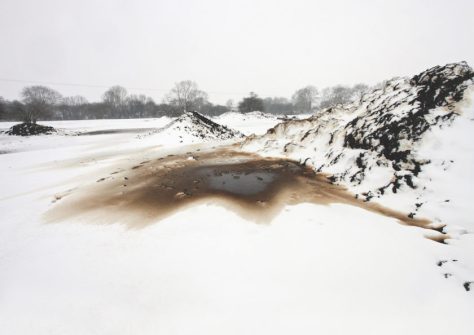
Dara McGrath’s book Project Cleansweep (McGrath, 2020) tells the story of the, mainly unknown, sites where biological and chemical items were manufactured, stored, tested and dispersed. Starting from a report on Project Cleansweep (Edwards, 2011), which was a government investigation that was aimed at making sure that residual traces of chemical and biological manufacturing processes did not cause any ongoing risk to life, McGrath investigated further and ended up looking at 92 sites across the United Kingdom. The book shows a selection of the pictures he took, along with copies of newspaper reports and drawings. Many of the images are stark, the land and the buildings are destroyed but others are beautiful and belie the nature of the place they were taken in. Some of the images remind me of those of Edward Burtynsky, in that they show desolate and ruined places and other those of Fay Godwin, reminding me of her work in Our Forbidden Land (Godwin, 1990). The pictures are shown alongside a brief explanation of where they are and what went on, together with what the land is used for today. McGrath explores 4 sites in greater detail;  Rhydymwyn – where bulk chemical weapons were made and stored and where there is significant ongoing contamination, Harpur Hill – where captured enemy ordnance was destroyed, Gruinard Island where anthrax was tested in 1942  and which was eventually decontaminated and declared safe in 1990 and Lyme Bay where trials of spraying bacteria and zinc cadmium sulphate across the coast were carried out leading (possibly/probably) to the clusters of health problems found in the area.

16-HarpurHill-Derbyshire-2012
© Dara McGrath – Harpur Hill, Darbyshire

The book is unforgiving, the story is horrifying but the images will stay with me.

To see more images see: Landscapes of chemical and biological warfare https://www.bbc.co.uk/news/in-pictures-51615267

See McGraths blog for links to videos that show more detail on some of the sites including Lyme Bay and Gruinard Island: https://daramcgrath.wordpress.com/

Dulce et decorum est

Bent double, like old beggars under sacks,
Knock-kneed, coughing like hags, we cursed through sludge,
Till on the haunting flares we turned our backs,
And towards our distant rest began to trudge.
Men marched asleep. Many had lost their boots,
But limped on, blood-shod. All went lame; all blind;
Drunk with fatigue; deaf even to the hoots
Of gas-shells dropping softly behind.

Gas! GAS! Quick, boys!—An ecstasy of fumbling
Fitting the clumsy helmets just in time,
But someone still was yelling out and stumbling
And flound’ring like a man in fire or lime.—
Dim through the misty panes and thick green light,
As under a green sea, I saw him drowning.

In all my dreams before my helpless sight,
He plunges at me, guttering, choking, drowning.

If in some smothering dreams, you too could pace
Behind the wagon that we flung him in,
And watch the white eyes writhing in his face,
His hanging face, like a devil’s sick of sin;
If you could hear, at every jolt, the blood
Come gargling from the froth-corrupted lungs,
Obscene as cancer, bitter as the cud
Of vile, incurable sores on innocent tongues,—
My friend, you would not tell with such high zest
To children ardent for some desperate glory,
The old Lie: Dulce et decorum est
Pro patria mori.

Wilfred Owen

References:

Edwards, R. (2011). MoD investigates former chemical weapons factories for contamination. The Guardian. [online] 24 Jul. Available at: https://www.theguardian.com/environment/2011/jul/24/mod-chemical-weapons-factories-contamination [Accessed 3 Mar. 2020].

Godwin, F. (1990). Our Forbidden Land. London: J. Cape.

McGrath, D. (2017). daramcgrath. [online] daramcgrath. Available at: https://daramcgrath.wordpress.com/ [Accessed 3 Mar. 2020].

Mcgrath, D. (2020). Dara McGrath Project Cleansweep. Beyond the Post Military Landscape of the United Kingdom. Heidelberg, Neckar Kehrer Heidelberg.