Category Archives: Photographers

Dayanita Singh – Go Away Closer

© Dayanita Singh – Go Away Closer

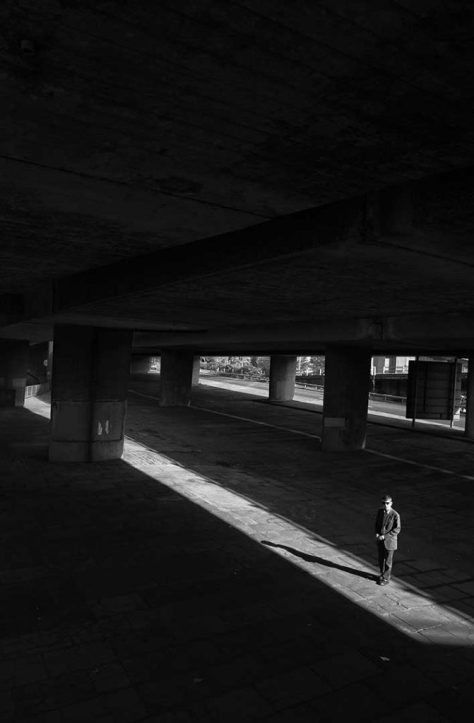
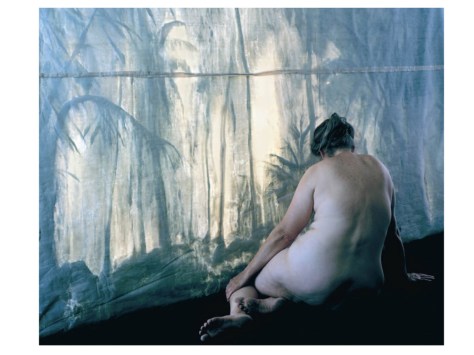
Dayanita Singh’s book Go Away Closer is described as a novel without words, a tale of opposites, connecting personal losses with collective sadness. The series was originally produced for an exhibition, with the images in museum style display cabinets that could be arranged in a multitude of ways. The secondary production in a small photobook of 40 images has, to some extent, confined them, settled the images into a specific configuration. Singh does not add any text or titles to explain the meanings. In an interview Singh has said that she actively ‘withholds’ narrative information (Rafa, 2013). The images are a selection of portraits, empty interiors, and close ups. Some, like the starting image in the book,a young girl lying on a bed, are acutely personal, other like the ending image of wet pavement, seem distanced. There is no story other than an overall feeling of change and despair, loss and mourning. But I am not Indian. Maybe the images would not read that way to someone from her culture. In an interview or the Guardian Singh says, ‘Go Away Closer is what happens between people: I can’t live with you, I can’t live without you’  and also ‘that there was a more interesting way to edit photographs – not through an obvious “theme” but through what’s going on intuitively or subconsciously’ (Malone, 2013).

Singh has moved from creating fixed exhibitions to what she calls her ‘museums’. These consist of groups of related images that are placed within wooden structures of 30 – 40 images, but these can be changed out for other images, and she may change them even within a single show. The set becomes a reflection of her feelings at the time, not a constant and unchanging one.

© Dayanita Singh

Her online blog (Singh, n.d.) made fascinating reading giving advice to new photographers, details of her thought processes about the development of her museums and writings about her work from others. The letter by Rilke that she quotes gives very pertinent advice to anyone engaged in a creative process, but especially to anyone lacking confidence in their own self worth as an artist.  ‘So, dear Sir, I can’t give you any advice but this: to go into yourself and see how deep the place is from which your life flows; at its source you will find the answer to, the question of whether you must create. Accept that answer, just as it is given to you, without trying to interpret it. Perhaps you will discover that you are called to be an artist. Then take that destiny upon yourself, and bear it, its burden and its greatness, without ever asking what reward might come from outside. For the creator must be a world for himself and must find everything in himself and in Nature, to whom his whole life is devoted.’ (Rilke, 1934).

Reference list:

Malone, T. (2013) ‘Dayanita Singh’s best photograph – a sulking schoolgirl’ In: The Guardian 10 October 2013 [online] At: https://www.theguardian.com/artanddesign/2013/oct/10/dayanita-singh-best-photograph-schoolgirl

Raza, N. (2013) ‘Go Away Closer’, Dayanita Singh, 2007. At: https://www.tate.org.uk/art/artworks/singh-go-away-closer-t14176 (Accessed on 20 April 2020)

Rilke, R.M. (1934) Letters to a young poet. New York: W.W. Norton & Company.

Singh, D. (2007) Go Away Closer. Göttingen, Germany: Steidle.

Singh, D. (s.d.) Blog – Dayanita Singh. At: http://dayanitasingh.net/blog/ (Accessed on 20 April 2020)

 

Julia Borissova – white blonde


© Julia Borissova – white blonde

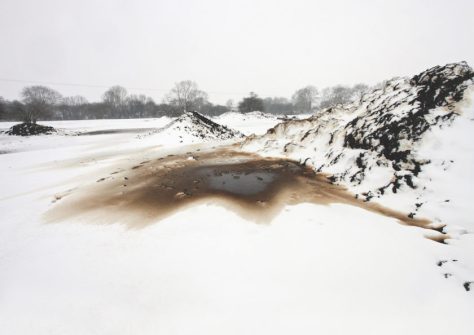
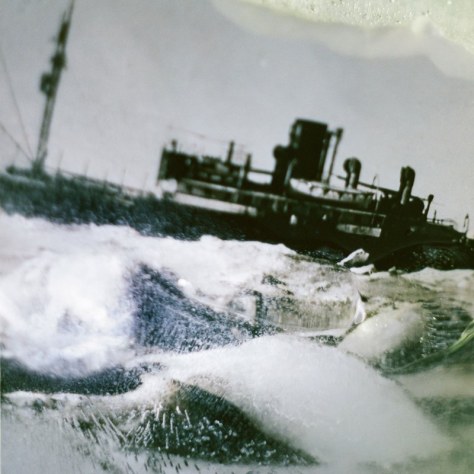
Julia Borissova in White Blonde (Borissova, 2018) is telling a story about Antarctica – she says, ‘though my series I aimed to convey a feeling of he hostile and unfamiliar environment of the South Pole, creating images where the geographic reality give way to the space of dream’. She has used a combination of archival photographs, found objects and self images to explore personal and collective history. The book is short, consisting of just over 20 images. Some are full bleed, some across 2 pages and other overlap each other. They are given consistency by their tonal range, whites, pale blues, greys, beiges and black. The only bright colour (red) is in the additional print sent with the book which shows crimson folded hearts with a portrait of a woman – I assumed it was a self-portrait however now know it is actually part of Borissova’s series Lullaby for a Bride. Most of the images are blurred or overlaid with what looks like ice. In reality Borissova did actually freeze the images to get this effect, ‘to be part of the landscape to express a sense of awareness of time’ (Arena, s.d.). Borissova calls her self-portraits ‘icebergs’. The overall feeling is of age, confusion, and exhaustion in a strange landscape. It is not clear whether or not Borissova has visited Antarctica, although I do not think so.

Her images are available in the book white blonde, on her website as single images and as a slideshow. Interestingly, the order of the images is different between the book and the slideshow, they are often cropped differently (all the images in the slideshow are square and this was the original format) and not all images occur in both. The book and the slideshow are complimentary, not equal but additive.

The book requires careful examination. On my first viewing I found if difficult to follow. Some of the images are beautiful, others are confusing, some are clear, some are abstract. On multiple views I found myself sucked into the cold and the ice. They are a meditation rather than a clear story and are worth reviewing time and again.

With thanks to Julia Borissova for additional information and pointing me towards the review on Landscape Stories.

© Julia Borissova – white blonde

References:

Arena, G. (s.d.) Landscape Stories | Julia Borissova – Nautilus // Let Me Fall Again // White Blonde. At: http://magazine.landscapestories.net/en/books/book-reviews/julia-borissova (Accessed  20/05/2020).

Borissova, J. (2018). White blonde. S.L.: Bessard.

Borissova, J. (n.d.). White Blonde. [online] http://www.juliaborissova.ru. Available at: http://www.juliaborissova.ru/Julia_Borissova_PhotoSite/Projects/Pages/White_Blonde.html [Accessed 17 Apr. 2020].

Diane Arbus

Diane Arbus (1923-1971) was an American photographer who, according to Wikipedia (!) ‘worked to normalise marginalised groups and highlight the importance of proper representation of all people’. (Wikipedia contributors, 2019). Her work has become controversial simply because of that. She called the people she photographed her ‘singular people’ and they were often different, disabled (both physically and mentally) or had other things that set them aside from high society: nudists, transvestites, Jews. Her images are often stark, usually graphic and highly revealing. I have looked at her work before in Self Evidence – Woodman, Arbus and Mapplethorpe (after seeing an exhibition) and  Reading Images (in response to a research question).

Over years I have worked with people with a range of disabilities similar to those Arbus photographed and find her images both disturbing and tender. How I interpret them depends on my mood. On one day I think “How could she” and on another I think “that is perfect”. In the book ‘diane arbus’ (Arbus and Arbus, 1990) she is quoted as saying, “You see someone on the street and essentially what you notice about them is the flaw”  and “there are certain evasions, certain nicenesses that I think you have to get out of” and “Freaks was a thing I photographed a lot. It was one of the first things I photographed and it had a terrific kind of excitement for me…. they made me feel a mixture of shame and awe…. they’ve already passed their test in life. They’re aristocrats” and “I work from awkwardness, by that I mean I don’t like to arrange things. If I stand in front of something instead of arranging it, I arrange myself”. On looking though the images in that book the odd thing that struck me was that the happiest, and most honest, smiles were in the images of the people with learning disabilities.

csm_Lempertz-1041-106-Photography-Diane-Arbus-Untitled-2-_f803013e78

Her images are black and white (although colour film was available), square format (a Rollei) and usually low key. Often the most important part of the image is dark. Most of the portraits are taken full face on, with the subject looking straight at her – has she actually arranged them? Or is this just how people expect to be photographed?

She gave the marginalised people a voice, whether or not it was a voice that they would have chosen is an interesting question, but a least she engaged with them rather than ignoring them.

References:

Arbus, D. and Arbus, D. (1990). Diane Arbus. London: Bloomsbury.

Wikipedia Contributors (2019). Diane Arbus. [online] Wikipedia. Available at: https://en.wikipedia.org/wiki/Diane_Arbus [Accessed 25 Mar. 2019].

Borders of Nothingness – On the Mend

Infinity
© Margaret Lansink

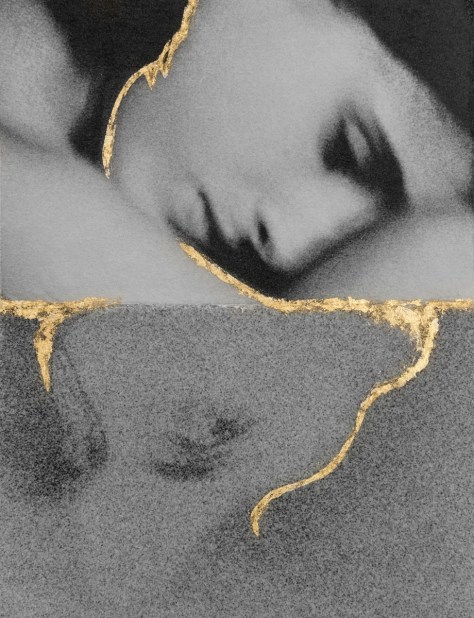
Margaret Lansink is a Dutch photographer who lives in a small village near Amsterdam. She was one of a very large family and uses her camera to connect with her emotions. She, according to her artist’s statement, often feels like a spectator of a play. Her images are intuitive, blurred and misty, full of emotion. Her new book Borders of Nothingness – On the Mend grew out of her estrangement from her daughter and subsequent reconnection (although you do not learn whether or not it was/is a success). In the introduction it says ‘In the infinite flow of everything, people come and go in our lives. While the presence of some can be so subtle that we hardly register when it begins or ends, with others its far clearer: they enter, or leave, with a bang’ (Lansink, 2020). In her interview for Leica, Lansink says, ‘Borders of nothingness is my way of telling people that life is not always what you expect from it’ (Klink, 2018).

The book is small, 14 x 18.5 cm and tactile. The original edition of 50 copies was hand bound in a Japanese style, the edition I have is still beautiful, although without the gold leaf collage of the original. The images are black and white, silver and gold and their lack of clarity makes one dream of what has happened and what might be. They are subtle, haunting, and I have found myself going back over and over to read slightly different stories.

I bought this for myself to break the miseries of isolation. It was well worth the price.

_Natsukahii

Lansink’s website shows more of the images and is worth a look both for this and her earlier series which are photographed in a similar style.

Reference list:

Klink, D. (2018) Margaret Lansink – Borders of Nothingness | LFI Blog. At: https://lfi-online.de/ceemes/en/blog/margaret-lansink-borders-of-nothingness-1641.html (Accessed on 26 March 2020)

Lansink, M. (2020) Borders of Nothingness – On the Mend. Belgium: Ibasho.

Lansink, M. (s.d.) margaretlansink. At: https://margaretlansink.com/ (Accessed on 26 March 2020)


Natural Light II

Angela-Catlin-10-1-671x1024
Ronald Frame © Natural Light II – Angela Catlin

Natural Light II is a book of photographic portraits of Scottish writers by Angela Caitlin. I acquired it because I was attracted to the cover image of an unnamed person (I think Alasdair Grey) and also because I read endlessly and voraciously. I am Scottish by habit (although not by birth) and much of the poetry, crime and other novels I read is by Scottish authors, so it seemed a sensible acquisition.

The images are all taken by natural light, across the world and vary from close up portraits such as the ones of Jackie Kay and William Boyd to ones where the person is almost hidden, Christopher Brookmyre and Ronald Frame. The combination of the image and the written text, a piece by the subject, a poem or a short extract of fiction was fascinating. The person’s portrait often did not give any clues as to the type of writing, other than some wild men from the north with their Gaelic poems! I spent as much time reading as looking – and have been seduced into enlarging my collection of both poetry and fiction.

My favourite image is one of Al Kennedy, shown outside, smiling, under blossom – contrasted with a rather scary piece of work about a girl (she feels young) being overwhelmed with the expectations of her lover. I look back and forward between the writing and the image and think – how do they fit together – but why should they? Why should someone’s looks mandate how or what they write about? Why should I be so naïve to assume they should?

Very few of the images show the subject looking at the camera, most are staring into the distance, or looking slyly sidewards. What are they thinking about? Are they imagining their next poem? These are the dreamers of our life and we would be poorer without them.

Reference:

Catlin, A. (2015). Natural Light II: photographic portraits of Scottish writers. Glasgow: Cargo.


Project Cleansweep

Having been brought up as a child in the 60’s and 70’s I was very aware of the Cold War – but only as an abstract issue. We saw the leaflets. While at university we campaigned for nuclear disarmament but, in spite of living in Scotland – the site of Gruinard Island and testing for anthrax, knew very little about chemical and biological warfare (NBC). That was of the past. It was related in my mind to the mustard gas in WWI, with no assumptions that is was still current. At school we read Dulce et decorum est by Wilfred Owen (Owen, 1920). We acted it out. But it seemed so horrific that it was obviously something that wouldn’t happen now. Yes, there were occasional news items about Saran attacks – but they were elsewhere, nothing to do with the British Isles, honesty, lack of corruption and ethical behaviour.  As I got older, I became less optimistic about the state of the world and more aware that there was still research into NBC, even in Britain. I became aware of Porton Down – which, according to the government website only researches NBC so that we can have counter measures, (see https://www.gov.uk/government/news/the-truth-about-porton-downq). I became aware of beaches that were contaminated with radioactivity due to use of radium to give luminance to dials for aircraft. I heard rumors of pockets of increased cancers and disabilities near old military sites – but little was ever verified.

02-Kimbolton-Cambridgeshire-2012-840x594
© Dara McGrath – Kimbolton, Cambridgeshire

Dara McGrath’s book Project Cleansweep (McGrath, 2020) tells the story of the, mainly unknown, sites where biological and chemical items were manufactured, stored, tested and dispersed. Starting from a report on Project Cleansweep (Edwards, 2011), which was a government investigation that was aimed at making sure that residual traces of chemical and biological manufacturing processes did not cause any ongoing risk to life, McGrath investigated further and ended up looking at 92 sites across the United Kingdom. The book shows a selection of the pictures he took, along with copies of newspaper reports and drawings. Many of the images are stark, the land and the buildings are destroyed but others are beautiful and belie the nature of the place they were taken in. Some of the images remind me of those of Edward Burtynsky, in that they show desolate and ruined places and other those of Fay Godwin, reminding me of her work in Our Forbidden Land (Godwin, 1990). The pictures are shown alongside a brief explanation of where they are and what went on, together with what the land is used for today. McGrath explores 4 sites in greater detail;  Rhydymwyn – where bulk chemical weapons were made and stored and where there is significant ongoing contamination, Harpur Hill – where captured enemy ordnance was destroyed, Gruinard Island where anthrax was tested in 1942  and which was eventually decontaminated and declared safe in 1990 and Lyme Bay where trials of spraying bacteria and zinc cadmium sulphate across the coast were carried out leading (possibly/probably) to the clusters of health problems found in the area.

16-HarpurHill-Derbyshire-2012
© Dara McGrath – Harpur Hill, Darbyshire

The book is unforgiving, the story is horrifying but the images will stay with me.

To see more images see: Landscapes of chemical and biological warfare https://www.bbc.co.uk/news/in-pictures-51615267

See McGraths blog for links to videos that show more detail on some of the sites including Lyme Bay and Gruinard Island: https://daramcgrath.wordpress.com/

Dulce et decorum est

Bent double, like old beggars under sacks,
Knock-kneed, coughing like hags, we cursed through sludge,
Till on the haunting flares we turned our backs,
And towards our distant rest began to trudge.
Men marched asleep. Many had lost their boots,
But limped on, blood-shod. All went lame; all blind;
Drunk with fatigue; deaf even to the hoots
Of gas-shells dropping softly behind.

Gas! GAS! Quick, boys!—An ecstasy of fumbling
Fitting the clumsy helmets just in time,
But someone still was yelling out and stumbling
And flound’ring like a man in fire or lime.—
Dim through the misty panes and thick green light,
As under a green sea, I saw him drowning.

In all my dreams before my helpless sight,
He plunges at me, guttering, choking, drowning.

If in some smothering dreams, you too could pace
Behind the wagon that we flung him in,
And watch the white eyes writhing in his face,
His hanging face, like a devil’s sick of sin;
If you could hear, at every jolt, the blood
Come gargling from the froth-corrupted lungs,
Obscene as cancer, bitter as the cud
Of vile, incurable sores on innocent tongues,—
My friend, you would not tell with such high zest
To children ardent for some desperate glory,
The old Lie: Dulce et decorum est
Pro patria mori.

Wilfred Owen

References:

Edwards, R. (2011). MoD investigates former chemical weapons factories for contamination. The Guardian. [online] 24 Jul. Available at: https://www.theguardian.com/environment/2011/jul/24/mod-chemical-weapons-factories-contamination [Accessed 3 Mar. 2020].

Godwin, F. (1990). Our Forbidden Land. London: J. Cape.

McGrath, D. (2017). daramcgrath. [online] daramcgrath. Available at: https://daramcgrath.wordpress.com/ [Accessed 3 Mar. 2020].

Mcgrath, D. (2020). Dara McGrath Project Cleansweep. Beyond the Post Military Landscape of the United Kingdom. Heidelberg, Neckar Kehrer Heidelberg.

Cindy Sherman

© Cindy Sherman – Untitled Film Stills

Sherman was born in America in 1954, so she is slightly older than I am. Her early experiences may well have been similar, although transmuted via an American, rather than British, perspective, you played on the street, you dressed up and pretended to be people, if you were a girl there were very tight gender specific jobs and roles. It took guts and extreme talent to move beyond them.  Sherman was the youngest of five children, and no one else in her family was interested in art. She went to art college with very little formal knowledge about art and expecting to have to become a teacher. She initially started her career as a painter, but rapidly abandoned this and took up photography, initially concentrating exclusively on pictures of herself dressed up as various roles.  However, Sherman does not describe these works as self-portraiture, but as using herself as ‘a vehicle for a commentary on a variety of issues in the modern world’ (Sherman, 2019). She portrays archetypes, a series of fabricated, fictional characters that are familiar to us because of our familiarity with TV and film people, mediated via the popular press (and more latterly social media). All of these early images are called Untitled, with a series name and often a number – further distancing them from any assumption that they are showing a specific person. A portrait almost always has the name of a person, or, at minimum, a description that personalises them. In later images Sherman used dolls and prosthetic body parts posed in highly charged sexual positions and clearly designed to shock the viewer. Recently she has returned to using herself as the subject, both in a further series of created characters and as a series of distorted images that are freely available to view on her Instagram site.

© Cindy Sherman – Instagram

In a recent article Sherman, when talking about her own work and about selfies (and why her images are the reverses of selfies) says ‘It feels magical, I don’t know what it is I’m looking for until I put the makeup on, and then somehow it’s revealed. I’m disappearing in the world, rather than trying to reveal anything. It’s about obliterating, erasing myself and becoming something else’ (Blasberg, 2019).

Sherman is both a prolific artist and an influential one. Almost every article discussing post-modernism in photography references her. Grunberg describes her work as ‘Perfectly poststructuralist portraits, for they admit to the ultimate unknowableness of the “I”. They challenge the essential assumption of a discrete, identifiable, recognizable author (Grunberg, 2010, p.9). Her work is included in the list of 7 most expensive prints sold (Untitled 96) which is one of the Centrefold series that was originally commissioned for Artforum but never run as the then editor was concerned that they might be misunderstood. I wonder if the editor had really considered any of Sherman’s images as this comment could be applied to most (if not all) of them.

There is a fascinating (and long) discussion on the OCA website about Sherman, discussing her self-portraits – are they narcissistic or not? her background  growing up in white, TV obsessed America – and the impact that had on her initial reactions to gender and make-believe that goes on to discus why we like, or don’t like her images and wether an initial ‘gut reaction’ has any validity as a starting point for analysis of an image (The Open College of the Arts, 2011).

I have seen a small number of Sherman’s prints in galleries

  • An early Madonna in the Sometimes I Disappear exhibition in Edinburgh – discussed in Sometimes I Disappear
  • Cindy Sherman – Early Works at the Stills Gallery, Edinburgh. This showed some of her very earliest self-portraits – Untitled (Murder Mystery People) together with some images form the untitled Film Stills collection and a very early film Dolls Clothes. Prior to this exhibition most of the images I Had seen were in books. I was surprised at how small the images were. This initially disappointed me, however it had the effect that I had to go in close to look at them in detail, and this drew me into the stories, possibly more so than a large image would have.

I find myself bemused by some of her work, revolted by other pieces (as I am fairly sure she meant people to be) and increasingly interested in it the more I examine it. Very little of it is ‘easy’. Some may be attractive to look at, but the closer you look at it the less obvious it becomes. Three years ago, I would have confidently stated that I did not like her work. My view is now different.

References:

Blasberg, D. (2019). Why Cindy Sherman Thinks Selfies Are a Cry for Help. [online] WSJ. Available at: https://www.wsj.com/articles/why-cindy-sherman-thinks-selfies-are-a-cry-for-help-11572352378.

Grundberg, A. (2010). Crisis of the Real: writings on photography. New York: Aperture Foundation, p.9.

Instagram.com. (2018). cindy sherman. [online] Available at: https://www.instagram.com/cindysherman/ [Accessed 10 Apr. 2019].

Sherman, C. (2019). Biography – Cindy Sherman – Photographer, Model, Director, Actor, Avant-Garde Images, Doll Parts and Prosthetics, Movies. [online] Cindysherman.com. Available at: http://www.cindysherman.com/biography.shtml.

Stills. (2019). Cindy Sherman: Early Works, 1975—80 – Stills. [online] Available at: https://stills.org/exhibitions/cindy-sherman/ [Accessed 3 Feb. 2020].

The Open College of the Arts. (2011). Cindy Sherman: Master of Disguise | The Open College of the Arts. [online] Available at: https://www.oca.ac.uk/weareoca/fine-art/cindy-sherman-master-of-disguise/? [Accessed 3 Feb. 2020].


Hans Eijkelboom

Hans Eijkelboom is a Dutch photographer who has done several series of images about people.

1973-WithMyFamily-Eijkelboom
© Han Eijkelboom – With My Family

In With My Family (1978) he posed as the father with a mother and their children in their living room. The rooms are busy and reminiscent of the June Street images of Parr and Meadows, although of course, the twist here is that the ‘father’ is not the real father (and possibly the families are rather higher in the social scale). However they look totally relaxed and could easily be mistaken for a ‘real’ family. I wonder who took the images as there is no sign of a cable release– was it an assistant, or could it, in a further twist, have been the actual father.  More recently, Trish Morrissey (discussed in Masquerades) has done a similar set of images for her series Front (2005) where she became the ‘mother’ in photographs of families on the beach. In these images she took it further as she borrowed items of clothing from the actual mother before posing. On her website she says, ‘Ideas around the mythological creature the ‘shape shifter’ and the cuckoo are evoked.’ (Morressey, 2017). Both of the series raise the question about the reality of images, and what is truth. Does it matter that the apparently happy family group is a constructed one? What does that say about the identity of families? How can an outsider know? One assumes that groups of people on the beach or in the house are related if they are shown in a family album – but they may not be. The further on in time from the image the less certain one becomes. I have images in my family archives of similar (although less professionally posed groups) where no one now alive is sure who all the people are.

Sylvia-Westbrook
© Trish Morressy – Sylvia Westbrook

Eijkelboom has carried on working with identity. His more recent work People of the 21st Century, collected into a series of Photo Notes shows people he has photographed on the street. He then collages groups of people who are wearing very similar outfits. Does this show loss of the individual? But everyone is subtly different, their personal slant on what is the current fashion. Although this is in some ways a retake of Sander’s People of the 20th Century there is no overt attempt to categorise the people by their place in life or their class, although assumptions might be made by the grouping and the clothes. In An interview Eijkelboom says, “That’s a very strange development in society. That wasn’t the intention at the start of the project, but in the end you could say the book is about a fight, a war within society: more and more, big companies have their grip on people, in producing the clothes and so on. But in the book you see the possibilities to give it your own personal touch. When you now go to the Kalverstraat in Amsterdam, everybody has their own individual message on their T-shirt. But on the other hand, they all look the same, because they are all people with a message on their T-shirt. You can already see a little bit of change, making the power of the big companies weaker, I think.” (Petridis, 2014).

Eijkelboom-26mrt16-gatAthene-copy-824x1024
© Hans Eijkelboom

References:

Morressey, T. (2017). Trish Morrissey. [online] Trishmorrissey.com. Available at: http://www.trishmorrissey.com/works_pages/work-front/workpg-01.html [Accessed 8 Jan. 2020].

Petridis, A. (2014). Same but different: Hans Eijkelboom’s tribal street photography. [online] the Guardian. Available at: https://www.theguardian.com/artanddesign/2014/oct/23/hans-eijkelboom-street-photography-tribes-people-twenty-first-century.


Philip J Brittan

ghostsarereal-2
© Philip J Brittan – From Ghosts Are Real

Philip J Brittan has used photography to help to manage very personal emotions and memories. His latest book Ghosts Are Real was made after a difficult time of his life, when his mother had died, and the family has ‘fractured’. He took long night walks as ‘a kind of haven’ and based the images on feelings and emotions that came from these walks. The images are varied, many are colourful, some show obvious images, a tree, a tower block – while others show sudden flashes of colour that when examined carefully turn into a scene of trees, or birds or possibly a person.  They are gloriously abstract. Brittan says, ‘Looking back, it seems clear to me that Ghosts Are Real is about the bruised relationship between the world and the self, with love providing my own protective shield, present everywhere, agile and invulnerable’ (Brittan, 2019).

ghostsarereal-5
© Philip J Brittan – From Ghosts Are Real

The phrase ‘the bruised relationship between the world and the self’ says all there is needed about autobiographical work. If you can use any form of media to show this, you have made a worthwhile piece. You may have used direct images like those some of those by Elina Brotherus, they may be more complicated, just alluding to your story like the work of Teichmann, or in Brittan’s case totally abstract – but if they can express your story the exact nature of the work is irrelevant.

Reference:

Brittan, P.J. (2019). Ghosts Are Real. PJB Editions.

Esther Teichmann

© Esther Teichmann

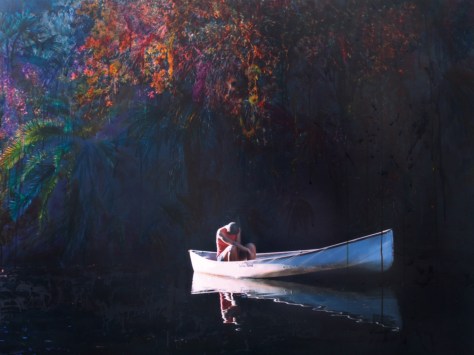
Esther Teichmann uses mixed media, including photographs, painting, poetry, music and sculpture to tell stories. Jessica Brier says ‘Esther Teichmann calls for a new way to look at photographs, not as mirrors of, or windows into the world, but as portals between the personal and universal, reality and the supernatural and photography and other mediums. Through the layering of memory, desire, fear, fiction and fantasy, Teichmann uses and extends the photographic medium as a passage between realms of experience and artistic creation. Her work exploits the tension between photography’s relationship to reality and a sense of otherworldly power. For Teichmann, this complex, even troubled relationship with the medium yields a passionate foray into others’ (Brier, 2014). Brier’s article talks about an alternate view of photographs, not as either windows or mirrors but as portals or wormholes that can transport us from place to place.  She discusses Teichmann’s use of photography as a way of retelling myths that shed some light on her personal emotions, seen though a haze of fantasy and suggestion.

Teichmann images are colourful and soft, with a strong Pre-Raphaelite feeling. They are mysterious and float in a world of her imagining. Her work is personal but could relate to anyone. She uses it to explain all the areas that impact on human life. Teichmann is using photography to talk about things that are not easily visualised – imaginary things and places, how your memories of childhood relate to the past, the present and the future. Where you are and where you were – all in one image.

© Esther Teichmann

References:

Brier, J. (2014). Esther Teichmann: The Photograph as a Portal. [online] Daylight.co. Available at: https://stories.daylight.co/DD1312 [Accessed 11 Dec. 2019].

Teichmann, E. (2019). [online] Estherteichmann.com. Available at: http://www.estherteichmann.com/work [Accessed 11 Dec. 2019].