Category Archives: Coursework

Paul Graham

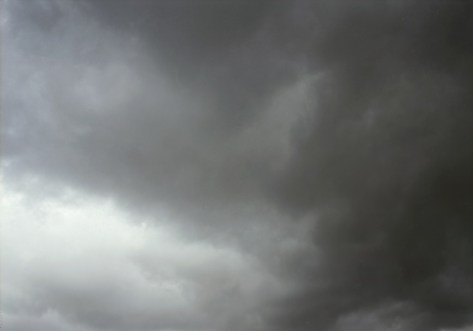
Paul Graham (born 1956) is a British photographer (although he has lived long term in America) who uses documentary photography to explore, not just what is happening, but why it happened and the associated emotions. One of his recent books a shimmer of possibility shows images taken on his travels around America. The book shows 12 visual stories of the small pieces of life that make up the America of the ordinary people that live there. In an interview he says  “it has steadily become less important to me that the photographs are about something in the most obvious way. I am interested in more elusive and nebulous subject matter. The photography I most respect pulls something out of the ether of nothingness… you can’t sum up the results in a single line. In a way, ‘a shimmer of possibility’ is really about these nothing moments in life.” (O’Hagan, 2011).  In another book, Cease Fire he shows images of the sky over Northern Ireland’s troubled areas such as the Shankill Road. What is he saying? And how do you interpret them?

Paul Graham 1
© Paul Graham – from Cease Fire

His most recent book Mother (Graham, 2019) is more personal. It shows a series of apparently simple images of his mother in her care home. The images are dark, the light only glancing of the edges of her cheekbones or her hair. Often her face is not in focus, rather the focus is on the edge of her blouse or the sinews in her neck. There is only one image where she is looking at him and that look (to me at least) reads ‘What are you up to now?” Many of the images show her sleeping. The images are large, shown in groups and interspersed with pink textured pages, which echo the pink that his mother frequently wears. The book is described as showing ‘mortality and the slow unravelling of late old age……the watched-over becomes the watcher’. It is a series of images that I wish I had taken of my mother; they are his tribute – but will stand in for mine.

Mother_Paul_Graham-61_aeb7f40c-0c73-444e-81ad-d434800398d8_1024x1024
© Paul Graham – Mother

References

Graham, P. (2019). Mother. S.L.: Mack.

O’Hagan, S. (2011). Paul Graham: “The photography I most respect pulls something out of the ether.” [online] the Guardian. Available at: https://www.theguardian.com/artanddesign/2011/apr/11/paul-graham-interview-whitechapel-ohagan [Accessed 18 Oct. 2019].

Louis Quail

Louis Quail is described as a documentary photographer, but that tends to imply a photographer who looks at something from the outside with an analytical voice. Some of his earlier projects such as Desk Job in which he explores office life across the continents, showing the similarities of how the workers in a large office exist and how there is a common culture of the office worker versus the big bosses can be described in this fashion.

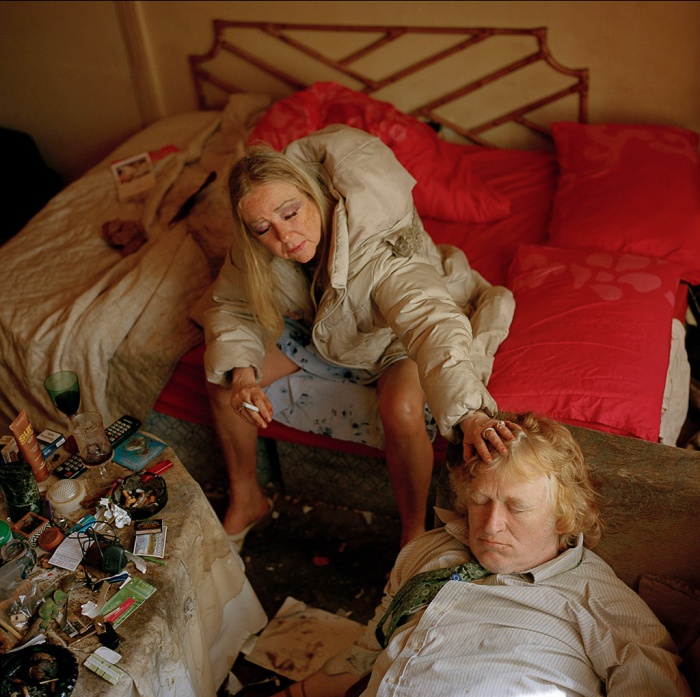
However, his latest project Big Brother is deeply personal. It tells the story of his brother’s struggle with schizophrenia and the ongoing difficulties this causes. It shows the difficult side of having a severe mental illness, and how negotiating the pitfalls of state, welfare and hospital treatment is fraught with anxiety both for the person and his relatives – but it also tells an ongoing love story about Justin and his long time girlfriend Jackie. The book is both fascinating and terrifying. I was constantly torn between laughing and weeping while reading and seeing Justins story.  The book contains photographs taken over 7 years interspersed with text telling the story and drawings and pieces of writing by Justin. It includes a small booklet of paintings and poems by Justin which make it clear that however damaged Justin is by his schizophrenia he is also a very creative person. One of these poems begins:

Boxed in clever on a psychiatric ward

It’s no wonder I am bored.

The fatigue sets in

The eternal light won’t go off

Before its off.  (Quail and Quail, 2018).

© Justin Quail

Quail says on his website ‘This book did not set out to be a political polemic; rather, my intention was to fight stigma and share Justin’s story so we can understand, empathize and celebrate Justin’s individuality. However, inevitably by studying the problems affecting my brother, the work speaks of and draws attention to the crisis in mental health care, raising important questions about how we look after our most vulnerable citizens’ (Quail, 2019).

The book is worth a long look – for the story, the images and the increased understanding of a person’s difficult world. For this story the long-term engagement was essential to avoid a superficial glance and to give the meaning to the story. It would have been simple to just show the ‘bad bits’ but Quail succeeds in showing both these and the joy that even a difficult life can encompass.

References:

Quail, L. (2019). Big Brother – Introduction – Louis Quail Photography. [online] Louis Quail Photography. Available at: http://louisquail.com/big-brother-introduction/ [Accessed 17 Oct. 2019].

Quail, L. and Quail, J. (2018). Big brother. Stockport: Dewi Lewis Publishing.

Julian Germain

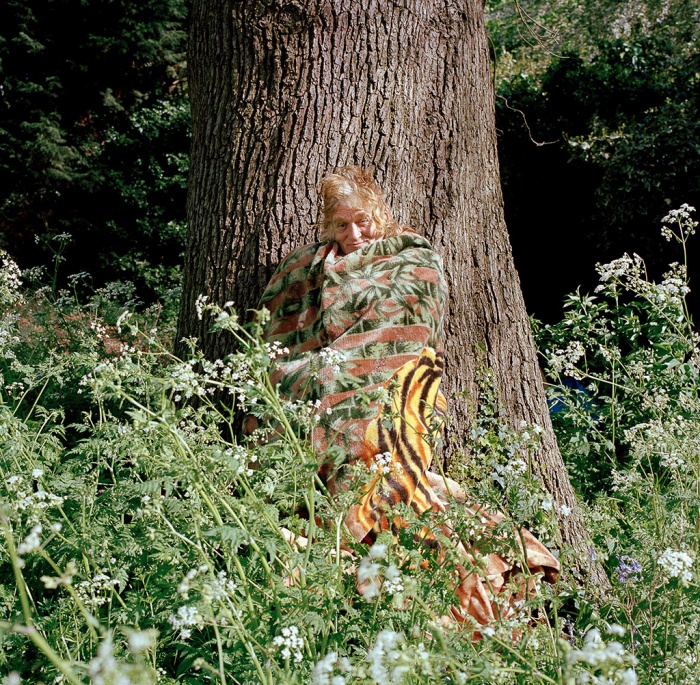
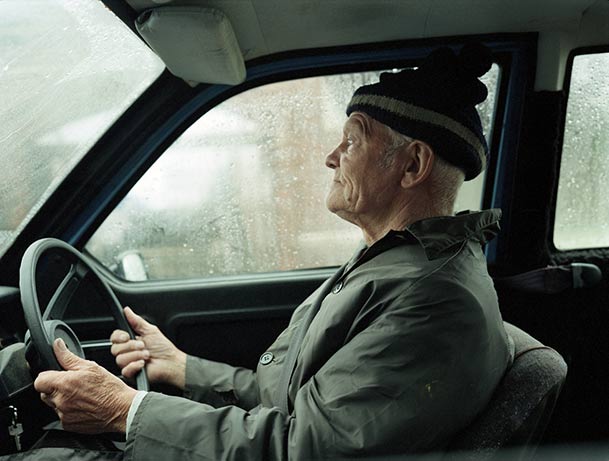
Julian Germain (born 1962) is a British photographer who often combines his own images with archival images to look at the effects of change in society. He works in Britain and abroad, especially Brazil, where he gave cameras to the street children and collected their images – showing the lives of marginalised people. In For every minute you are angry you lose sixty seconds of happiness, which was originally shown at the Baltic gallery, accompanied by a book (Germain and Snelling, 2005), he made a series of photographs taken over 8 years of an elderly gentleman called Charles Snelling which he then published along with pages from Snelling’s own photo album. Germain says ‘He showed me that the most important things in life cost nothing at all. He was my antidote to modern living’ (Germain, 2005). The images are a straightforward story telling that combines photographs of Snelling in his house, on the beach and out walking with images of items that he owns, such as an old kettle steaming on the hob. The work acts as an ‘extended portrait’ – a story of the later part of someone’s life where the photographer has engaged over considerable time – thus giving a richer view than a flying visit could give. This is an excellent example of the additional information time spent on a project gives you, and I find it fascinating.

Germain mostly works by producing books. He says ‘A book is such an excellent way to really look at a body of work over a long period of time. Of all the visual arts the book is suited to photography. Of course, much of my work is not about the single image, my pictures work on each other, placed as they are in sequences and a book is the perfect framework for that. A photo book is a work of art in its own right…’ (Skerrett and Germain, 2010).

References:

Germain, J. (2005). Julian Germain “For every minute you are angry you lose sixty seconds of happiness” project. [online] Juliangermain.com. Available at: http://www.juliangermain.com/projects/foreveryminute.php [Accessed 16 Oct. 2019].

Germain, J. and Snelling, C. (2005). For every minute you are angry you lose sixty seconds of happiness: portrait of an elderly gentleman. London: Mack.

Skerrett, P. and Germain, J. (2010). INTERVIEW: “In Conversation with Julian Germain” (2005) – AMERICAN SUBURB X. [online] Americansuburbx.com. Available at: https://americansuburbx.com/2010/09/interview-in-conversation-with-julian.html [Accessed 16 Oct. 2019].

Harry Callahan

Harry Callahan (1912 – 1999) was an American photographer based in Chicago. He taught at the Chicago Institute of Design and then at the Rhode Island School of Design. He took many street photographs with a heavy contrast of black and white. However, he also took images of his wife and daughter, often set in the distance against the city. This contrasted with other very simple images of trees against the sky, patterns in the sand. He also combined many images to make multiple exposure prints – although it is not clear whether this was done by multiple in-camera exposures or by overlaying prints. He shot thousands of pictures but produced very few finished prints. He was an experimental photographer, trying out a range of possibilities for the subjects he was interested in. He is reported as saying ‘I guess I’ve shot about 40,000 negatives and of these I have about 800 pictures I like” (Artnet.com, 2019). He also said, “The difference between the casual impression and the intensified image is about as great as that separating the average business letter from a poem. If you choose your subject selectively — intuitively — the camera can write poetry.” (Cassidy,2006).

Eleanor
© estate of Harry Callahan – Eleanor

References:

Artnet.com. (2019). Harry Callahan. [online] Available at: http://www.artnet.com/artists/harry-callahan/ [Accessed 16 Oct. 2019].

Cassidy, V.M. (2006). Harry Callahan: The Photographer at Work – Photographs by Harry Callahan | LensCulture. [online] LensCulture. Available at: https://www.lensculture.com/articles/harry-callahan-harry-callahan-the-photographer-at-work.

Exercise 2.2 – Covert

The Brief: Shoot a series of 5 subjects who are unaware of the fact they are being photographed. Think through carefully. Be aware of other people’s feelings and also any privacy laws.

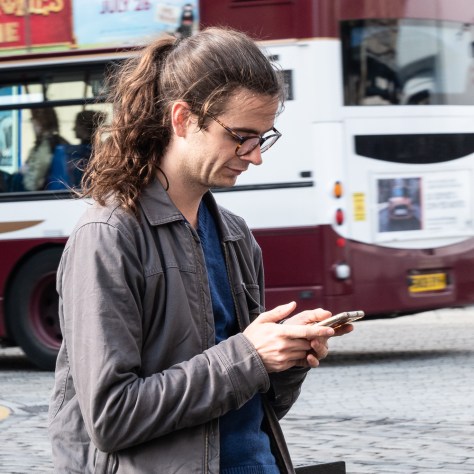
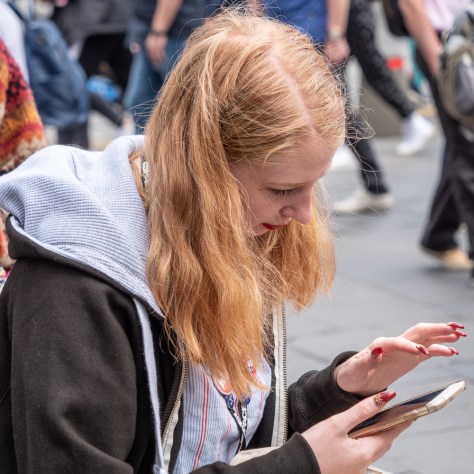
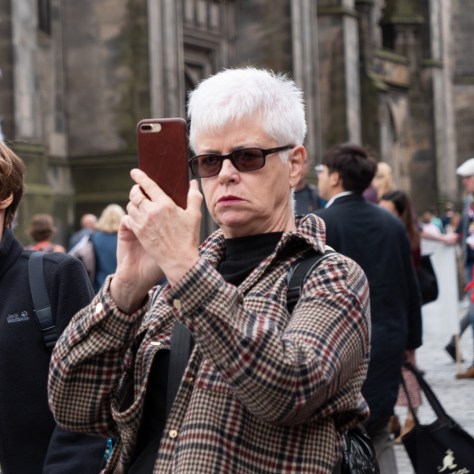
I was aware that this was potentially a difficult exercise as I find taking portraits hard and am not often in places that there are a lot of people other than at work. Work was not an option as there would be ethical issues involved as I work in a hospital. I decided to make use of the opportunity to take images at the Edinburgh Festival as:

  • Just about everyone was carrying and using either a camera or a smart phone
  • The Royal Mile (which runs though the centre of Edinburgh) has endless people walking up and down it, and a series of free outdoor events that you can sit and watch

I went to Edinburgh on a sunny day, by myself. On reflection, it might have been better to take someone with me for company and so that I didn’t stand out so much, although there were plenty of other single people there. I spent the day wandering up and down the Royal Mile, finding places where I could sit or stand to people watch and take images.  Most of the time people were so involved in the general buzz that they did not notice me taking pictures and most of those who did just smiled at me. Some posed! There was one difficult incident when I was approached by a large and aggressive man, himself carrying a large camera with a very long lens, who said that I should not be taking pictures of anyone else without their explicit permission, as it was  rude, illegal, and gave professional photographers like himself a bad name.  He went on to say I was obviously a member of a camera club who thought I was being clever. I did not observe him going up to anyone to ask their permission to take photographs and he was not wearing any name badge or obvious identification.

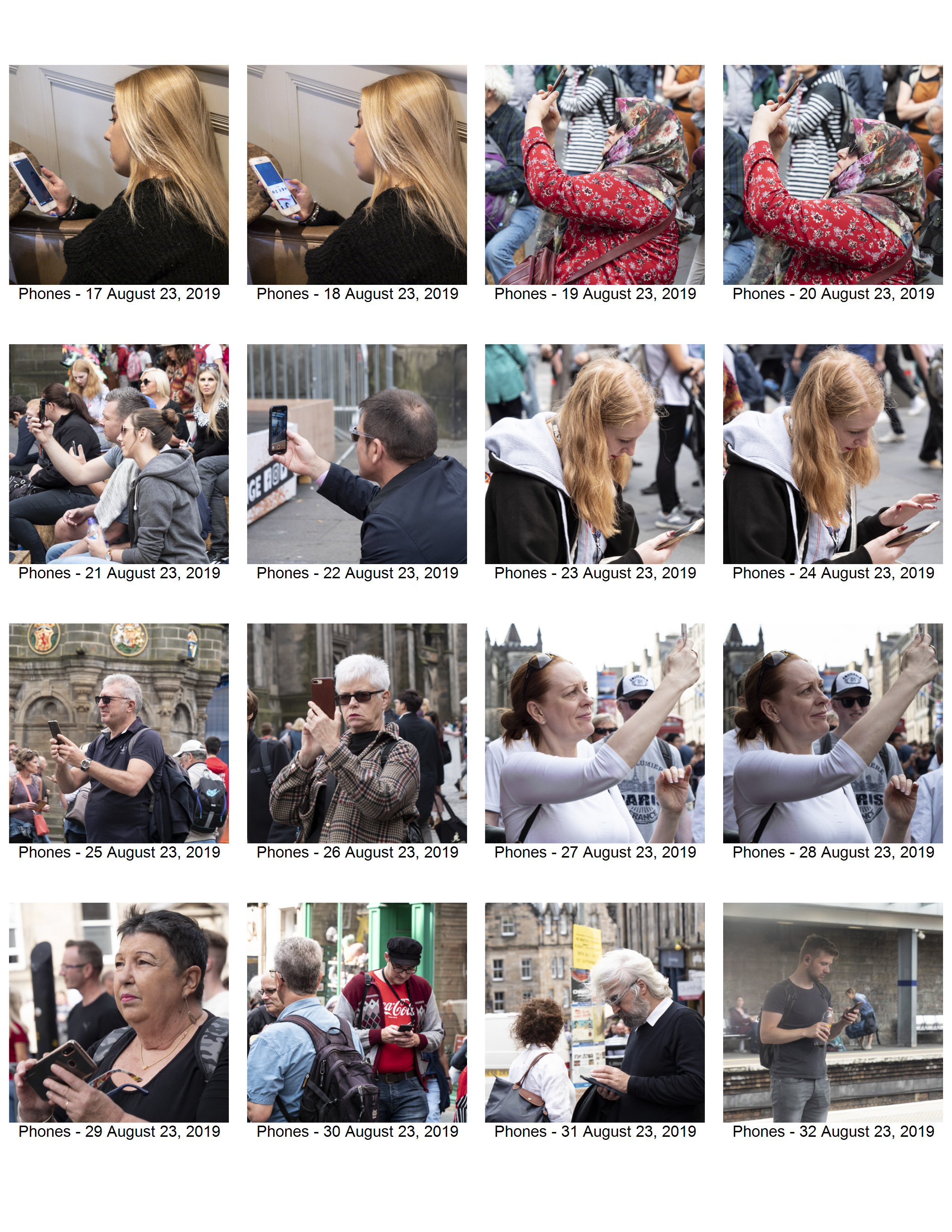
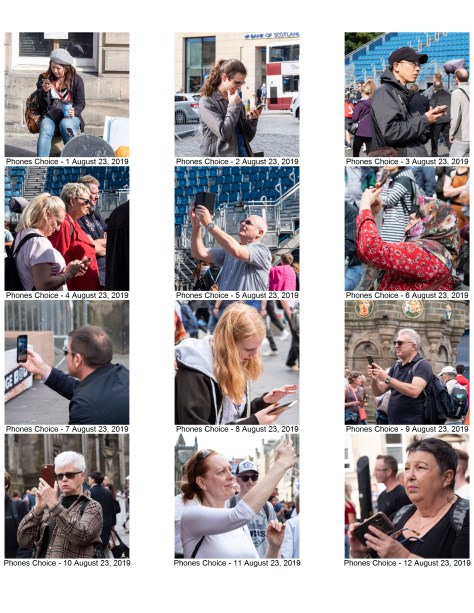
When I got home, I sorted my images. As I did not have the opportunity to examine them while I was in Edinburgh and would not have been able to repeat the exercise, I had relied on taking a large number of images and had ended up with over 400! Many were out of focus or did not really show anything; people had stepped in front of me, bumped into me or moved away at the critical moment.

On examination they divided up into groups:

  • General crowd scenes
  • The performers
  • People watching the performances
  • People chatting to each other
  • People staring intently into their smart phones, often taking selfies

This gave me a large number of possibilities to work with. The most interesting two groups of people were the people watching the performers and the phone addicts. As I have spent some time over the course looking at the subject of people taking images of other people taking pictures, such as Martin Parr and  Martin Parr and Paul Reas , I decided to follow their example and look at the images of people taking pictures.

  • In this group I had 32 images, some of which were of the same people
    • I cut this down to 12 images where the focus was mainly on one person
      • I then picked 6 images
    • I decided to crop each image to a square
    • I then experimented with a black and white or colour image of each.

Changing to monochrome helped me to pick out the images that worked best as it helped to clarify the ones where the background was over-intrusive. I also spent time considering the most appropriate processing – but decided that I preferred the colour work in this context.

Final Images:

untitled (1 of 1)

untitled (1 of 1)-2

untitled (1 of 1)-4

untitled (1 of 1)-5

untitled (1 of 1)-6

Summary:

This was an interesting exercise and taught me a lot about candid photography:

  • Many of the images I took were too cluttered
  • I took too many pictures without enough pre-visualisation
  • Most people who saw me just smiled
  • Some people can be very aggressive so be prepared to turn away and delete images
  • It would be better to go out with a theme in mind, as although I could identify several themes from the images I took, I undoubtedly missed possibilities
  • Consider taking from a lower viewpoint to isolate the specific people better

I will probably use this group of images again – but looking at a different ‘theme’.

Contact sheets:

Phone choice
12 preferred images

Project 1 – The unaware – 2

Tom Wood (born 1951) is an Irish photographer who spent much of his life in Merseyside, and who now lives in Wales. He was photographing in New Brighton at the same time as Martin Parr and Ken Grant, but the three photographers produced very different work. Wood is an obsessive photographer, never going anywhere without his camera and constantly taking pictures. He works in series, but the series are not separated by time, rather than by how and at what time of day he takes the images. He travelled widely by bus and took pictures on the bus. He also took images at the local shipyard, and, possibly most famously, the images in the Chelsea Reach nightclub – which became the book Looking for Love (Wood, 1989).  Wood returned week after week to the nightclub (and all the other areas he was interested in) and having taken pictures of the people there one week would offer them copies of the images the next week.  He was extremely well known in the area and became their ‘Photie Man’.

Wood photographed people close-up. He said in an interview with Sean O’Hagen “I’m not trying to document anything. It’s more about deciphering and transforming. I make what you might call real-life photographs” (O’Hagen, 2015).  Wood’s work is taken over years, usually with no specific plan in mind. He said “I take pictures all the time, if did a project, had a plan, it would be self-conscious. It’s very different to go out looking for something. All that stuff can get in the way, whereas if you take pictures all the time, it’s no big deal because that’s what you do all the time. And because I was always doing pictures, going to the same places year after year, I became part of the scenery. I was just the guy who takes pictures.” (Smith, 2018). Wood does not describe himself as a documentary photographer, even though most of his series tell stories about the place they are taken in. He works long term, over years rather than weeks and makes images that are enjoyed by the local people. His pictures do explore the place, and the time (both time of day and the era) but he was more interested in taking a good photograph than in documenting a specific event. The is an interesting detailed interview In Paper Journal that was done alongside an exhibition at The Bradford Media Museum (Manandhar and Karallis, 2013).

In Photie Man (Wood, 2005) – he said, ‘I’m interested in good photographs, and if they document something, so much the better’. This statement is very different from the one by Parr ‘I am a documentary photographer, and if I take a good photograph in the process, that’s a bonus’ (quoted in OCA manual, Identity and Place, p.46). The same words (or very nearly) but in a different order and with a completely different emphasis. A good picture – or an accurate document. What takes priority? It is fascinating that two people, working in the same place, at the same time can produce such different images. Wood’s images are kinder, more caring and less satirical than Parr’s. Even the images in Looking for Love, which show people often at their worst, drunk, tired and often being groped have a sense of good humour. He was there. He was close up, and he went back time after time, so the people knew him. He did not want to exploit the people and says he made very little money from his photography at that stage. Parr’s images are harder, they are often funny, the colours are harsher, and, of course, he makes a substantial living from it. Overall, I prefer Wood’s images, although I am very aware that I was familiar with Martin Parr’s work while only came across Tom Wood when researching for this topic.

My personal preferences aside, the two photographers have a different style of work and a very different way of thinking about what they are doing and why they are doing it. At this moment, and this might change over time, I feel I am more in tune with Wood’s way of thinking. My experience is that I am looking for a ‘good’ photograph, and hopefully that will also say what I am trying to say. What is ‘good’ is, in itself, an interesting concept. Does it mean sharp, correctly exposed and so on? Does it mean truthful (itself a slippery concept)? Does it mean something that people will like and respond to (and, if so – is it the proverbial ‘man on the street’ or a population of informer viewers) ? That will depend on your planned purpose for the image or series of images, what story you are trying to tell and who it is for.


Reference list

Manandhar, N. and Karallis, P. (2013). Interview: Tom Wood – Paper Journal. [online] Paper Journal. Available at: https://paper-journal.com/tom-wood/ [Accessed 1 Oct. 2019].

O’Hagan, S. (2015). Girls (and boys) just wanna have fun: smoke, sticky carpets and snogging in the 80s. [online] the Guardian. Available at: https://www.theguardian.com/artanddesign/2015/may/08/gareth-mcconnell-tom-wood-looking-for-love-80s-photos [Accessed 1 Oct. 2019].

Photography 1 – Identity and Place. (2015). Open College of the Arts.

Smyth, D. (2018). New Brighton Revisited by Martin Parr, Tom Wood, and Ken Grant. [online] British Journal of Photography. Available at: https://www.bjp-online.com/2018/07/new-brighton-revisited/ [Accessed 1 Oct. 2019].

Wood, T. (1989). Looking for Love. Manchester: Cornerhouse Publ.

Wood, T. (2005). Photie man. Göttingen: Steidl.

 

Project 1 – The Unaware 1

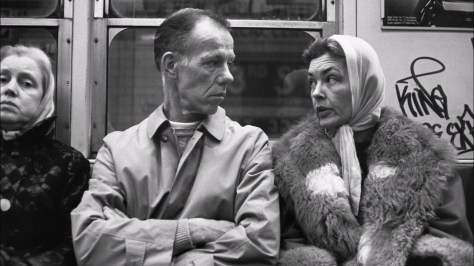
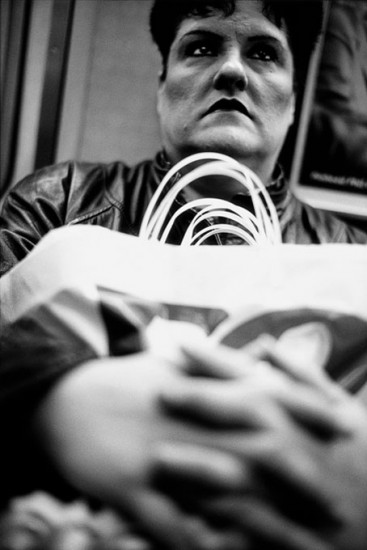
Taking portraits of people who are unaware of you needs a certainly needs a degree of stealth and a place where there are plenty of people who are engaged in their own thoughts. One of the commonest places for this to be done is on public transport. If you google ‘images of the underground in London’ it becomes obvious that this is a very common place for photographers to take pictures. Many of these are of the underground architecture, others are of general crowd scenes and yet more are portraits, usually taken without the knowledge of the people being photographed, although some are obviously posing for the camera.

The genre probably started with the subway images of Walker Evans, although similar portraits were also taken by Helen Levitt, who was his apprentice, at much the same time. The two of them often went out together as Evans thought that people were less likely to see him taking photos if he was with someone else. Levitt revisited the subject much later in 1978 taking a range of images of similar scenes, this time against a background of graffiti (Silverman, 2017). They can be seen in Manhattan Transit: The Subway Photographs of Helen Levitt.

Helen Levitt
© Helen Levitt

Stefan Rousseau, a London photographer also took images on the London Underground. There is a recent photoessay available on this in which he says ‘Suddenly I became aware of a new world of phone-obsessed, sleep-deprived, makeup-wielding commuters so absorbed in their own world that I felt I had to photograph them. I’m astonished by the skill of the women who are able to apply their makeup while hurtling through tunnels and those who can watch last night’s TV standing up in the smallest of spaces’ (Rousseau, 2019). The whole essay can be accessed at:

https://www.theguardian.com/uk-news/2019/mar/29/riding-the-tube-a-photo-essay-by-stefan-rousseau

Stefan Rousseau
© Stefan Rousseau

Lukas Kuzma is another photographer who has taken pictures on the London Underground in the series Transit (Kuzma, 2015) in which he shows a mixture of images of people, some aware of him, others clearly unaware. Some of his images are amusing, some fascinating, others almost cruel.  Some of his images can be seen on Behance.

Lukas Kuzma
© Lukas Kuzma

For other photographers who work on images taken on public transport see:  Martin Parr Christophe Agou and Walker Evans

Edited 04/11/19:

I have just come across another photographer who worked extensively on the London Underground in the 1970’s. Mike Goldsmith has just produced a book London Underground 1970 – 1980 which shows images from a slightly earlier underground scene, although the people have similar world-weary expressions.  The pictures can be seen at:

https://www.bbc.co.uk/news/in-pictures-50261478

_109489911_londonunderground_northernline1975
© Mike Goldwater – Northern Line 1975

Given the number of articles and relevant photographers I have found in a fairly short exploration of this topic, I suspect that a whole PhD could be written on it.

Reference list

Candid moments on the London Underground. (2019). BBC News. [online] 4 Nov. Available at: https://www.bbc.co.uk/news/in-pictures-50261478  [Accessed 04 Nov. 2019].

Kuzma, L. (2015). Transit. [online] Behance. Available at: https://www.behance.net/gallery/23661963/Transit [Accessed 1 Oct. 2019].

Levitt, H., Campany, D., Hoshino, M. and Zander, T. (2017). Helen Levitt – Manhattan Transit. Köln Galerie Thomas Zander Köln Verlag Der Buchhandlung Walther König.

Rousseau, S. (2019). Riding the tube – a photo essay by Stefan Rousseau. [online] the Guardian. Available at: https://www.theguardian.com/uk-news/2019/mar/29/riding-the-tube-a-photo-essay-by-stefan-rousseau [Accessed 1 Oct. 2019].

Silverman, R. (2017). The Subway Portraits of Helen Levitt. [online] Lens Blog NY Times. Available at: https://lens.blogs.nytimes.com/2017/10/12/the-subway-portraits-of-helen-levitt/ [Accessed 20 Aug. 2019].


Christophe Agou

Silence01-791x550
© Christope Agou – from -in the face of silence

Christophe Agou (1969 – 2015) was a French photographer who lived in New York and, like Walker Evans, took a series of images of the New York subway – Life Below (Agou, 2004). He said ‘Trust your heart and open your eyes’ and ‘There is a certain honesty underground, a certain truth. The sense of enclosure is sometimes oppressive, but I love the feeling of the pulse beneath the city’ (Hogarth and McLaren, 2010). Agou worked in both black and white and colour, across the city of New York and in the countryside of the Forez hills in France. In the  New York subway he took mainly images of people who were unaware of him ‘an intimate rendezvous with people in a meditative state from every conceivable walk (Agou, 2011) while for the work in Forez, published as in the face of silence (Agou, 2011 a) he spent time getting the know the community of farmers over eight years. As well as a a photographer Agou was a gifted writer. His website describes his interactions with the people he photographed using lyrical prose ‘… underneath the wooded volcanoes, the furrows of poor earth, the thick fog, the scent of damp clover, the cry of the crows, the entanglement of the forest after a storm, the peace in the heart of the vines, the paths dug up into ruts, the fields lying fallow, the snow swept away by the north wind, the mysteries of the night, the silence… this reality inspires me’ Agou, 2017).

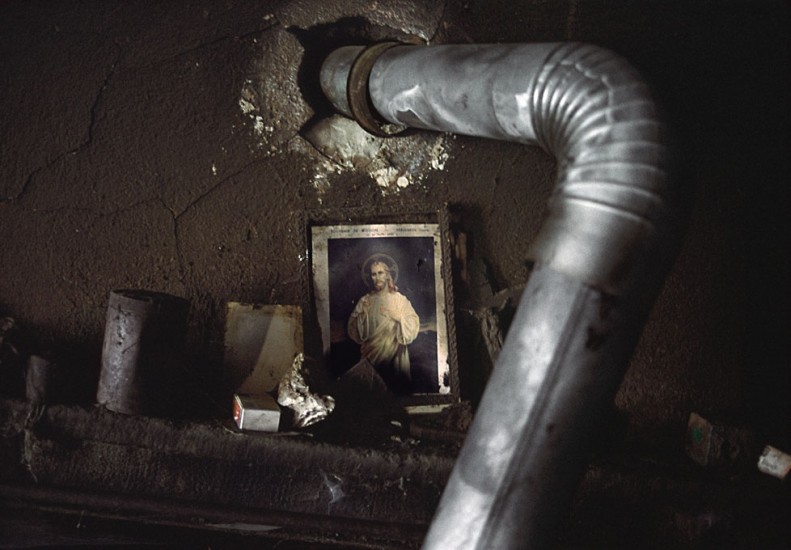
While Agou used the underground as a way of exploring people’s emotions, he was not intrusive. Although he did not always ask about taking the images, he would engage with the people involved and, unlike Evans, he did not hide his camera. However, his images in this series do act as an updated view of the subway.  I find some of his other images, from in the face of silence more revealing. The time he spent with the farmers has allowed a more intimate view, the details are both heart-warming (a cat and a cup) and heart breaking (a picture of Christ under a pipe in a wall).  He has filmed ‘their life as it is’ – with details, but no sentimentality.

Reference list

Agou, C. (2004). Life Below: the New York City subway. New York: Quantuck Lane Press.

Agou, C. (2011a). books | christophe agou. [online] Christopheagou.com. Available at: http://christopheagou.com/books/ [Accessed 1 Oct. 2019].

Agou, C. (2011b). In the face of silence. Stockport: Dewi Lewis.

Agou, C. (2017). face au silence (in the face of silence) | christophe agou. [online] Christopheagou.com. Available at: http://christopheagou.com/face-au-silence/ [Accessed 1 Oct. 2019].

Howarth, S. and Mclaren, S. (2010). Street Photography Now. London: Thames & Hudson.

Martin Parr

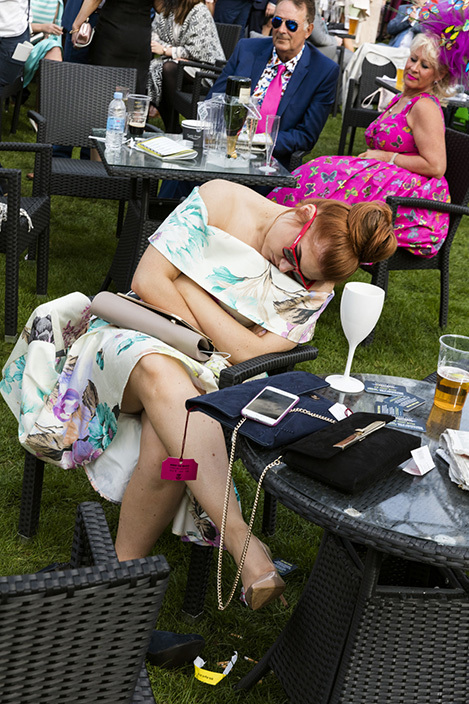
Grand National Ladies Day
Martin Parr: The Grand National Ladies Day © Martin Parr/Magnum Photos

Martin Parr is a British photographer (born 1952) who is mainly known for his images of the British public, shown with loud, brash colours and often very satirical in nature. On his website they are described as ‘exaggerated or even grotesque. The motifs he chooses are strange, the colours are garish and the perspectives are unusual (Weski, 2019). He has looked at the way we live over the years, ranging from images of socialites, to people on the beach in various states of dress, via food and the Grand National racing events. Many of his images are not ‘pretty’ – he shows things as they are, rather then as we would like to think they are. He has published a plethora of books of his own images, his website lists 121 since 1982, together with many others he has edited and is a renowned collector of other people’s photo-books.

Although we tend to think of him as a British (or mainly English) photographer he has travelled and taken images (and produced books of those images) across the world, from Benidorm to Belfast, India to Italy and also Japan. Japonais Endormis (Japanese Asleep) (Parr, 1998) is a collection of images taken on the Tokyo subway of sleeping commuters.

 These salarymen (and women) often travel for long hours every day, to and from work. Parr has taken images looking down on them. They are clearly not aware that he is taking their picture and are vulnerable in the moment. The sharpest focal point of the image is usually the hair, their eyes are closed, they look exhausted.  Although his website describes his style as garish and often grotesque, in this case the images are tender, and he appears to have sympathy with their unending need to travel (and sleep while travelling. This is not echoed in the images of Japanese people shown in The Phone Book (2002) (Parr, 2002) which shows people on their mobile phones, also seemingly unaware that they are being watched, let alone photographed. Here he returns to his more usual brash colours and aggressive imagery.

4parr
© Martin Parr

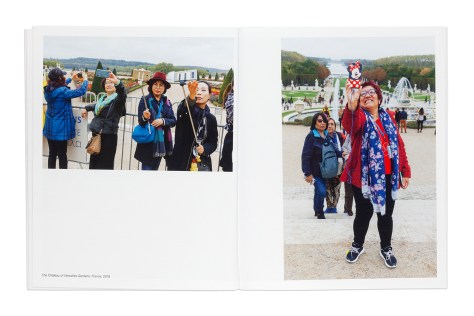
One of the themes Parr has returned to on many occasions is the multitude of people who take pictures of themselves at historic sites. He has dwelt on this theme for many years, and one of his recent projects returns to this topic. Parr was one of five artists who were commissioned by the Palace of Versailles to make work that echoed its spirit and took images of others taking images (Pegard, 2019)  Parr has  discussed this at some length in his blog (Parr, 2012) but ends up admitting that, of course, he is doing exactly the same thing. He does, however, turn is upside down by photographing the people who are taking the photos of themselves.

4
© Martin Parr

Parr’s images are often fascinating and have opened the way for other photographers to take less reverent images and also to have a sense of humour in their work. I found the Japanese Sleepers collection to be both telling and touching about a way of life I know little about. It is a very human piece of work.

 Reference list

Parr, M. (1998). Martin Parr: Japonais endormis = 眠る日本人. Paris: Published by Galerie Du Jour Agnès B.

Parr, M. (2002). The Phone Book: 1998-2002. London, Eng.: Rocket; Essen, Germany.

Parr, M. (2012). Too Much Photography | Martin Parr. [online] Martinparr.com. Available at: https://www.martinparr.com/2012/too-much-photography/ [Accessed 27 Sep. 2019].

Pégard, C. (2019). Versailles, Visible invisible: Dove Allouche, Nan Goldin, Martin Parr, Eric Poitevin, Viviane Sassen : [exposition, Versailles, Château de Versailles, Domaine du Trianon, 14 mai-20 octobre 2019]. Paris: Éditions Dilecta, Dl.

Weski, T. (2019). Introduction | Martin Parr. [online] Martinparr.com. Available at: https://www.martinparr.com/introduction/.


Exercise 2.1 -Individual Spaces

The brief is to make a link between subjects and their background by taking 3 portraits in a place of their choosing, having first spent some time discussing where and why they chose that particular place. The key here is the interaction between you and the subject.

 For details about the planning of this exercise and some alternative ideas see:

Exercise 2.1 – Individual Spaces, Initial Planning

Pauline:

Pauline is a long-term friend. She has some mental health issues and is a very private person, so I was surprised that she agreed to be photographed. She said ‘At Aberdour lighthouse, on the beach. It’s relaxing. It’s somewhere I can sit and think, clear my head. It reminds me of being at the beach as a child, all my teenage years were spent at the beach with my friends’. She took me directly to the exact spot she wanted, however was very clear that she wanted to be photographed looking over the sea with me behind her. No facial views were wanted.

untitled (1 of 1)

Gillian:

Gillian is a long-term friend. She has a difficult life as he has a son with severe autism. Gillian said ‘I want it to be outside somewhere, with trees and gardens, somewhere peaceful, somewhere I can go to sit and not think about things’. We agreed to go to the local park, where she frequently takes her son, but rarely goes without him. When we got there, we spent time wandering around the park looking at different places that she would like to sit in.

untitled (1 of 1)-2

Jennifer:

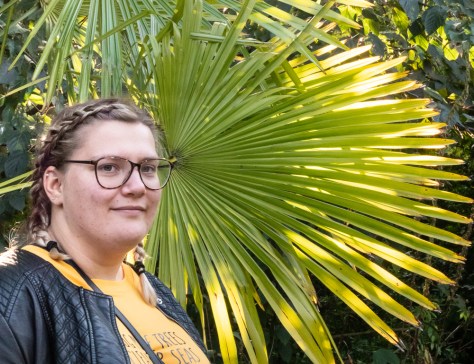
Jennifer is my daughter. This was the most difficult shoot as she wanted to be both the model and the director. After a long discussion she said ‘I want it to be outside in a Botanical Garden, with trees’. We went to one garden and took a series of photos but she then decided that she would rather be photographed in Edinburgh Royal Botanic Garden where she used to work – ‘I want it to be in the garden I know best, at  one of my favourite places in that garden, where I actually did the work’ so we had a second session with a change of venue.

untitled (1 of 1)-4.jpg

This brief takes the concept of identity further than the earlier exercises. Part of a person’s idea of their identity is held within the place they live or feel comfortable in. An important part here is the conversation with the subject to understand where they want to be photographed and why that place is important to them. I then needed to work with the subject to get a successful image within those constraints.

While taking the images I took several images of each person from much further away, where the background became more prominent, overall I preferred the more close-up images, showing the face and the expression – but one could argue that as the object of this exercise was to show the person in place that would be a better option.

I am moderately happy with this series. The images fulfilled their purpose, although possibly do not sit together as a set as well as they could as the views are different, sideways and from the back, however they are all taking up a similar position in the frame. The place is linked to the person and contributes to the image.

Learning points:

  • Spend time with the person to explore their thoughts
  • During the actual shoot remember that you need to be in charge
  • Be patient and allow the person to relax to avoid the ‘smile for the camera’ syndrome
  • Family make difficult subjects